OECD Lifts 2025 Growth Outlook but Warns of U.S. Tariff Shock in 2026
 OECD
OECD
The world economy may expand faster than expected in 2025, but storm clouds loom just beyond the horizon. In its latest report, the Organisation for Economic Co-operation and Development (OECD) revised its global growth projections upward, citing resilience in major economies and strong investment in technology. Yet, the same report carries an unmistakable warning: the surge in U.S. tariffs could slow the global economy in 2026 and reignite inflationary pressures.
Global Growth: A Brighter 2025, a Flat 2026
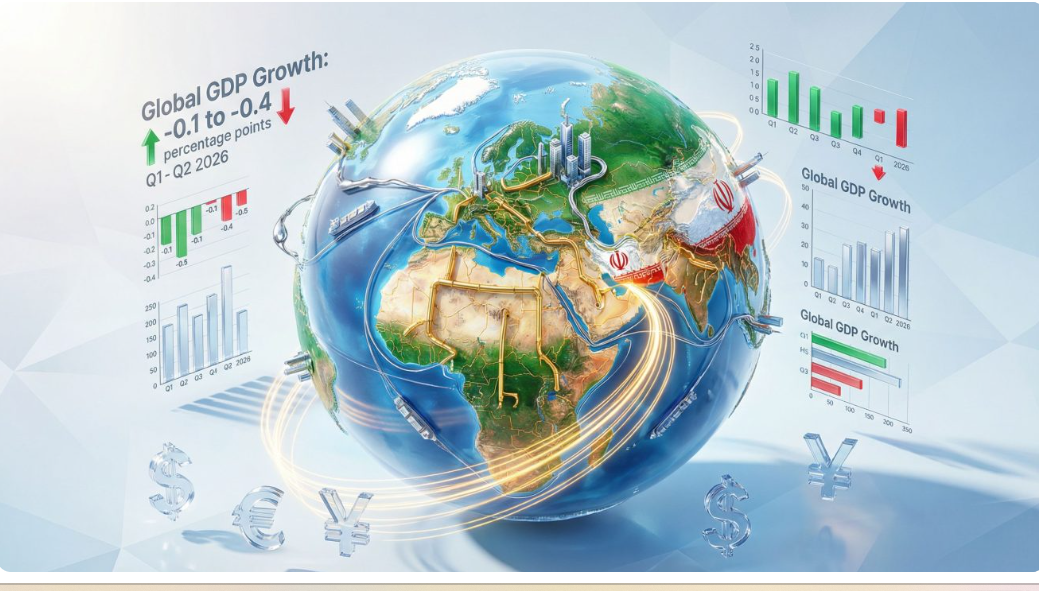
The OECD lifted its forecast for global GDP growth in 2025 to 3.2%, up from its previous estimate of 2.9%. This upgrade reflects stronger activity in advanced and emerging markets alike. However, the organization kept its 2026 outlook steady at 2.9%, signaling that momentum may falter as the delayed effects of protectionist trade policies begin to bite.
The United States remains a key driver of these shifts. The OECD revised the U.S. growth outlook for 2025 to 1.8%, up from 1.6%. For 2026, however, the forecast stays muted at 1.5%. Behind the numbers lies a looming challenge: Washington’s effective tariff rate rose to 19.5% by the end of August, with the full economic consequences yet to unfold. The OECD cautions that by 2026, these tariffs could push U.S. inflation from 2.7% to 3%.
Regional Snapshots: Who Benefits, Who Suffers
-
Euro Area: Growth in 2025 was nudged upward from 1% to 1.2%, but 2026 expectations slipped to 1%. Rising borrowing costs and trade frictions weigh heavily on Europe’s medium-term path.
-
China: Despite structural challenges, China’s growth outlook improved. The OECD sees 4.9% expansion in 2025 (up from 4.7%) and 4.4% in 2026 (up from 4.3%), supported by domestic stimulus.
-
Japan: Long a symbol of low growth, Japan’s 2025 forecast rose from 0.7% to 1.1%, with 2026 adjusted to 0.5%.
-
United Kingdom: Expectations were slightly brighter, moving from 1.3% to 1.4% for 2025, suggesting a fragile but steady recovery.
-
India: A standout performer, India’s growth projection climbed from 6.3% to 6.7% for 2025, though it is forecast to cool to 6.2% in 2026.
-
Brazil: A modest upgrade places 2025 growth at 2.3% (up from 2.1%), with 2026 rising slightly to 1.7%.
-
Mexico: The outlook doubled for 2025, from 0.4% to 0.8%, reflecting improving external demand.
-
Saudi Arabia: Perhaps the sharpest revision, its 2025 forecast jumped from 1.8% to 3.7%, buoyed by energy production and investment flows.
This patchwork of growth expectations highlights how some economies can capitalize on shifting dynamics, while others may struggle against the twin headwinds of debt and protectionism.
The Tariff Trap: Inflation’s Return
The OECD’s report draws a clear line between the rise in U.S. tariffs and its global consequences. If current duties remain, the report anticipates a modest inflationary bump. But if tariffs climb higher, the risks escalate dramatically.
The report states bluntly that “the global slowdown would be more severe if tariffs rise further.” Central banks could face difficult choices: protect credibility by holding rates high, or risk inflation by easing prematurely.
Monetary Policy Outlook: Fed in the Spotlight
The OECD expects the U.S. Federal Reserve to shift policy in response to labor market weakness. According to the report, the Fed is likely to cut rates once at the end of 2025 and twice more in early 2026. These moves aim to soften the economic drag from trade barriers and stabilize domestic conditions.
Yet the organization underscores a broader lesson: the independence of central banks is essential to maintaining “low and stable inflation.” Weakening that autonomy could amplify the damage tariffs already threaten to cause.
Debt and Fiscal Strains: A Growing Threat
Another red flag in the OECD’s assessment is public debt. In advanced economies like the United States and France, soaring debt levels are raising alarm. The report warns of “growing concern” that governments may struggle to respond effectively to the next economic shock.
The OECD urges policymakers to adopt credible measures to halt or even reverse debt accumulation. Without such action, fiscal constraints could limit governments’ ability to provide stimulus or emergency relief in times of crisis.
Technology vs. Protectionism
Interestingly, the report acknowledges that heavy investment in new technologies has been a key driver of U.S. resilience. Advanced manufacturing, artificial intelligence, and clean energy initiatives have boosted activity. Yet, as the OECD notes, these gains are not sufficient to offset the drag from higher tariffs. In other words, innovation cannot fully insulate economies from the ripple effects of protectionist policies.
A Cautionary Outlook
The OECD’s updated forecasts highlight a paradox: optimism for 2025, but caution for 2026. While many countries benefit from domestic reforms and external demand, the long shadow of rising tariffs threatens to reshape the global landscape. Inflationary risks, fiscal vulnerabilities, and geopolitical uncertainty converge to create an uneasy horizon.
As the OECD makes clear, the choices policymakers make in the next 18 months will define whether today’s resilience transforms into lasting recovery — or dissolves into another wave of instability.