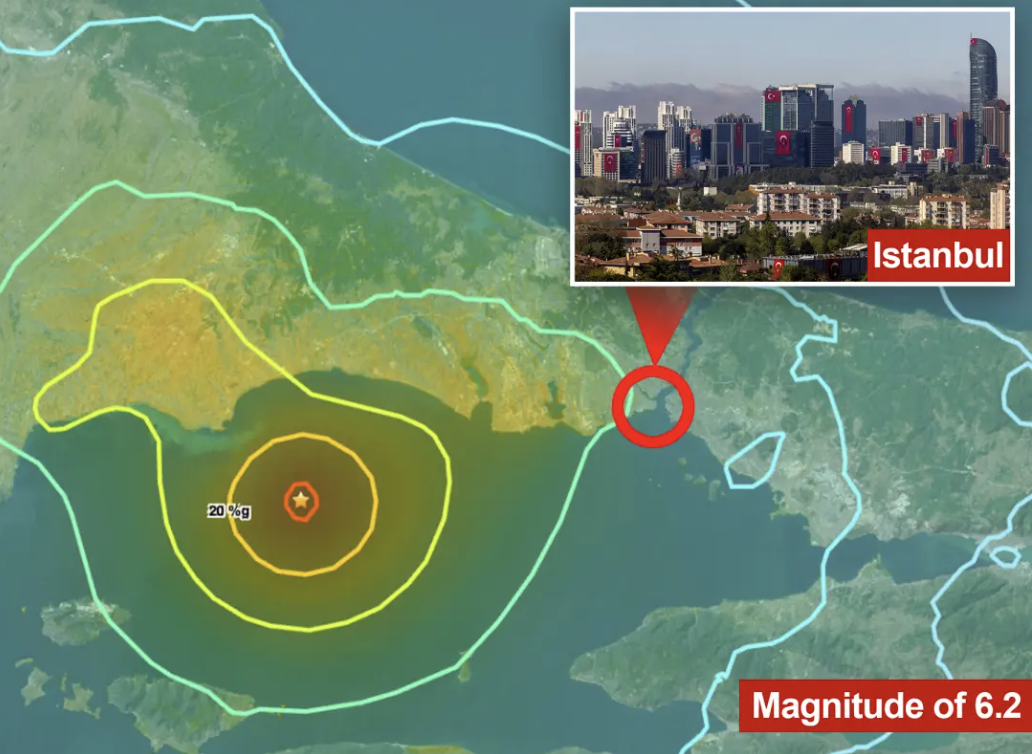
NYT Warns Istanbul Could Face One of the Worst Humanitarian Disasters in Recent History
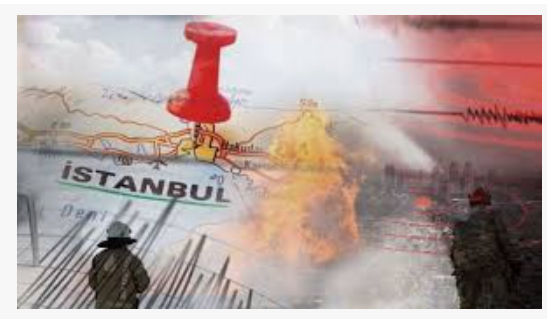 deprem istanbul
Translated from karar.com
A New York Times analysis warns that growing seismic pressure on locked fault segments beneath the Marmara Sea significantly increases the risk of a magnitude 7 or stronger earthquake near Istanbul. While scientists stress that the timing of such an event cannot be predicted, they caution that human-driven failures—weak enforcement of building codes, unplanned urbanization, and inadequate preparedness—could turn a major earthquake into one of the most severe humanitarian disasters of modern times.
As seismic activity intensifies along Türkiye’s most critical fault systems, concern is mounting over Istanbul’s vulnerability to a major earthquake. According to a recent analysis published by The New York Times, increasing movement along fault lines in the Marmara Sea is dangerously stressing segments of the Main Marmara Fault that have remained locked for decades.
Scientists emphasize that earthquakes cannot be predicted with precision. However, they warn that the combination of mounting geological stress and long-standing human neglect could dramatically magnify the scale of destruction in a city of nearly 16 million people.
Locked Fault Segments Under Dangerous Strain
The New York Times analysis highlights how a series of earthquakes migrating eastward across the Marmara region has placed growing pressure on fault segments closest to Istanbul.
Volcanologist and science writer Dr. Robin George Andrews, referencing newly published peer-reviewed research in the journal Science, said seismic activity threatening Istanbul has reached a level that “can no longer be ignored.”
According to the analysis:
-
Locked segments of the Main Marmara Fault continue to accumulate stress.
-
This structural buildup increases the probability of an earthquake of magnitude 7.0 or greater.
-
Such an event could have devastating consequences in a densely populated megacity like Istanbul.
Science Journal Findings: Stress Is Increasing Year by Year
A study published in Science examined seismic activity in the Marmara region over the past two decades and found a clear west-to-east migration of earthquakes toward the locked fault segment near Istanbul.
Recorded events include:
-
2011: Magnitude 5.2 earthquake in western Marmara
-
2012: Magnitude 5.1 earthquake in eastern Marmara
-
2019: Magnitude 5.8 earthquake in central Marmara
-
2024–2025: Magnitude 6.2 earthquake closer to the eastern segment
Researchers say this pattern increases the likelihood that a future rupture could propagate toward Istanbul, where stress has continued to build without significant release.
“The critical fault segment is becoming increasingly compressed with each passing year,” the study concluded.
Earthquakes Cannot Be Predicted—Preparation Is Critical
Dr. Patricia Martínez-Garzón, a member of the research team, stressed that while earthquake forecasting remains impossible, risk mitigation is essential.
“Earthquakes cannot be predicted in advance,” she said. “Our focus must be on early detection of warning signals and, most importantly, on reducing potential impacts.”
Scientists warn that even an earthquake measuring 6.0 or above could cause serious structural damage in Istanbul, particularly in areas with older or poorly constructed buildings.
Human Factors Could Turn Disaster Into Catastrophe
Experts agree that geology alone will not determine the scale of destruction. Human-made vulnerabilities may prove decisive.
Cornell University earthquake scientist Judith Hubbard warned that a major earthquake in Istanbul could rank among the worst humanitarian disasters of recent history.
“A very large earthquake in Istanbul would be one of the most severe humanitarian catastrophes we have seen in modern times,” Hubbard said.
The New York Times analysis highlights several key risk factors:
-
Decades of unplanned urban expansion and informal construction
-
Long-standing failures to enforce building standards
-
Dense development on weak and unstable ground
Dr. Andrews noted that, as seen during the 2023 earthquakes in southern Türkiye, human neglect often plays a decisive role in transforming natural disasters into large-scale humanitarian crises.
“What ultimately determines the scale of catastrophe is not just the earthquake itself,” he said, “but the human decisions made long before it happens.”
Conclusion: Timing Unknown, Risk Increasing
Scientists remain unanimous on one point: the exact timing of a major earthquake cannot be known. What is known, however, is that Istanbul faces a scientifically well-documented and growing seismic risk.
Experts stress that strengthening the building stock, upgrading infrastructure, improving emergency preparedness, and accelerating urban transformation plans are no longer optional—but urgent necessities.
PA Turkey intends to inform Turkey watchers with diverse views and opinions. Articles in our website may not necessarily represent the view of our editorial board or count as endorsement.
Follow our English YouTube channel (REAL TURKEY):
https://www.youtube.com/channel/UCKpFJB4GFiNkhmpVZQ_d9Rg
Twitter: @AtillaEng
Facebook: Real Turkey Channel: https://www.facebook.com/realturkeychannel/***
Related articles
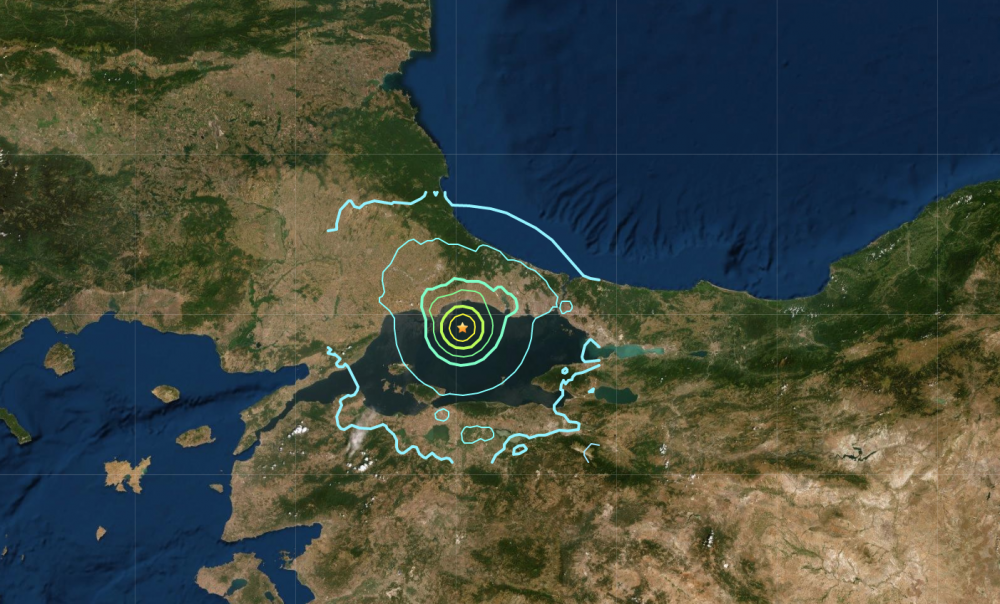
Earthquake Warning: Experts Say the Threat Goes Far Beyond Istanbul
Marmara Earthquake Warning: Why Turkey Must Act Before It’s Too Late
Why the Next Istanbul Earthquake Could Be One of History’s Worst Disasters