



No Punishment for Non-Armed PKK Members, Sentence Reductions for Armed Offenders
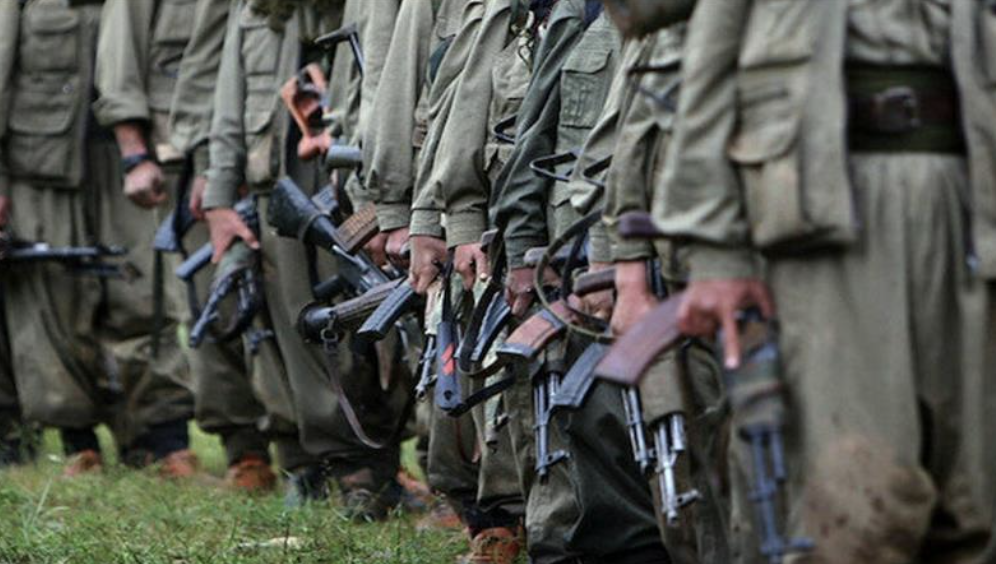 PKK
PKK
In a striking revelation on live television, journalist Sinan Burhan, Editor-in-Chief of Millet News Agency, shared backstage insights about potential legal reforms being discussed within the Turkish government. According to Burhan, new regulations could soon reshape how PKK members and even certain ordinary crime convicts are treated under Turkish law.
Rumors of a Legal Change
Burhan stated that the government is evaluating adjustments to Article 221 of the Turkish Penal Code, a section that regulates the legal status of those associated with terrorist organizations. These changes would not come in the form of a blanket amnesty, he emphasized, but rather as revisions within the existing judicial framework.
If enacted, the revisions could represent one of the most significant shifts in Ankara’s counterterrorism legal strategy in recent years.
No Penalties for Non-Armed PKK Members
The most headline-grabbing element of Burhan’s remarks concerns PKK members who have never engaged in armed activity. Under the rumored changes, individuals affiliated with the group but not involved in violent acts would be exempt from punishment.
Burhan carefully underscored that this would not be described as an “amnesty.” Instead, the government would frame the move as a legal adjustment that removes penalties for certain categories of offenders — specifically, those whose ties to the organization have not included violence.
Such a step would likely be portrayed as a gesture toward demobilization and could serve as an incentive for lower-level members to sever ties with the organization without fear of incarceration.
Sentence Reductions for Armed Participants
While non-armed affiliates may escape punishment altogether, Burhan added that members who participated in armed actions could also see benefits under the reform. Instead of escaping charges, these individuals would be eligible for sentence reductions and possibly conditional release under Turkey’s system of supervised freedom.
“This is not an amnesty, it is a sentence reduction,” Burhan clarified. By stressing this distinction, he suggested the government is keen to avoid political backlash against the perception of a sweeping pardon.
The Critical Factor: Laying Down Arms
Burhan identified one non-negotiable prerequisite: disarmament. He stressed that the determining condition would be whether or not PKK members choose to put down their weapons. The security forces would play a central role in verifying compliance.
Without credible evidence that the organization is disarming, Burhan implied, the legal pathway for leniency would remain blocked. This linkage highlights the government’s continued prioritization of security verification in any step toward reconciliation.
Beyond Terror Cases: Impact on Ordinary Crimes
The potential reforms may not be limited to terrorism-related offenses. Burhan claimed that discussions within government circles also include sentence reductions for ordinary criminal cases. If true, this could mean broader penal system reforms, allowing a range of convicts to benefit from reduced sentences or earlier release.
Such a move would resonate with ongoing debates in Turkey about overcrowded prisons and the cost of long-term incarceration. It would also fit a broader pattern in which governments occasionally introduce sentence reductions to manage correctional pressures.
Political Sensitivity and Public Debate
If the proposed measures move forward, they will almost certainly spark a heated public debate. On one side, the prospect of leniency for non-armed members of the PKK could be seen as a pragmatic step toward demobilization and reintegration. On the other, critics may view it as a dangerous concession to a group long designated as a terrorist organization.
The government, according to Burhan’s framing, appears intent on drawing a sharp line between armed and non-armed actors, while insisting that these measures fall within existing legal frameworks rather than an extraordinary amnesty.
A Delicate Balancing Act
The rumored changes reflect the delicate balancing act Turkish authorities face: incentivizing disengagement from armed groups, managing prison populations, and maintaining public trust in the justice system.
If realized, this legal shift would mark a notable recalibration of Turkey’s counterterrorism approach, potentially opening doors for reconciliation but also testing political boundaries.
For now, the issue remains in the realm of speculation, though Burhan’s remarks have already set the stage for national debate. Whether the government chooses to advance these reforms — and how they are received by the public — could significantly shape Turkey’s domestic political and security landscape in the years ahead.