Murat Yetkin: Israel’s Escalating Airstrikes on Syria Amid Tensions with Turkey and U.S. Diplomacy
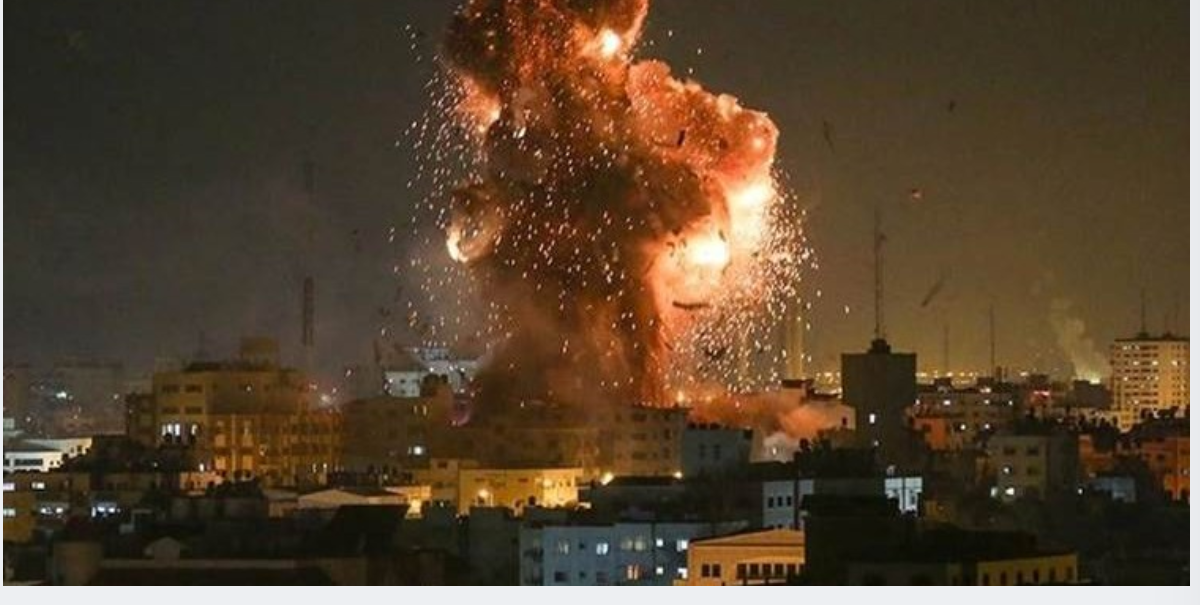 syria-israel raids
As I began writing this article on the morning of May 3, international observers were reporting that Israeli drones were once again seen over Damascus. The Syrian Observatory for Human Rights announced that more than 20 Israeli airstrikes carried out on the night of May 2 into May 3 on the capital Damascus and Hama were the heaviest attacks to date. Reports of Israeli attacks were also coming from Latakia. In particular, the last remaining air defense systems in Syria were being targeted.
On May 2, an attack was carried out near the Syrian Presidential Palace. Israeli Prime Minister Benjamin Netanyahu claimed this was an “open warning” to Interim President Ahmed Shara, urging him not to interfere with the Druze.
In May, Israeli warplanes again targeted an “extremist group attacking the Druze minority” near the capital Damascus. Prime Minister Netanyahu claimed that this operation aimed to warn the Shara administration about its stance toward the Druze population.
These airstrikes took place following a non-confrontational statement by Turkish Foreign Ministry Spokesperson Öncü Keçeli on April 30, who stated that Israel must cease its attacks on Syria.

Israel, Syria, Turkey, and the United States: Regional Conflict and Drone Warfare
After thirteen years of civil war, Syria remains vulnerable and exposed to daily airstrikes by Israeli fighter jets, with the entire world watching.
The current justification is the Druze issue.
After Bashar al-Assad left the country on December 8, the reason shifted to preventing military facilities in Syria—including weapons depots—from being used by Iran-backed groups.
Soon, similar Israeli attacks may aim to force Syria into a federation based on ethnic and sectarian divisions—like in Iraq or Lebanon—including Kurdish and Alawite regions. Such developments should surprise no one.
We can trace the beginning of this latest Israeli air campaign to the period following reports that Turkey would establish a military training base in Hama, Syria, as part of a military training cooperation agreement. Right after this, Netanyahu boarded a plane to meet with U.S. President Donald Trump to complain about Turkey.
During that meeting, Trump praised Turkey and President Recep Tayyip Erdoğan. He reportedly told Netanyahu that if he had a problem with Turkey, he should speak directly to Trump. He said he liked Erdoğan, and Erdoğan liked him. At the same time, Netanyahu was advised to be smart and avoid targeting Turkey directly.
“My Friend Trump” and the Syrian Issue: Erdoğan’s Strategic Messaging
In the days following this meeting, it was announced that Turkish and Israeli delegations, facilitated by Azerbaijan, held talks on a ceasefire framework in Syria. It has not yet been disclosed whether these talks produced any tangible outcomes—for example, the creation of deconfliction lines similar to past agreements with Russia.
It once again became clear, amid the continuation of Israeli airstrikes on Syria, that Erdoğan had not abandoned his personal diplomacy with Trump. On April 29, while returning from his visit to Italy, Erdoğan told journalists on the plane:
“With my friend Trump, I believe we will add a completely new momentum to our bilateral relations. I see that we understand each other well as two leaders, especially on the issue of Syria.”
Following the publication of Erdoğan’s statements, the Turkish Ministry of Foreign Affairs issued its warning to Israel about stopping its attacks—though in a restrained and diplomatic tone.
Turkey’s U.S. Disputes Go Beyond Israel and Syria: Focus on PKK in Syria
Turkey’s problems in the Middle East with the United States go beyond the Israel–Gaza issue and now Syria. The central issue is the U.S. military, financial, and political support for the PKK’s Syrian branch.
Since 2014, Turkey has persistently called on the United States—initially during the Obama administration—to cease its support for the Syrian branch of the PKK, which was provided under the pretext of fighting ISIS (Daesh).
The PKK Disarmament Process: Erdoğan’s “Terror-Free Turkey” Vision
This issue is also linked to the ruling AK Party’s “Terror-Free Turkey” policy and its efforts to disarm the PKK.
The process currently appears stuck between the government’s insistence on disarmament and dissolution, and the PKK’s condition that Abdullah Öcalan, the group’s imprisoned leader, be granted freedom of movement.
On May 2, AK Party Spokesperson Ömer Çelik stated that the process—initiated by MHP leader Devlet Bahçeli and advanced by Öcalan’s call—had become a state policy through “our President’s strong will.” This was in part a message to the PKK. Çelik also referred to the risk posed by “proxy wars” that could sabotage the process.
Crucial Questions on Syria, PKK, and Proxy Wars in the Middle East
At this stage, the following questions must be asked:
Does the government’s recent tendency not to directly blame or harshly criticize Israel suggest the existence of a ceasefire framework—or at least a mutual understanding? For example, was the prevention of CHP’s Palestine rally connected to this understanding?
Is Erdoğan’s statement that he and Trump “understand each other” regarding Syria not only related to Israeli airstrikes but also to the PKK disarmament process?
When mentioning “proxy wars,” was the reference limited to Israel, or did it also include Iran or certain European countries?
Other questions may also arise. But for now, these should suffice to understand the “patience” being exercised by Ankara.
Related articles
What would happen to Turkish economy if Syrians left?
Israel’s president in Ankara to thaw frosty ties as gas interest grows
Pax Turkica or Imperial Illusion? The Limits of Erdoğan’s Regional Ambition