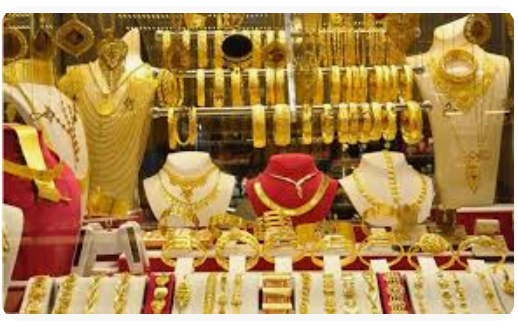
JPMorgan Chase CEO Says Gold Could Hit $10,000
 gold price
As gold prices surged to all-time highs, JPMorgan Chase CEO Jamie Dimon made headlines with a bold statement that left investors stunned. Despite clarifying that he is not personally a gold investor, Dimon suggested that the precious metal’s price could “easily reach $5,000, or even $10,000 per ounce” if current economic trends continue. His remarks came as both global and domestic markets witnessed a historic double record in gold.
Gold Breaks New Records
On Wednesday, amid fears of a potential U.S. government shutdown and growing expectations for Federal Reserve rate cuts, spot gold prices jumped 1.15% to surpass $4,190 per ounce, marking an unprecedented peak. In Türkiye, gram gold climbed to a record 5,633 TL, reflecting both global momentum and the continued weakness of the Turkish lira. The surge placed gold at the center of global financial discussions just as Dimon’s comments hit the headlines, amplifying investor attention.
“A Semi-Rational Choice” in an Uncertain Economy
Dimon described gold as a “semi-rational investment choice” in today’s uncertain environment. He explained that while holding gold carries an estimated 4% cost, the current macroeconomic conditions — including fiscal instability, inflation risks, and shifting global yield structures — could justify such an investment. “If this environment persists, gold could easily go to $5,000, maybe even $10,000,” Dimon stated, highlighting the possibility of an extended bull cycle.
The JPMorgan chief’s comments reflect a growing sentiment among investors that traditional safe havens like gold and silver could outperform as central banks signal a potential pivot toward monetary easing in 2026. Dimon’s tone, however, was more cautious than speculative: he positioned gold not as a speculative asset, but as a “rational hedge” against systemic risk.
Market Overvaluation Warning
Beyond his gold remarks, Dimon also delivered a broader warning about overvaluation across global asset classes. “When you look at valuations, almost everything is expensive right now,” he said. “This requires more disciplined, data-driven risk management.” His comments echoed concerns that equity and real estate markets may be pricing in unrealistic growth expectations, especially given rising geopolitical uncertainty and slowing global demand.
Analyst Reactions: “A Hedge, Not a Bet”
Market analysts say Dimon’s prediction shouldn’t be taken as a call to speculate but as a signal of shifting investor psychology. According to financial strategist Marianne Holt of Capital Insight Partners, “When major banking executives like Dimon openly discuss gold at $10,000, it’s a reflection of broader distrust in monetary stability, not a forecast in the technical sense.”
Meanwhile, global institutions are adjusting their gold outlooks accordingly. A French banking giant recently raised its end-2026 forecast for gold to $5,000 per ounce, citing persistent inflation and geopolitical demand. Similarly, Bank of America analysts expect both gold and silver to strengthen through 2025, supported by a weaker dollar and potential Fed rate cuts.
Investors Turn to Safe Havens
Dimon’s remarks come as central banks worldwide continue to accumulate gold reserves, reinforcing the perception of gold as a reliable store of value amid volatile markets. According to recent reports, global gold demand from central banks remains near record highs, led by China, Türkiye, and India. In retail markets, the rush toward precious metals has also intensified, with investors diversifying portfolios away from overvalued equities and unstable fiat currencies.
The Road Ahead: Rational or Irrational Exuberance?
While Dimon’s projection of $10,000 gold is speculative, it underscores a growing theme: confidence in fiat systems is waning, and risk aversion is driving gold’s long-term appeal. Whether the metal’s rally continues or stabilizes, its role as a barometer of global uncertainty remains intact.
For now, gold’s climb is being fueled by a potent mix of monetary policy shifts, fiscal anxieties, and geopolitical tension — the same cocktail that has historically pushed investors toward safe-haven assets.
As Dimon himself concluded, “In a world where nearly everything is overpriced, gold might just be the least irrational choice left.”
Related articles

Global Cancer Crisis Looms: Deaths Could Hit 18.6 Million by 2050
Safe Haven Frenzy: Gold, Silver, and Platinum End 2025 at Historic Highs
Gold, Silver, and Industrial Metals Surge as Fed Rate-Cut Hopes