



Istanbul’s Water Supply Falls to Alarming Five-Year Low
 Drought in Turkey
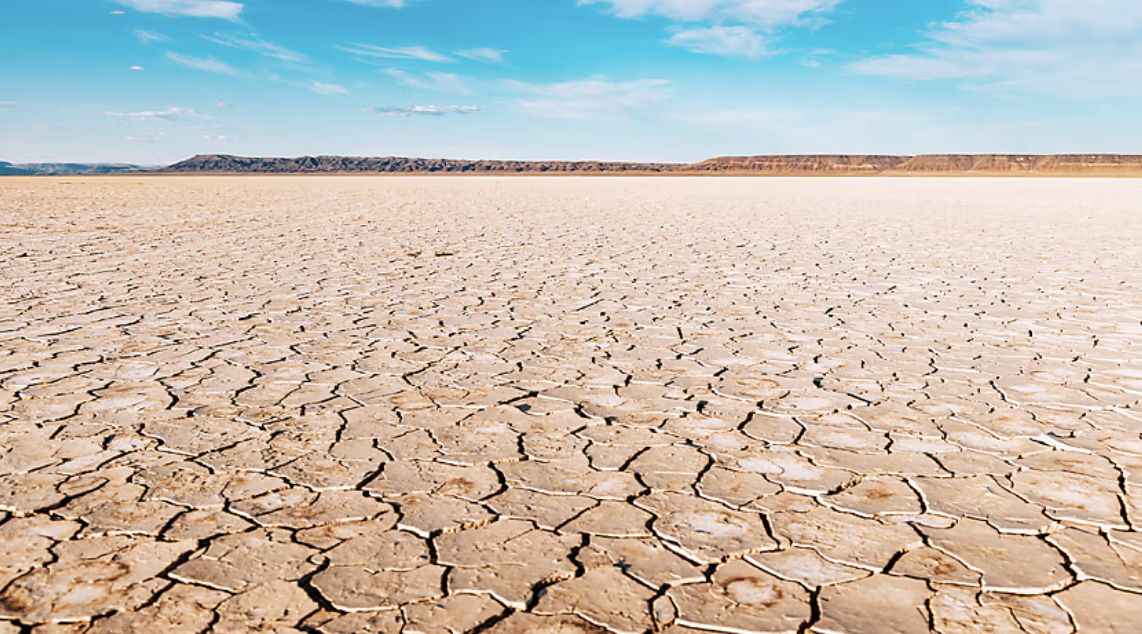
Istanbul is approaching a critical point in its water supply as inadequate rainfall across the Marmara Region continues to push reservoir levels toward historic lows. According to the latest figures from the Istanbul Water and Sewerage Administration, the city’s average reservoir fullness has dropped to only 20.29 percent. This marks the lowest level recorded for this period in the last five years, signaling a worsening ecological and urban threat.
The alarming trend reflects a severe lack of precipitation stretching from spring through autumn. With winter approaching, experts warn that Istanbul may soon face a far more serious water shortage unless significant rainfall arrives in the next few months.
Five Reservoirs Drop Below 20 Percent
The city relies on ten main reservoirs for its water supply. Current data shows that half of them have fallen below the 20 percent threshold, a level considered critical for sustainable consumption.
Kazandere has fallen to a dangerously low 1.97 percent, the weakest among all reservoirs. Pabucdere follows at 3.89 percent, while Alibey stands at 12.5 percent. Sazlidere is at 19.76 percent, and Omerli, one of the city’s most essential resources, is now down to 17.83 percent.
Terkos, a major supplier, is at 22.61 percent, while Buyukcekmece is reported at 22.13 percent. Istrancalar remains at 20.78 percent, Darlik at 22.99 percent, and Elmali at 50.68 percent, making Elmali the only reservoir currently maintaining a healthy level.
Istanbul’s total reservoir and pond capacity is 868.683 million cubic meters. Yet as of today, the usable amount of stored water is limited to only 176.012 million cubic meters. This sharp decline highlights how precarious the situation has become for a megacity of more than 16 million residents.
Reservoir Decline Over the Last Ten Years
Historical data from ISKI reinforces the severity of the current drop. As of November 21, reservoir levels were recorded at 35.27 percent in 2016, 55.09 percent in 2017, 48.61 percent in 2018, 37.13 percent in 2019, 26.43 percent in 2020, 41.95 percent in 2021, 35.4 percent in 2022, 23.08 percent in 2023, and 27.49 percent in 2024. This year, the figure has fallen to 20.29 percent on the same date, representing one of the steepest declines of the past decade.
“We Are Approaching an Alarm Level”
Dr. Guven Ozdemir, a meteorology engineer from Istanbul Aydin University, highlighted the broader context behind the drop. He explained that the drought affecting Turkey since April has significantly undermined Istanbul’s water resources. Despite expectations of rainfall during September and October, the city received almost none, with only the eastern Black Sea region experiencing meaningful precipitation.
Dr. Ozdemir warned:
“When we look at the reservoirs in Istanbul, fullness is around 20 percent. Some of our reservoirs are even below that, which is extremely concerning. The risk is growing gradually, and we are nearing an alarm level. Once reservoirs fall below 10 percent, the remaining water becomes very difficult to treat due to mud and bottom sediments, and the treatment process becomes far more costly.”
December and January Will Be Decisive
According to Ozdemir, Istanbul’s ability to avoid a water crisis depends heavily on the rainfall expected in December and January. Without substantial precipitation during those months, he warns that the city could face a far more severe scenario.
Ozdemir also emphasized that water conservation should be understood in a broader sense. He stated that reducing water use must go hand in hand with lowering energy consumption, noting that electricity production in Turkey is partly dependent on hydropower.
He explained:
“Water conservation is not limited to using less water from the tap. We also need to adjust our electricity use, since hydropower plants generate some of it. We must reduce our overall energy consumption as much as possible. In agricultural irrigation, traditional flood irrigation should be replaced by drip irrigation. There is a massive amount of fresh water being consumed unnecessarily.”
His remarks underline that the water issue is not only a meteorological challenge but also an infrastructural, agricultural, and energy-related one. This multi-layered problem requires immediate action from both policymakers and citizens.
With Istanbul’s reservoirs edging closer to the limits of their usable capacity, the months ahead will determine whether the city stabilizes its water supply or enters a phase of deeper environmental stress.
Related articles
Istanbul Faces Water Shortage as Reservoir Levels Drop Amid Heatwave
Istanbul Faces Critical Water Shortage as Reservoir Levels Plunge 42% in 3 Months
Türkiye’s Dam Reservoir Levels Drop to 42.2%, Sharp Declines in Ankara and İzmir