Israel’s Aggression and Turkey’s Red Lines
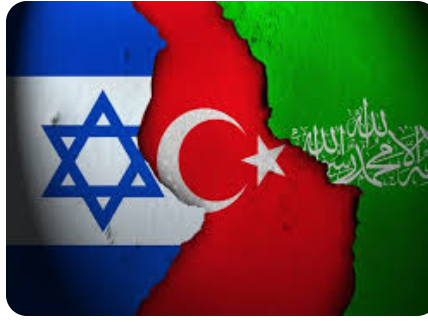 tr-israil
By Okan Müderrisoğlu – Translated and adapted for Real Turkey

Before diving in, let us begin by acknowledging the competence of Turkish intelligence — its field knowledge, technical skill, and analytical strength. Why? Because Israel’s large-scale strike on Iran, launched in the early hours of a June morning, had been on Ankara’s radar weeks in advance.
At 03:00 AM, as the first wave of Israeli airstrikes hit Iran’s capital and military infrastructure, high-level coordination calls began in Ankara. By 2:30 PM, it culminated in an emergency security meeting: Foreign Minister Hakan Fidan, Defense Minister Yaşar Güler, Chief of General Staff Metin Gürak, and MIT (National Intelligence Organization) Director İbrahim Kalın assessed the situation and briefed President Erdoğan in real time.
Meanwhile, MHP leader Devlet Bahçeli issued a bold statement, declaring that Israel’s operation was “a veiled threat to Turkey” and that Israel must be stopped—even if that means the use of force.
A Weakened Iran, a Calculating Israel
Iran, long isolated by sanctions, suffering from economic fragility, internal dissent, a fractured military, and compromised intelligence, has been weakened over the years. Despite its bravado—missile parades and nuclear rhetoric—Tehran has suffered deep infiltration. In fact, even the head of Iran’s anti-Mossad intelligence unit turned out to be a Mossad agent, according to former President Mahmoud Ahmadinejad in a 2024 interview.
Rather than direct confrontation, Iran spent decades building a “Shia Crescent”—from Tehran to Beirut via Baghdad and Damascus—and relied on proxy forces like Hamas, Hezbollah, the Houthis, and Hashd al-Shaabi. Yet it never moved beyond rhetorical threats.
The October 7 Hamas-led Al-Aqsa Flood marked a turning point. The US-EU’s blanket support for Israel left Iran exposed. Mossad’s long reach, already deep within Iran, became even more evident when Hamas political chief Ismail Haniyeh was assassinated in Tehran on July 31, 2024.
Israel is not just reacting to Hamas or Gaza. Its broader strategy, underpinned by the “Promised Land” fantasy, now seeks to redraw regional borders—from Gaza to the Euphrates. The first phase appears to aim for the erasure of Palestine, the paralysis of Lebanon, Yemen, and ultimately Iran.
When President Erdoğan warned about this expansionist design, he was largely dismissed by Western and domestic circles. But recent developments are proving him prescient.
Turkey’s Intelligence and Security Priorities
Iran’s capacity to inflict immediate damage on Israel is likely limited. It may retaliate with its remaining missile stockpile or use proxies to strike US and Israeli targets in third countries.
One of MIT’s top priorities is preventing Israeli and Iranian intelligence networks from clashing on Turkish soil. Turkish intelligence has already dismantled several covert networks and quietly foiled plots that never made the headlines.
When Israel’s internal security chief once remarked, “We’ll strike Hamas even inside Turkey,” MIT did not stay silent—it issued a rare public warning, asserting that such actions would bring grave consequences.
Strategic Messaging and National Cohesion
It is deeply troubling that some domestic political actors, under the guise of opposing the government, appear ready to align with foreign agendas—even at the edge of treachery.
As tensions soar and the Middle East once again flirts with regional war, Turkey must not only defend its national interests, but also remain vigilant against internal opportunism that may compromise its strategic integrity.