Gedik Macro View: Industrial production maintained its moderate recovery trend in June
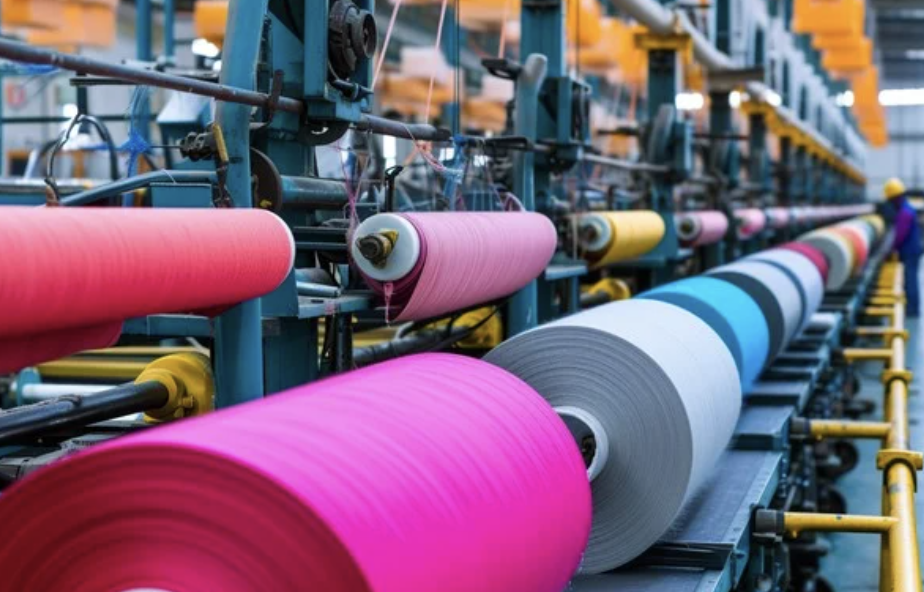 Textile Industry in Turkey
IP index rose by 0.7% MoM and 8.3% YoY in June, continuing its moderate recovery trend. According to TurkStat data, seasonally and WD-adjusted industrial production (IP) index grew by 0.7% MoM in June. Note that that IP had increased by 3.1% in May after contracting by 3.1% in April. On a yearly basis, the IP index increased by 8.3% YoY on a WD-adjusted basis (9.3% unadjusted) in June.
IP is set to deliver a meaningful contribution to GDP growth in 2Q25. The annual expansion in the IP index accelerated to 5.5% in 2Q, from a modest 0.7% in 1Q. Without working-day adjustments, IP growth surged to 7.3% in 2Q, following a 2.2% contraction in 1Q. As such, the industrial sector is likely to make close to a 1.4% pts positive contribution to 2Q GDP growth, after erasing %0.4% pts in 1Q. On a QoQ basis, the recovery seems to have persisted albeit at a slower pace with sequential 3.3%, 1.7% and 0.7% growth rates over the past 3 quarters. Recall that, the IP had recorded some 3.7% and 0.9% contraction in 2Q24 and 3Q24.
Divergences across industrial sub-sectors persisted in June. On a calendar-adjusted YoY basis, food products manufacturing led the gains with a remarkable 14.2% increase. Other notable contributors included fabricated metal products with 13.9%, plastics and rubber products at 10.6%, motor vehicles at 9.3%, non-metallic mineral products also at 9.3%, basic metals at 6.9%, chemical products manufacturing at 5.5%, and electrical equipment at 1.1%. On the downside, several key sectors experienced declines: durable consumer goods manufacturing contracted by 1.4%, machinery and equipment production by 4.2%, and textiles by 0.3%. Apparel manufacturing showed the steepest decline at 12.7%.
Looking at the January–June period, the recovery appears more limited and uneven across sectors. Growth was observed in food products (5.8%), fabricated metal products (10.3%), basic metals (3.5%), non-metallic minerals (3.5%), and chemical products (0.5%). Conversely, motor vehicles (-2.0%), machinery and equipment (-5.3%), plastics and rubber (-0.6%), textiles (-2.2%), durable consumer goods (-1.3%), and apparel manufacturing (-2.9%) all posted annual contractions.
There has been a limited but not broad-based recovery in IP in 1H25. Strength in energy, food, fabricated metals, basic metals, non-metallic minerals, and chemicals reflects resilient demand in certain core intermediate and basic goods segments. In contrast, ongoing weakness in motor vehicles, machinery, plastics, textiles, durables, and apparel highlights persistent softness in both investment and household consumption. As a result, IP’s overall contribution to 1H25 GDP growth was constrained, with demand-side fragilities weighing on multiple sub-sectors. That said, the slight recovery trend observed over the past two months, along with the expected rate-cut cycle and an anticipated easing in credit conditions, supports a cautiously optimistic outlook. External demand and the global growth backdrop, however, remain key sources of uncertainty.
Looking ahead to 3Q25, headline YoY IP growth numbers may appear strong—likely above 5%—despite weak signals from leading indicators. Note that the manufacturing PMI has remained below the 50 threshold since April 2024 (or r since July 2023, excluding the brief readings of 50.2 in February and 50.0 in March 2024). The manufacturing PMI has gradually weakened from 48.3 in February, hitting as low as 45.9 in July. Furthermore, electricity consumption, a closely watched proxy for industrial activity, rose by just 1% YoY in July. Together with anecdotal evidence, these indicators suggest a potential sequential decline in the IP index Nonetheless, the low base from last year should keep annual growth figures elevated (probably above 5%) throughout 3Q25.