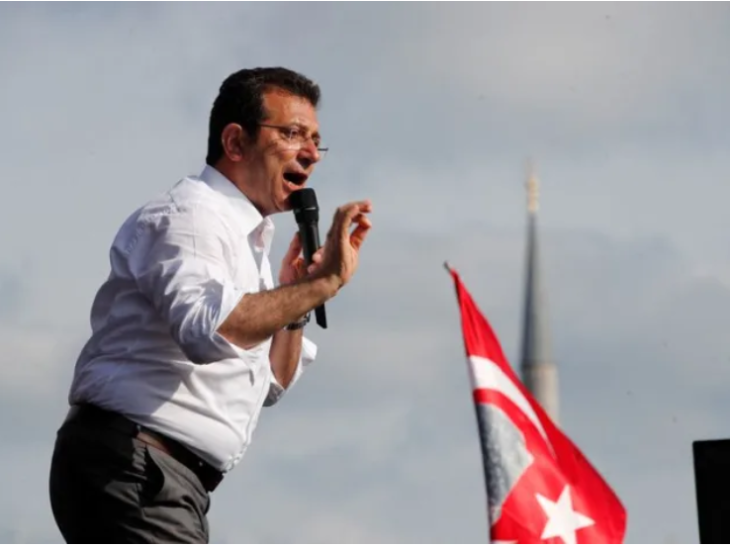
Freedom House: Turkey Ranked ‘Not Free’ Online as Imamoğlu’s Campaign Account Blocked
 internet freedom
The access ban on the presidential candidate’s page came the same day Freedom House released its 2025 Internet Freedom Report
The same day that Istanbul Mayor Ekrem İmamoğlu’s Presidential Campaign Office account was blocked on social media, Washington-based human rights group Freedom House released its latest report declaring that Turkey remains among countries where the internet is “not free.”
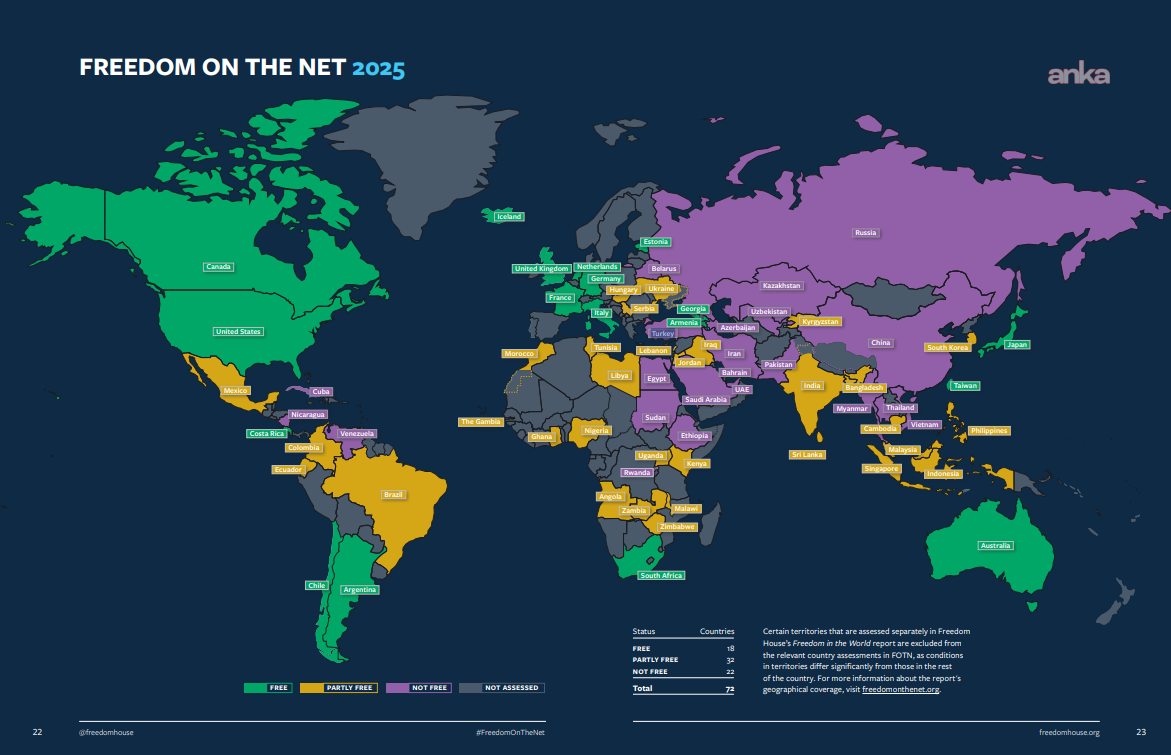
The 2025 Freedom on the Net report — authored by Kian Vesteinsson and Grant Baker — found that online freedom has deteriorated globally for the 15th consecutive year.
Out of 72 countries surveyed, 18 were rated “free,” 32 “partly free,” and 22 “not free.”
Turkey received 31 out of 100 points, keeping the same score as last year, placing it firmly in the “not free” category.
Mass account suspensions and content takedowns
According to Freedom House’s Turkey rapporteur Gürkan Özturan, online restrictions and surveillance continue to intensify.
“Authorities issued numerous orders to block websites and remove content, while pro-government troll networks spread disinformation,” the report said.
During protests in March 2025, following İmamoğlu’s arrest, Turkish regulators restricted access to social media platforms for 42 hours, while the Information and Communication Technologies Authority (BTK) previously blocked Instagram for nine days in August 2024.
Freedom House noted that the platform X (formerly Twitter) also suspended the account of independent news outlet Bianet for covering the protests, as well as İmamoğlu’s campaign page itself.
The report emphasized that authorities “continued to block or suspend social media accounts at the government’s request.”
New cybersecurity law expands state powers
In March 2025, the Turkish Parliament passed the Cybersecurity Law No. 7545, granting officials broad access to all data stored within Turkey, provided they obtain a court order.
The law also penalizes refusal to share personal information with authorities and criminalizes “spreading false information about data leaks,” carrying prison sentences of up to five years.
Critics argue that the law further consolidates government control over digital space and threatens citizens’ privacy and online expression.
Gezi legacy and a decade of online repression
The report draws a direct line back to the 2013 Gezi Park protests, which revealed how social media could bypass traditional media censorship.
After the protests, then-Prime Minister Recep Tayyip Erdoğan launched a series of legal cases against citizens accused of “online insults,” while introducing new laws requiring platforms to remove critical content or face access restrictions.
Since then, Freedom House said, Turkey has “solidified one of the world’s most comprehensive censorship systems.”
Journalists, activists, and social media users continue to face investigations for online posts, despite a decline in the number of long-term prison sentences.
Internet shutdowns during protests
The report highlighted two key incidents in 2024:
-
In July 2024, Turkish authorities restricted nationwide internet access for a week during anti-refugee protests in Kayseri.
-
In March 2025, during demonstrations over İmamoğlu’s detention, access to major social media platforms was cut for nearly two days.
Freedom House said such shutdowns are “symptomatic of a growing global trend” in which governments clamp down on connectivity during political unrest.
“Digital freedom under siege worldwide”
Commenting on the findings, Özturan said the latest data show that digital freedom is being eroded across the globe, as governments expand surveillance and manipulate online content to suppress dissent.
“In Turkey, as elsewhere, authorities continue to restrict social media access during mass protests, expand content takedown orders, and apply arbitrary censorship,” he said.
“These measures not only narrow digital expression but also show how vital online platforms have become for free speech and civic participation.”
Özturan added that every new restriction “highlights the need for stronger solidarity to defend the public’s right to information.”
“The future of the internet,” he concluded, “will depend less on how states use technology and more on how societies defend their digital rights.”
PA Turkey intends to inform Turkey watchers with diverse views and opinions. Articles in our website may not necessarily represent the view of our editorial board or count as endorsement.
Follow our English language YouTube videos @ REAL TURKEY: https://www.youtube.com/channel/UCKpFJB4GFiNkhmpVZQ_d9Rg
And content at Twitter: @AtillaEng
Facebook: Real Turkey Channel: https://www.facebook.com/realturkeychannel/
Related articles
CHP Leader Özel Committed to İmamoğlu’s Candidacy: “No Plan B, Only İmamoğlu”

Survey: 45% of AKP Voters Say “The Economy Is Bad or Very Bad”
MEM: Is Imamoglu a strong candidate for the Turkish presidential election?