First China–Turkey Freight Trains Depart as Ankara Pushes to Lead Eurasian Trade Corridors
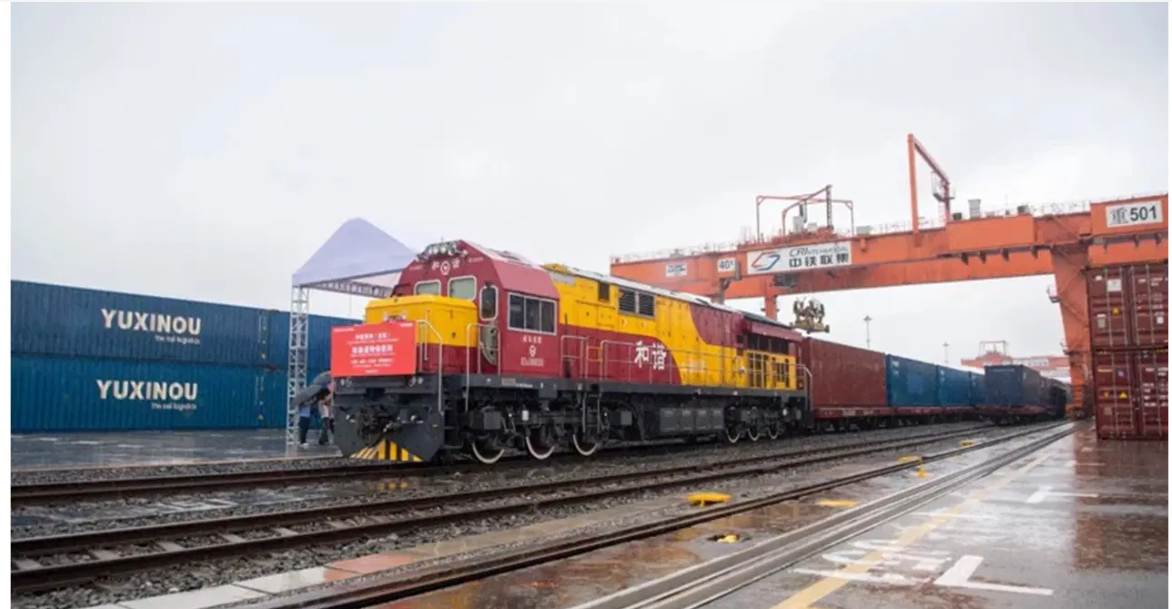 middle corridor
Turkey welcomed the launch of the first regular freight trains from China as part of its ambitious efforts to become the central logistics hub linking Asia and Europe.
Two freight trains departed from China’s Chongqing and Chengdu on July 9, heading westward to Turkey via the Middle Corridor—an overland trade route connecting China to Europe through Central Asia, the Caspian Sea, and Turkey. The milestone was announced by Turkish Minister of Transport and Infrastructure Abdulkadir Uraloğlu, who hailed the development as a “new chapter” in Eurasian logistics.
“The trains travelled over 3,500 kilometers within China and have now crossed into Kazakhstan. From there, they will continue through the Caspian region and Turkey before reaching Europe,” said Uraloğlu. Carrying a total of 2,000 tons of cargo, the shipments mark the start of regular east-west rail links with an ambitious target of operating 1,000 freight trains annually.
A Strategic Leap for the Middle Corridor
The initiative follows an agreement signed at the Global Transport Corridors Forum between China State Railway Group and Turkish logistics firm Pasifik Eurasia. “These trains are concrete proof of Turkey’s strategic vision for the Middle Corridor,” said Uraloğlu, adding that the project reinforces Turkey’s central role in global supply chains—especially in times of crisis.
The Middle Corridor, officially known as the Trans-Caspian International Transport Route, is being positioned as a strategic alternative to the Northern Corridor through Russia. It has gained fresh importance amid geopolitical uncertainties, including the Russia–Ukraine war and ongoing tensions in the Red Sea and the Gulf region.
FM Fidan: Connectivity Is Now Foreign Policy
Foreign Minister Hakan Fidan emphasized the political and economic significance of transport corridors in a fragmented world order during a keynote speech at the Global Transport Corridors Forum in Istanbul. “Transport and connectivity are no longer just matters of development. They are now at the heart of foreign policy,” said Fidan.
Fidan argued that initiatives like the Middle Corridor and the Development Road Project—a proposed transport axis running from Iraq’s Al-Faw Port to Europe via Turkey—could help anchor stability in conflict-ridden regions. The project envisions a vast network of railways, highways, and energy pipelines and is being closely coordinated with partners in Iraq, the Gulf, and Asia.
“Turkey’s geography, industrial capacity, and diplomatic stance make it a necessary and trusted partner in Eurasian connectivity,” Fidan stated. Over the past 20 years, Turkey has invested nearly $200 billion in infrastructure under President Erdoğan’s leadership, significantly enhancing its regional transport capabilities.
Looking Ahead: From Vision to Integration
Fidan also revealed that Turkey is working with China to align the Middle Corridor with Beijing’s Belt and Road Initiative, aiming for mutual benefit. He highlighted the importance of tripartite cooperation, particularly the Baku–Tbilisi–Kars railway, as a core link in this emerging logistics belt.
“Our vision is to create win-win outcomes for all stakeholders,” Fidan said, stressing that Turkey is committed to facilitating trade and boosting connectivity through regulatory reforms and infrastructure investments. He also underlined the strategic importance of regional mediation, peace-building, and economic integration in maintaining long-term stability.
IMPORTANT DISCLOSURE: PA Turkey intends to inform Turkey watchers with diverse views and opinions. Articles in our website may not necessarily represent the view of our editorial board or count as endorsement.
Follow our English language YouTube videos @ REAL TURKEY: https://www.youtube.com/channel/UCKpFJB4GFiNkhmpVZQ_d9Rg
And content at Twitter: @AtillaEng
Facebook: Real Turkey Channel: https://www.facebook.com/realturkeychannel/
Related articles
Trump–Sharaa Summit: Breakthrough on SDF Integration and Sanctions Relief Signals New Phase in Syria–US Relations
Hakan Fidan’s Iran War Briefing Reshapes Government Agenda in Türkiye
Erdoğan in Baku: “We are highly optimistic about achieving lasting peace in the Caucasus”