Everyone Is Becoming a Minimum-Wage Worker: The Silent Income Collapse in Turkey
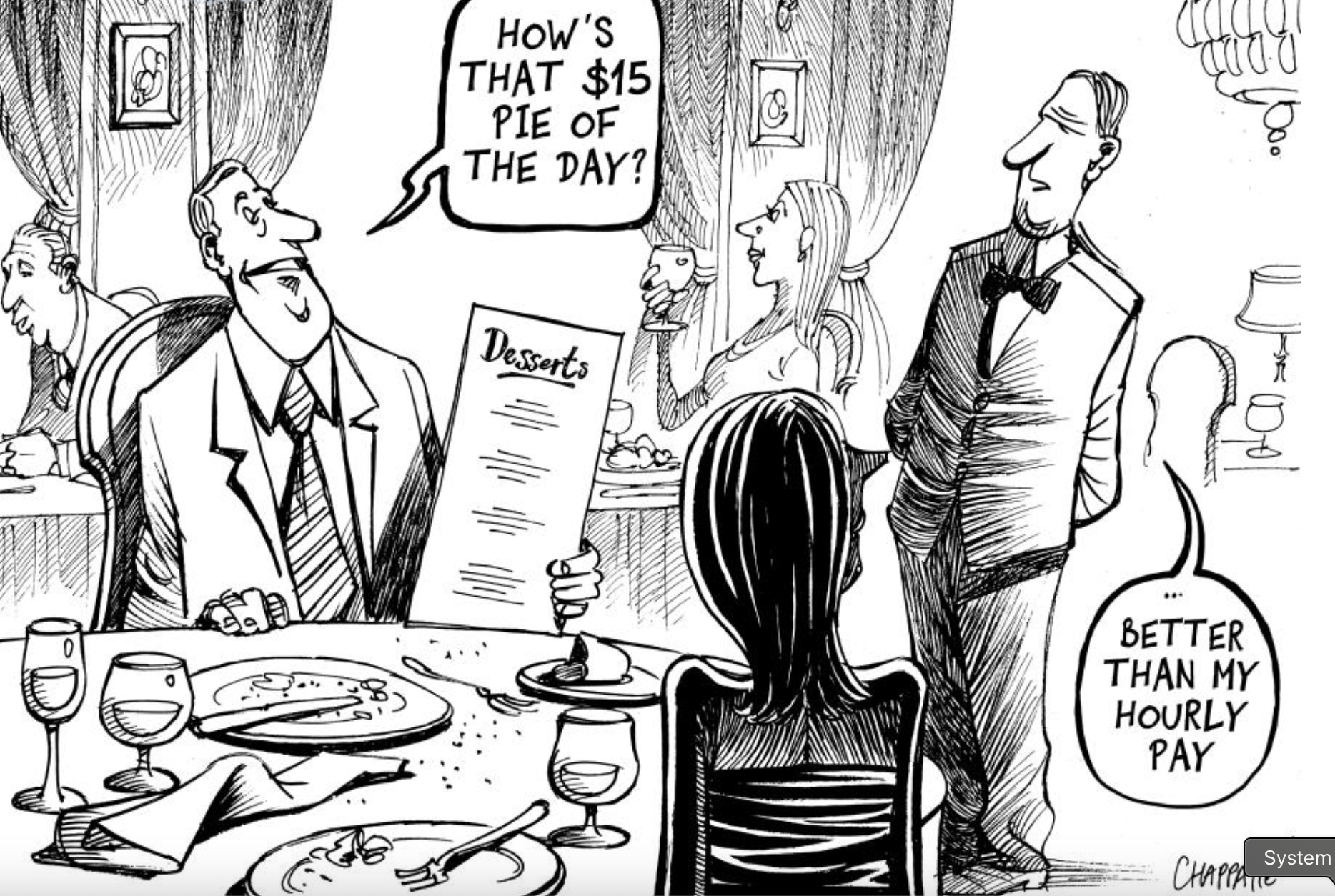 Minimum Wage by Patrick Chappatte
Public debate in Turkey has once again centered on the minimum wage negotiations, but the real story runs far deeper than a single pay raise. What the data now reveals is a profound erosion of income across the labor market, one that is steadily pushing nearly all workers toward the same low pay threshold. The minimum wage is no longer just a safety net for the lowest earners; it is rapidly becoming the dominant wage level in the country.
As wage talks dominate headlines, the loss of purchasing power experienced by workers has exposed the depth of economic hardship faced by households. The shrinking gap between minimum wage earners and the rest of the workforce shows that this is not merely a problem for a narrow segment of society. Instead, it has evolved into a structural issue affecting the majority of working people.
The Minimum Wage Is No Longer the Exception
For years, the minimum wage was framed as an entry-level income designed to protect the most vulnerable workers. Today, that definition no longer reflects reality. According to the 2026 Minimum Wage Report published by the Confederation of Progressive Trade Unions of Turkey (DİSK), based on 2024 data, nearly half of all workers in Turkey now earn the minimum wage or less.
The report shows that 46.7% of employees are trying to survive on incomes at or below the minimum wage. This means that almost one out of every two workers is officially classified as low-paid, a figure that would have been unthinkable just a decade ago. The phrase “my salary is above the minimum wage,” once a marker of relative security, is becoming increasingly rare.
A Rapid Deterioration Since 2020
The speed of this transformation is one of its most alarming aspects. In 2020, the share of workers earning the minimum wage or less stood at 33.8%. In just four years, that figure surged to 46.7%, representing a dramatic expansion of low-wage employment. Even when the extraordinary conditions of the pandemic are excluded, the upward trend remains unmistakable.
This shift did not happen in isolation. High inflation, weak wage growth outside minimum wage adjustments, and declining bargaining power for workers have all contributed to a labor market where wages cluster tightly around the legal minimum. Each new minimum wage hike, rather than lifting workers upward, effectively pulls the rest of the wage distribution downward toward the same level.
Wage Convergence: Everyone Meets at the Bottom
Perhaps the most striking finding in the DİSK report is what economists describe as “wage convergence.” In Turkey, 87.3% of workers earn two times the minimum wage or less. This means that only a very small minority of employees are able to break free from the gravitational pull of the minimum wage.
In practical terms, the minimum wage has ceased to function as a baseline and has instead become the country’s de facto average wage. Only around 10% of workers remain meaningfully outside this income compression, highlighting how narrow the upper end of the wage scale has become.
This convergence has serious implications. When wages are compressed at the bottom, incentives for skills, experience, and productivity weaken. Career progression loses its financial reward, and social mobility becomes increasingly difficult. Over time, this dynamic risks locking large segments of the population into permanent financial precarity.
Why Minimum Wage Debates Have Become So Intense
The growing intensity of minimum wage debates is no coincidence. When nearly half the workforce depends directly on the minimum wage, every adjustment becomes a nationwide economic event. What was once a negotiation affecting a limited group now determines the living standards of millions of households across the income spectrum.
As wages above the minimum fail to keep pace with inflation, more workers slide downward in real terms, even if they are technically earning “more” than before. This creates a paradox where nominal wage increases coexist with declining living standards, fueling frustration and economic anxiety.
A Broader Signal of Deepening Poverty
Beyond labor statistics, these figures point to a broader social reality: the expansion of working poverty. Employment is no longer a reliable shield against hardship. Having a job does not guarantee the ability to meet basic needs, save for the future, or withstand economic shocks.
The data suggests that Turkey is experiencing not just low wages at the bottom, but a systemic flattening of incomes. Without structural reforms that address productivity, wage-setting mechanisms, and inflation, minimum wage increases alone may continue to function as a temporary patch rather than a lasting solution.
What emerges from the numbers is a clear warning. The problem is no longer about how high the minimum wage should be raised, but about why so many workers have fallen into its orbit in the first place. Until that question is addressed, each new wage negotiation will merely underline the same uncomfortable truth: in Turkey, the minimum wage has become the norm.