Erdoğan’s “Great Deal” Calculus: Why Turkey Is Waiting for the Highest Bid
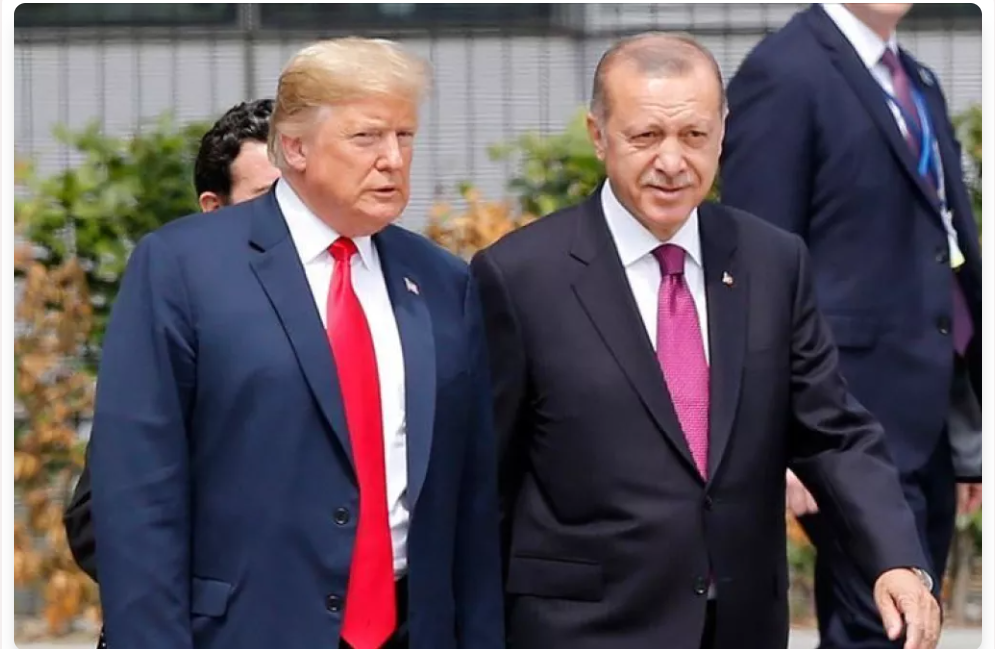 rte-trump
Summary:
According to Doveri Vesterbye, Director at ENC Europe and author of Security Threats along the EU’s Eastern Flanks, President Recep Tayyip Erdoğan and his core team — Foreign Minister Hakan Fidan and Presidential Advisor İbrahim Kalın — are executing a deliberate strategy of “perpetual hedging.” Turkey, he argues, is leveraging its unmatched geography between Europe and Asia to remain neutral for as long as possible until the “best institutionalized and credible offer” emerges from global powers.
Turkey Is Playing Its Best Hand
Vesterbye, who previously wrote for the SWP (2022) and European Leadership Forum (2023), describes Turkey as “a perpetual hedger,” aware that its land position gives it unrivaled leverage.
“Erdoğan and his advisers are loyal, intelligent, and highly strategic,” he writes. “They understand that Turkey’s geography is its strongest card. The longer Ankara stays non-aligned, the higher the eventual payoff.”
This strategic patience is underpinned by a strong, battle-tested military, diversified energy sources, and a globally connected industrial base.
Trump’s ‘Great Deal’ — and Ankara’s Dilemma
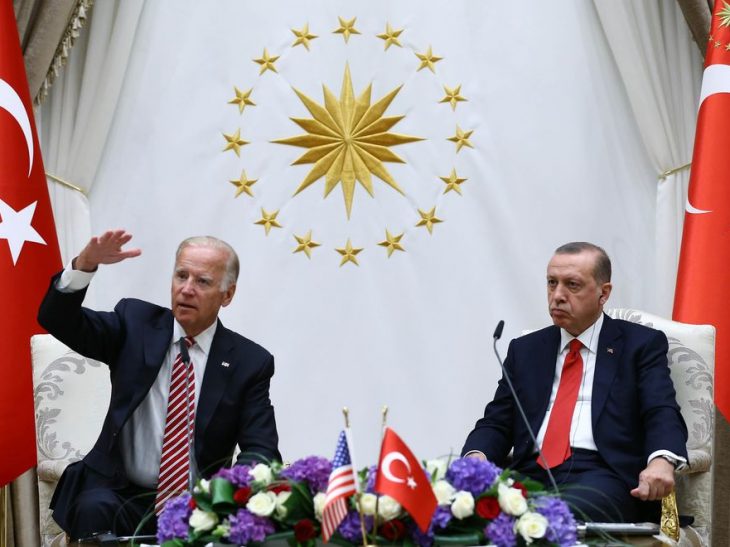
Vesterbye believes former U.S. President Donald Trump may soon propose a “Great Deal” to Ankara. But he doubts Erdoğan will settle easily. U.S. credibility, he argues, “has eroded dramatically over the past decade.”
Trump’s demands are clear:
-
End cooperation with Russia’s Rosatom on nuclear projects (Akkuyu and Sinop).
-
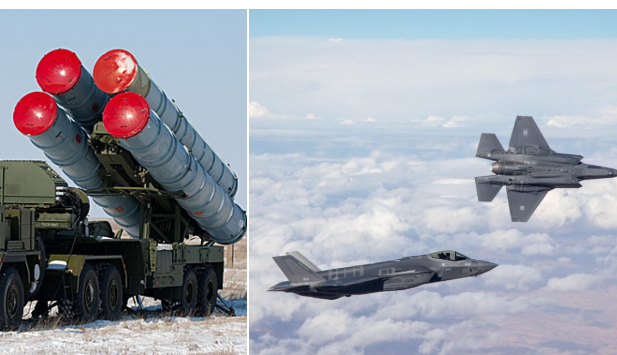
Eliminate S-400 missile systems.
-
Reduce Russian gas imports (Blue Stream and TurkStream).
-
Increase LNG imports from the U.S., even though American gas costs nearly twice as much as Russian gas.
For Turkey, that translates to higher costs for industry and consumers unless the state provides heavy subsidies.
Washington’s Other Demands: China, Israel, and IMEC
The U.S. also wants Turkey to decouple from China, particularly in energy, automotive, and electronics trade. Yet China is Turkey’s third-largest trading partner, with annual trade exceeding $43 billion, making decoupling an expensive proposition.
More sensitive are Washington’s geopolitical requests:
-
Aligning with Israel on Syria and missile-range limitations, effectively giving Prime Minister Benjamin Netanyahu leverage over parts of Syria.
-
Accepting the IMEC Corridor (India–Saudi Arabia–Israel–Cyprus–EU), which would reroute trade and logistics around Turkey.
“Turkey and Israel are currently locked in a classic regional power struggle,” Vesterbye notes. “Trump has two favorites — Erdoğan and Netanyahu — but Washington has historically tilted toward Israel.”
Africa and Energy Influence
Another element of Trump’s foreign policy, according to Vesterbye, involves Turkey’s role in Africa. Washington expects Ankara to coordinate with the U.S. in regions previously dominated by Russia and France.
However, Vesterbye calls Africa a “secondary priority,” compared to the high-stakes energy and regional security files.
What Trump Can Offer Erdoğan
In exchange for cooperation, Trump could lift CAATSA sanctions, which cost Turkey an estimated $9 billion in total, including $1.5 billion in forfeited F-35 payments and $6 billion in lost manufacturing revenues.
But the true prize, says Vesterbye, lies in technology transfer and military parity.
Re-admission to the F-35 program would enhance Turkey’s air superiority and yield long-term technological benefits for its domestic defense sector.
Trump might also offer:
-
Help in resolving the Halkbank case,
-
Support for Turkish operations in Syria and Iraq,
-
And even informal personal security guarantees for Erdoğan and his family — an issue that gained significance after the trauma of the 2016 coup attempt.
Erdoğan’s Red Lines and U.S. Credibility Crisis
Erdoğan’s calculus is personal as well as geopolitical. “He seeks guarantees for his own safety, his family, and his inner circle,” Vesterbye writes.
But he also faces a credibility dilemma: U.S. reliability is in question, while Russia–China cooperation is rising, and Europe is becoming more independent militarily and economically.
As a result, Ankara is expected to continue its “calibrated neutrality”:
“Turkey will keep engaging both Berlin and Paris for economic offers while maintaining open channels with Moscow and Beijing.”
What Ankara Wants in Return
From a potential Erdoğan–Trump meeting, Turkey is expected to seek:
-
Re-entry into the F-35 program and technology transfer,
-
Dropping of the Halkbank case,
-
Lifting of CAATSA sanctions,
-
U.S. backing for the Iraq Development Road and trans-Caspian corridor projects.
Yet without U.S. support for the Iraq Development Corridor, Turkey risks being bypassed in the global East-West logistics race — as major powers redraw infrastructure maps around energy, data, and transport networks.
Conclusion: Turkey Remains on the Negotiation Table
Vesterbye concludes:
“F-35s and the lifting of sanctions may sound like a great deal. But if Turkey is excluded from the world’s emerging transport and energy networks, the ‘Great Deal’ becomes a small one.”
Author: Doveri Vesterbye, Director of ENC Europe, and author of Security Threats along the EU’s Eastern Flanks (2023).
IMPORTANT DISCLOSURE:
PA Turkey intends to inform Turkey watchers with diverse views and opinions. Articles in our website may not necessarily represent the view of our editorial board or count as endorsement.
Follow our English language YouTube videos @ REAL TURKEY:
👉 YouTube: REAL TURKEY
👉 Twitter: @AtillaEng
👉 Facebook: Real Turkey Channel