



No “Right to Hope,” New Law Instead: Erdoğan’s 60-Page Terror-Free Turkey Plan
 Erdoğan
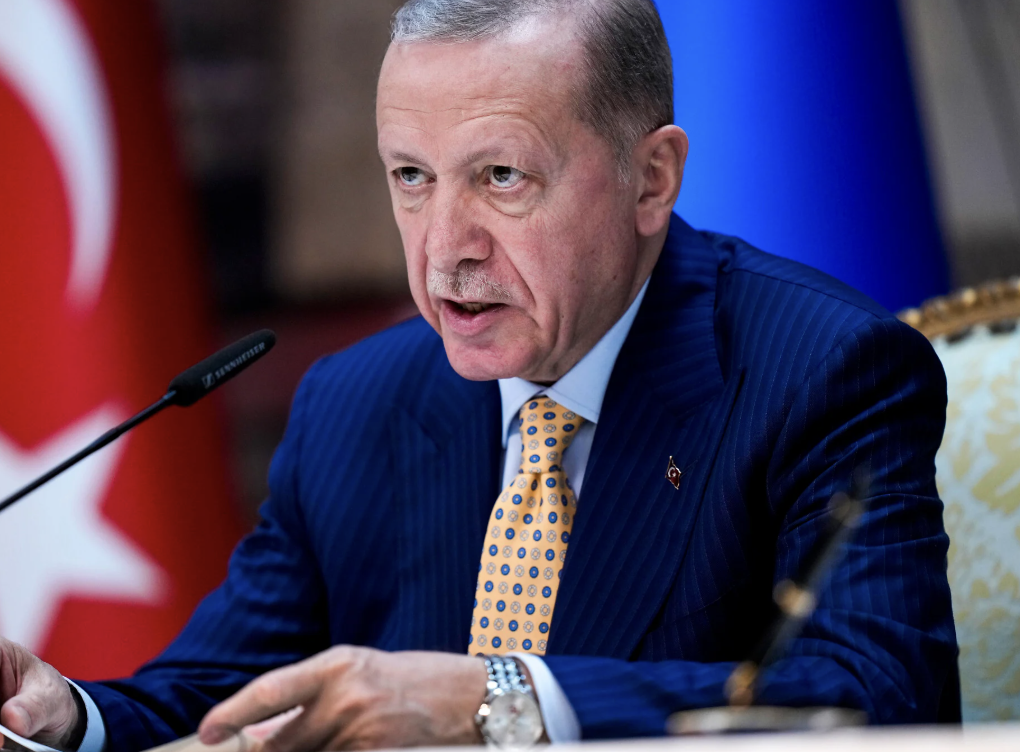
Turkey’s ruling Justice and Development Party (AK Party) has taken a decisive step in what it frames as a renewed “solution process,” formally submitting its long-anticipated “Terror-Free Turkey” report to the Speaker’s Office of the Turkish Grand National Assembly (TBMM). Shaped by President Recep Tayyip Erdoğan’s final revisions, the document has expanded from 53 to 60 pages, laying out a detailed political, legal, and security roadmap for the period ahead.
The report has quickly become the focal point of Ankara’s political agenda, not only for what it proposes, but also for what it deliberately leaves out. At a time when discussions around reconciliation, security, and regional dynamics are once again gaining momentum, the AK Party’s document signals both caution and strategic recalibration.
A New Phase in the “Terror-Free Turkey” Initiative
Prepared under the banner of “Terörsüz Türkiye”, the report consolidates months of internal work into a structured framework presented to parliament. According to sources familiar with the process, President Erdoğan personally reviewed the text, adding political emphasis and strategic clarity before its submission.
Organized under 15 main headings, the report outlines the government’s vision for ending terrorism through a combination of legal mechanisms, political coordination, and regional security conditions. Rather than framing the initiative as a classic peace process, the document emphasizes state authority, legal certainty, and controlled reintegration.
No Mention of the Controversial “Right to Hope”
One of the most striking aspects of the report is the complete absence of the so-called “Right to Hope” (Umut Hakkı). The concept had entered public debate following remarks by Nationalist Movement Party (MHP) leader Devlet Bahçeli, with speculation that it could potentially apply to Abdullah Öcalan.
Despite widespread discussion, the report contains no reference to this notion whatsoever. There is no conceptual, legal, or political mention of the “Right to Hope” across its 60 pages, signaling a clear boundary drawn by the AK Party on this issue. The omission suggests that Ankara intends to keep the process firmly within a framework that avoids highly contentious symbolic concessions.
Proposal for a Special Law for Disbanded Organization Members
Instead of revising existing criminal law provisions, the report advances a more distinct legal formula. It proposes the creation of a “separate and special law” tailored specifically for members of the PKK who have laid down arms and dissolved their organizational ties.
According to the report, addressing such cases within the current penal system may be insufficient or structurally limiting. A standalone legal framework is presented as a more effective mechanism to manage rehabilitation, reintegration, and monitoring processes in a controlled and transparent manner.
In its concluding sections, the document places particular emphasis on rehabilitation policies, highlighting social reintegration, oversight mechanisms, and long-term prevention strategies as essential components of lasting security.
Syria شرط: Integration With Damascus
The foreign policy and security dimension of the report places significant weight on developments in Syria. One of the key conditions outlined is the requirement that the Syrian Democratic Forces (SDF) comply with the “March 10 Agreement”, which предусматривает integration with the Damascus administration.
According to the AK Party’s framework, adherence to this integration process is a non-negotiable condition for regional stability and the broader success of Turkey’s domestic security strategy. This linkage underscores Ankara’s view that internal security cannot be entirely separated from regional geopolitical dynamics.
Political Traffic Accelerates in Ankara
Following the submission of the report to parliament, Ankara is entering a period of intense political diplomacy. The document has triggered a new round of inter-party contacts, with several high-level meetings scheduled in rapid succession.
The first significant engagement will take place on Saturday, December 20, when AK Party and DEM Party delegations are set to meet at 14:00. This meeting is expected to serve as an initial exchange of views following the report’s submission.
Political dialogue will continue into the following week. On Monday at 12:00, CHP and DEM Party representatives will hold talks, signaling broader parliamentary engagement with the process. Later that same day, at 16:00, the coordinator and deputy group chairs of the parliamentary commission will convene to assess the roadmap and procedural next steps.
A Controlled, State-Centered Roadmap
Overall, the “Terror-Free Turkey” report reflects a state-centered and tightly managed approach rather than an open-ended negotiation framework. By excluding controversial concepts, proposing a bespoke legal structure, and tying progress to regional security conditions, the AK Party appears intent on maintaining firm institutional control over the process.
As parliamentary discussions begin and political dialogue intensifies, the report is set to shape debates not only on security and counterterrorism but also on law, rehabilitation, and regional strategy. Whether this roadmap will translate into lasting outcomes remains to be seen, but for now, Ankara has clearly signaled the contours of its next move.