Erdoğan vs. CHP: Is Turkey Headed for a Political Breaking Point?
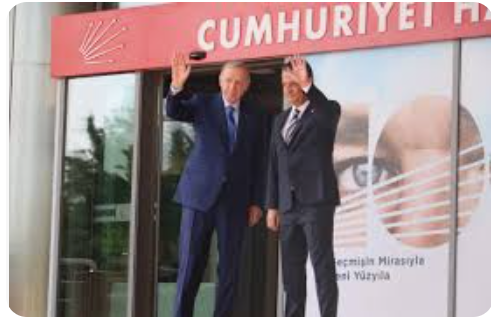 rte-chp
Summary:
The arrest of Istanbul Mayor Ekrem İmamoğlu may mark a turning point in Turkey’s political landscape, but it doesn’t solve President Erdoğan’s growing “CHP problem.” As the main opposition party regains national prominence and voter confidence, Erdoğan faces a resurgent, multi-headed threat that may define the country’s political future.
The CHP Comeback
Turkey’s main opposition party, the Republican People’s Party (CHP), has emerged as a formidable political force, rebounding from decades of decline. Once the proud party of modern Turkey’s founder Mustafa Kemal Atatürk, the CHP had long struggled with internal fragmentation and voter apathy. However, over the past few years, it has staged a remarkable comeback.
This revival is due to a strategic reconfiguration of its leadership and voter outreach. Istanbul Mayor Ekrem İmamoğlu has reconnected the party with lower- and middle-income voters, restoring its social democratic credentials. In Ankara, Mayor Mansur Yavaş has bolstered the party’s appeal among Turkish nationalists, while CHP Chair Özgür Özel has helped bridge the ideological divides between secularists, nationalists, and social democrats.
Together, these leaders have made the CHP the party of competent governance, winning trust through expanded public services, improved infrastructure, and transparent administration in key metropolitan cities. Since the party’s decisive victory in the 2024 local elections, polls have consistently shown the CHP outperforming Erdoğan’s ruling Justice and Development Party (AKP) nationwide.
Erdoğan’s Counteroffensive: Legal Pressure and Institutional Leverage
President Erdoğan now sees the CHP not just as an opposition, but as an existential threat. Leveraging his grip over Turkey’s courts, media, and bureaucracy, Erdoğan has escalated a campaign to delegitimize and destabilize the party.
Following İmamoğlu’s arrest in March—ostensibly over long-standing legal charges—analysts believe further prosecutions and detentions of CHP mayors and officials are likely. The goal: to sow division, keep opposition leaders entangled in legal proceedings, and cast doubt on their ability to govern.
CHP insiders warn that this strategy involves keeping court cases “open-ended” to prolong uncertainty. Erdoğan appears to be banking on political fatigue—betting that over time, public protests will lose momentum and the CHP’s poll numbers will erode, which has already begun to happen.
Possible Endgames: Chaos, Crackdown, or Resilience?
Turkey stands at a political crossroads, and several scenarios could unfold in the coming months:
1. CHP Internal Crisis
If Erdoğan succeeds in fueling infighting, the CHP could spiral into factional chaos. Court-appointed trustees and politically engineered dismissals might trigger leadership struggles, making the party appear unstable and reviving Erdoğan’s narrative that the CHP is “unfit to govern.”
2. CHP Resilience and Realignment
Alternatively, the CHP could weather the storm. If party factions reunify after a period of confusion, especially in reaction to Erdoğan’s judicial overreach, the party may reemerge even stronger—united by shared opposition to authoritarianism and energized by grassroots mobilization.
3. Turkey Edges Toward a Police State
A third path, possibly concurrent with the other two, involves deeper authoritarianism. Erdoğan could intensify the crackdown, suppress free speech and assembly, and even consider postponing elections if the economy remains weak. A full transition to a police state, however, would carry massive economic and diplomatic costs.
Structural Limits to Erdoğan’s Strategy
While Erdoğan’s tactics have been effective in the past, his current challenge is different. Several constraints make a full autocratic consolidation risky:
-
Turkey’s sizable and politically active middle class, much of which backs the CHP.
-
Robust civil society organizations that support democratic norms.
-
A century-old opposition party with deep institutional roots.
-
Close cultural and economic ties to Europe.
-
An economy fully embedded in global markets, where investor reaction can be swift and punishing.
Indeed, the recent delay by an Ankara court in issuing a verdict on the CHP leadership appears motivated not only by legal caution but also by fears of mass protests and market instability. Erdoğan may still dominate the political arena, but pushing too far could trigger a backlash he cannot contain—either domestically or economically.
A Political Battle With No Clear End
The ongoing tug-of-war between Erdoğan and the CHP is shaping up as a battle of attrition. The president holds considerable institutional power, but the opposition’s growing legitimacy—and the unpredictable weight of public opinion—create a volatile dynamic.
With a high-stakes summit with U.S. President Donald Trump looming, Erdoğan must balance political survival with economic stability and international credibility. Whether Turkey takes a more democratic or authoritarian path may depend not just on the next moves in Ankara, but also on the resolve of the Turkish electorate—and the global markets watching closely.
Adopted from Soner Cagaptay’s Article for The Washington Institute for Near East Policy
IMPORTANT DISCLOSURE: PA Turkey intends to inform Turkey watchers with diverse views and opinions. Articles on our website may not necessarily represent the view of our editorial board or count as endorsement.
Follow our English-language YouTube videos @ REAL TURKEY: https://www.youtube.com/channel/UCKpFJB4GFiNkhmpVZQ_d9Rg
And content at Twitter: @AtillaEng
Facebook: Real Turkey Channel: https://www.facebook.com/realturkeychannel/
Related articles
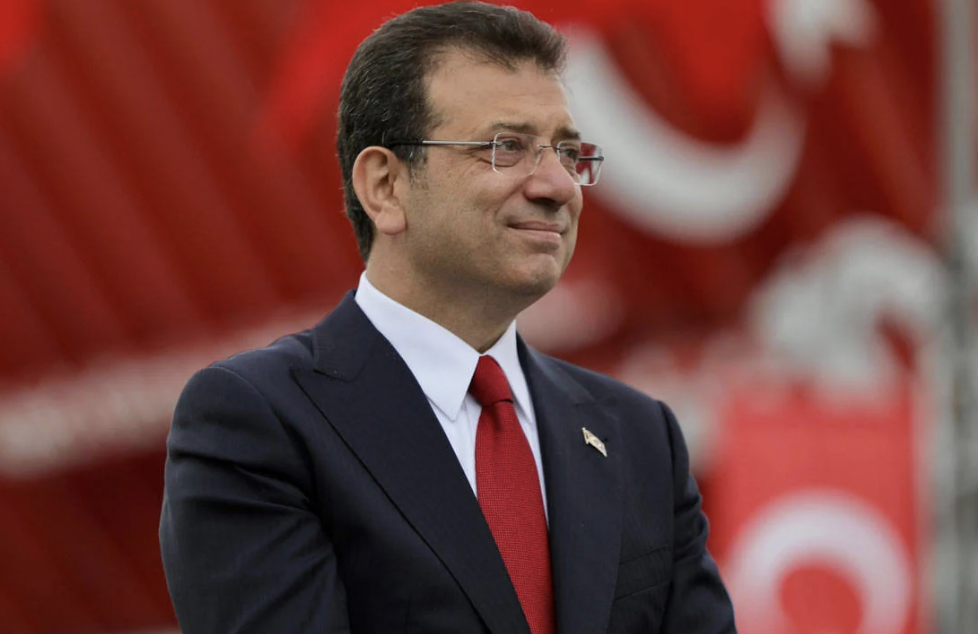
Istanbul Mayor Ekrem İmamoğlu Arrested in Corruption Probe

Kanal Istanbul Construction Resumes Amid Imamoğlu Arrest, Marketing to Arab Investors Intensifies
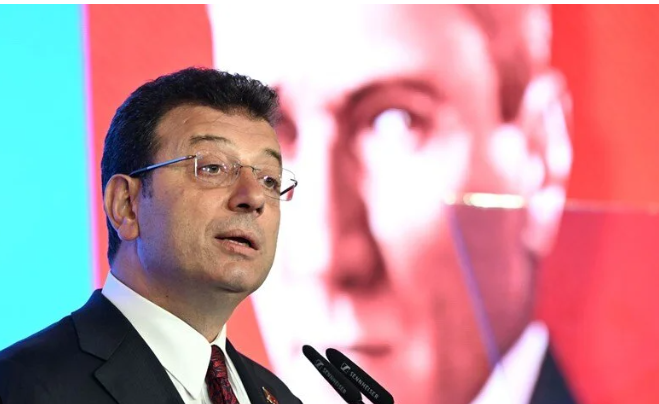
Protests Intensify Across Turkey Over İstanbul Mayor’s Arrest