Erdoğan says Türkiye has second-largest rare-earth deposit; denies claims it will be handed to US
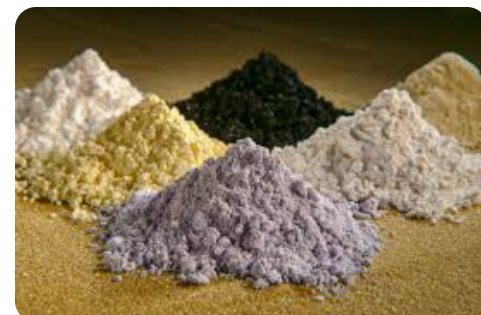 nadir mineraller
Summary:
President Recep Tayyip Erdoğan told reporters after a cabinet meeting that extensive exploration in Eskişehir’s Beylikova district has identified large rare-earth and associated mineral resources, and that a state pilot plant has been commissioned. The opposition has accused the government of planning to hand control of the deposits to foreign partners; Erdoğan rejected those claims.
Key points
-
Erdoğan said drilling at 310 locations in Beylikova has reached about 125,000 metres and that the working area contains an estimated 694 million tonnes of mineral resources, including barite and fluorite. He added the field contains 10 of the 17 rare-earth elements and about 12.5 million tonnes of rare-earth oxides.
-
The president said state miner Eti Maden has commissioned a pilot production facility that will process about 1,200 tonnes of ore annually as a first phase, and that work is ongoing to scale the pilot into an industrial plant.
-
Erdoğan rejected opposition claims that the deposits would be transferred to foreign control, saying the Beylikova field “will never be given to any country.”
-
CHP leader Özgür Özel has accused the government of preparing to hand strategic rare-earth reserves to foreign parties — specifically invoking U.S. President Donald Trump in his criticism — and called for national action to prevent any transfer. Özel’s comments have intensified political debate.
The Truth About Turkey’s ‘Mineral Mountain’: Is the World’s Second-Largest Rare Earth Deposit Real?
What Erdoğan said and why it matters
Speaking after a cabinet meeting at the Presidential Complex, Erdoğan framed the Beylikova discovery as strategically important for technologies from defence to renewable energy, electric vehicles, communications and space systems. He described the government’s approach as focused on extracting value from mineral assets through processing and international marketing rather than raw export.
Erdoğan’s figures — especially the 694 million-tonne resource estimate and 12.5 million tonnes of rare-earth oxides — if confirmed by international evaluation, would position the site among the world’s largest known deposits. The government has said it aims to become one of the world’s top five producers. Analysts and independent commentators have urged caution pending detailed public data and third-party verification.
Pilot production and industrial plans
The state mining company Eti Maden inaugurated a pilot production unit that, according to Erdoğan, will initially process about 1,200 tonnes of ore per year. Ankara says it is also pursuing purification and processing technology to convert the pilot facility into a larger industrial operation and to attract certified investors. Market analysts note that moving from pilot to commercial scale typically requires time, significant capital expenditure and environmental and technical approvals.
Political fallout and opposition accusations
The announcement has become a focal point in domestic politics. Main opposition CHP leader Özgür Özel accused the government of stalling or structuring the project to give foreign actors — he specifically referenced the United States and President Trump in his criticism — privileged access to the deposits in exchange for political gains for Erdoğan. Özel urged public resistance to any transfer of control and framed the issue as one of national sovereignty. Erdoğan called those accusations politically motivated and categorically denied plans to cede control of the deposits.
International observers note that Ankara has been in talks with multiple partners, including U.S. and other foreign firms, to develop the supply chain — a move seen as part of Türkiye’s effort to diversify partnerships and reduce global dependence on a single supplier for critical minerals. Such negotiations, and any resulting commercial terms, would be politically sensitive given rare earths’ strategic uses.
Technical and market considerations
Rare-earth element development is technically complex and costly. Processing often involves environmentally sensitive steps and requires specialised purification technology. While resource estimates and pilot plants are important milestones, marketable production depends on ore grades, metallurgical recoveries, environmental permitting, capital investment and commercial partnerships. Independent verification of resource estimates and transparent tendering and investment processes would be key to determining commercial viability.
International implications
The discovery — and the question of which partners Ankara chooses to develop it with — has geostrategic implications. Western governments, including the United States, have been seeking alternatives to China’s dominance of rare-earth processing and supply. Turkey’s potential emergence as a significant producer would be closely watched by allies and competitors alike, and could alter supply-chain calculations for defence and high-tech industries. Ankara’s diplomatic balancing among potential partners is also likely to be scrutinised domestically and abroad.