Dorian Jones: Trump Tests Turkey’s Energy Dependence on Russia with the Lure of U.S. Power
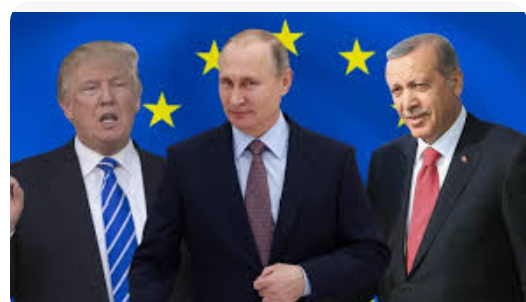 rte-putin-erdogan
Ankara faces growing pressure from Washington to curb its heavy reliance on Russian energy, as President Donald Trump offers Erdogan a “grand bargain” to rebuild ties with the West.
Ankara Under Pressure
President Recep Tayyip Erdogan is facing renewed U.S. pressure to reduce Turkey’s deep dependence on Russian oil and gas, amid signs that Ankara may finally be tilting back toward the West.
During Erdogan’s visit to the White House on September 25, 2025, U.S. President Donald Trump pressed Ankara to end its energy reliance on Moscow and scale back cooperation with Russia. The appeal came as Turkish firms signed a 20-year, multibillion-dollar deal with American companies to import liquefied natural gas (LNG).
Erdogan later announced that Turkey would work with the United States on civil nuclear energy, in what analysts view as a clear signal of Ankara’s intent to diversify energy sources and strengthen ties with Washington.
“Trump is offering a grand bargain,” said Asli Aydintasbas of the Brookings Institution. “Stop the hedging with Russia, stop the geopolitical balancing — and we can rebuild the partnership and become key regional partners again.”
Economic Leverage and Sanction Threats
Trump’s personal rapport with Erdogan — he often calls him a “friend” — has not stopped the U.S. president from using economic pressure as a tool. During his first term, he triggered a collapse in the Turkish lira after Ankara imprisoned an American pastor.
Now, Trump could deploy secondary sanctions if Turkey continues to import large volumes of Russian energy.
Russia still supplies nearly half of Turkey’s total energy, making a clean break highly disruptive. Zaur Gasimov, a Russian-Turkish affairs expert with Germany’s Academic Exchange Service, warned that a sudden rupture could mirror Europe’s 2022 energy crisis:
“It caused an augmentation of prices in Western Europe,” he said. “With inflation already high, the Turkish economy — and the average citizen — would be hit hard. No government would easily take that risk.”
While Ankara has ruled out terminating Russian energy contracts, oil imports from Russia have fallen to their lowest level in a year. Some long-term gas agreements are due for renewal, offering a potential window for Ankara to gradually reduce Moscow’s dominance — a move that would deal a serious blow to Russia’s shrinking export market.
The Erdogan–Putin Equation
Energy trade has long been the backbone of Erdogan’s pragmatic relationship with Russian President Vladimir Putin. Despite backing opposite sides in Ukraine, Libya, and Syria, both leaders have preserved a working relationship that balances competition with strategic necessity.
“Turkey and Russia have been fighting proxy wars across multiple regions,” said Ozgur Unluhisarcikli, head of the German Marshall Fund’s Ankara office. “Turkey tends to gain the upper hand, but it still manages its relationship with Russia carefully.”
Ankara, he added, would likely seek firm Western security guarantees before significantly distancing itself from Moscow.
“It would have to be certain it’s welcomed back to Europe,” Unluhisarcikli said. “Otherwise, the move could carry security implications for Turkey.”
Though Erdogan spoke with Putin by phone this week, such contact has reportedly become less frequent as their once-close rapport cools. Turkish officials remain mindful of past tensions — including the 2015 incident when Turkish forces shot down a Russian bomber, prompting Moscow to impose sanctions that crippled Turkish exports and tourism.
Russia’s Waning Leverage
Analysts note that Moscow’s influence over Ankara is fading amid Western sanctions and growing isolation following the Ukraine war.
“For Russia, Turkey remains a vital window to the outside world,” said Gasimov. “But its leverage over Ankara is diminishing. Flights to Turkey are increasing, and economic dependency is shifting the other way.”
The shift underscores Turkey’s careful recalibration — positioning itself as a regional energy hub while balancing security, economics, and diplomacy between rival powers.
IMPORTANT DISCLOSURE: PA Turkey intends to inform Turkey watchers with diverse views and opinions. Articles in our website may not necessarily represent the view of our editorial board or count as endorsement.
Follow our English-language YouTube videos @REAL TURKEY: https://www.youtube.com/channel/UCKpFJB4GFiNkhmpVZQ_d9Rg
Twitter: @AtillaEng
Facebook: Real Turkey Channel https://www.facebook.com/realturkeychannel/