Deutsche Bank Sees Turkey Entering a Careful Rate-Cut Cycle
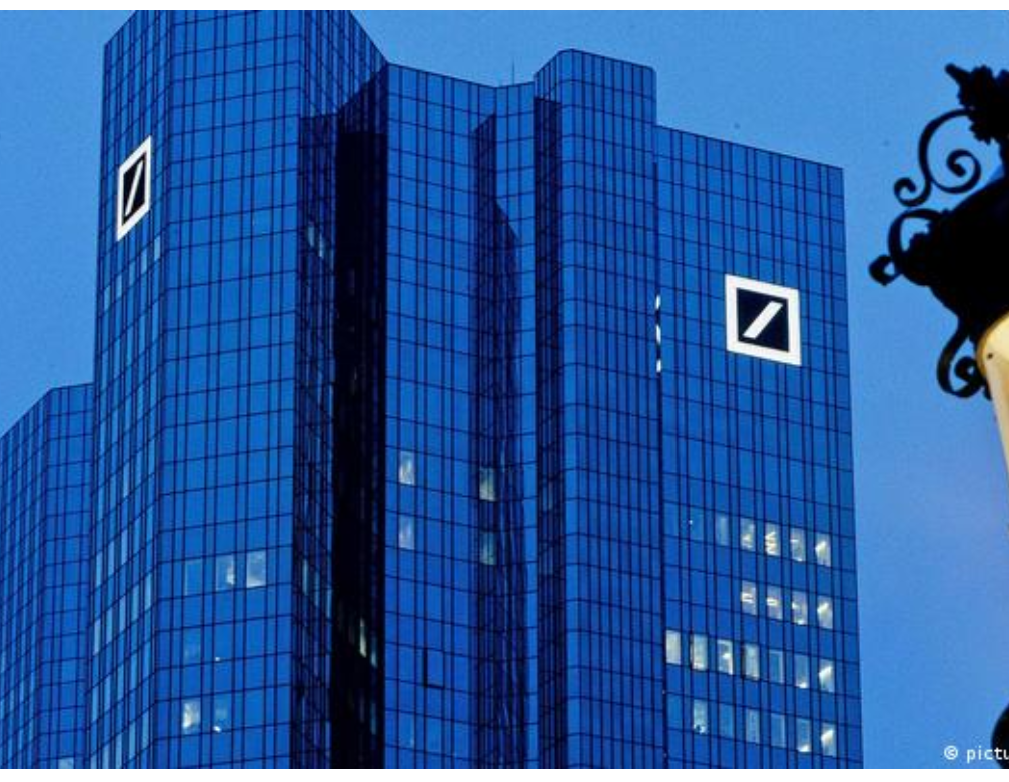 deutsche-bank
Deutsche Bank’s research team has described the Central Bank of the Republic of Türkiye’s (TCMB) December interest rate decision as broadly in line with expectations, reinforcing the view that Ankara is entering a cautious and measured monetary easing phase. The 150 basis point cut that brought the policy rate down to 38% was interpreted not as an abrupt shift, but as a controlled step within a longer-term disinflation strategy.
According to Deutsche Bank, the key takeaway from the December meeting was not only the size of the rate cut, which slightly exceeded market consensus, but also the tone of the accompanying policy statement. As reported by Ekonomim, Deutsche Bank economist Yiğit Onay emphasized that while the magnitude of the cut surprised on the upside, the overall messaging remained restrained and deliberate. He noted that “the decision text carries a balanced and even cautious tone,” highlighting the TCMB’s continued focus on anchoring expectations.
This balance between action and communication is central to how global investors are reading Türkiye’s monetary policy trajectory. Rather than signaling a rapid easing cycle, Deutsche Bank argues that the TCMB is carefully preserving policy credibility while creating limited room for gradual rate reductions.
A Gradual Easing Path Through 2026
Looking ahead, Deutsche Bank’s base-case scenario assumes a steady and predictable policy path throughout 2026. The bank expects the TCMB to deliver 100 basis point cuts at each Monetary Policy Committee (MPC) meeting over the course of the year. If this trajectory materializes, the policy rate would decline to approximately 30% by the end of 2026.
This projected easing path is closely tied to Deutsche Bank’s inflation outlook. The bank forecasts that consumer price inflation in Türkiye will fall to around 24% during the same period, creating space for real interest rates to remain positive even as nominal rates are reduced. From an investor perspective, this balance is critical: easing that outpaces disinflation could quickly undermine confidence, while excessive restraint could weigh on growth.
Deutsche Bank’s analysis suggests that the TCMB is acutely aware of this trade-off. The bank’s economists stress that future decisions will be data-dependent rather than pre-committed, with policymakers likely to adjust the pace of easing in response to evolving macroeconomic conditions.
What Will Shape the Speed of Rate Cuts?
In its assessment, Deutsche Bank identifies several variables that will ultimately determine how quickly or slowly the easing cycle progresses. Inflation dynamics sit at the center of this framework, particularly the behavior of core inflation and inflation expectations. Income policies, wage adjustments, and administered price changes are also expected to play a decisive role in shaping the disinflation process.
Beyond domestic factors, the global environment is viewed as equally influential. Deutsche Bank highlights geopolitics and energy prices as two external variables that could significantly alter the outlook. A stable geopolitical backdrop combined with persistently low energy costs could accelerate disinflation, opening the door to faster rate cuts than currently assumed.
On the other hand, the bank cautions that downside risks remain substantial. Any deterioration in domestic investment confidence, whether driven by political or economic developments, could complicate the TCMB’s task. Similarly, if inflation proves more persistent than expected, policymakers may be forced to slow the pace of easing or even pause temporarily to reassess conditions.
This asymmetric risk profile underscores why Deutsche Bank views the current phase not as a full-fledged pivot, but as a carefully managed transition.
Long-Term Outlook: Rates Stabilizing After 2027
Extending its horizon beyond the near term, Deutsche Bank also provided guidance on where policy rates could eventually settle. Despite ongoing uncertainty related to Türkiye’s inflation history, the bank expects the policy rate to stabilize at around 25% by the end of 2027. This level is seen as consistent with a structurally lower, but still elevated, inflation environment compared to advanced economies.
The implication is that while Türkiye may be entering an easing cycle, the era of ultra-low interest rates remains distant. Instead, Deutsche Bank envisions a normalization process in which policy gradually converges toward levels that balance growth, financial stability, and inflation control.
A Message of Caution to Markets
Overall, Deutsche Bank’s evaluation sends a clear signal to global markets: Türkiye’s monetary authorities are prioritizing caution over speed. The December rate cut, though larger than expected, did not represent a break from orthodoxy. Instead, it reinforced the perception that the TCMB is attempting to rebuild predictability and trust through consistent communication and incremental adjustments.
For investors, this approach reduces the risk of policy surprises while keeping Türkiye on the radar as a market where real yields could remain attractive. For the broader economy, it suggests a delicate balancing act—supporting growth without reigniting inflationary pressures.
As 2026 approaches, Deutsche Bank’s framework implies that every policy decision will be scrutinized not just for its numerical impact, but for what it signals about the TCMB’s commitment to disciplined monetary management.
Related articles

Credit Limits Likely to Stay in 2026 as Banks Prioritize Inflation Fight

CBRT Survey: Turkish Households Lock in 48pct Inflation Forecast
TCMB Raises 2026 Inflation Forecast to 15–21 Percent