Deutsche Bank: Fed’s Next Move, Emerging Market Outlook, and Turkey’s Path Ahead
 deutsche-bank
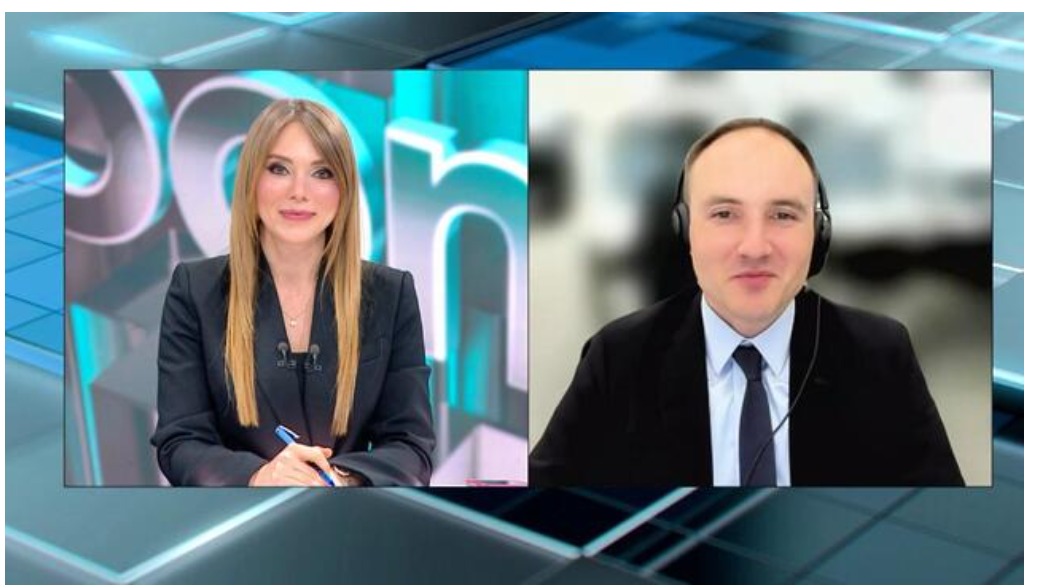
Following the Federal Reserve’s latest rate decision, Christian Wietoska, Head of CEEMEA & LATAM Research at Deutsche Bank, emphasized the Fed’s notably cautious tone, suggesting that policymakers remain wary despite progress on inflation. “We maintain our expectation that the Fed will deliver another rate cut in December. Although analysts are not as confident as before, this remains the main scenario,” Wietoska said during a live interview with CNBC-e.
According to Wietoska, the outlook for emerging markets (EMs) remains cautiously optimistic among international investors. “There’s a positive sentiment toward emerging markets beyond the short-term, tactical inflows driven by the weaker dollar,” he explained. However, he noted that several uncertainties persist, particularly regarding sustainable growth and the timing of monetary policy adjustments across EM economies.
Wietoska argued that for emerging markets to truly outperform, “we need to see stronger growth momentum.” He cautioned that central banks in these regions must avoid cutting interest rates too soon and should preserve the buffers accumulated over recent years. “The real test for emerging market performance will come next year,” he added, implying that 2026 could reveal which economies have the resilience to sustain recovery amid global monetary tightening.
Turning to Turkey, Wietoska praised the Central Bank of the Republic of Turkey (TCMB) for focusing on maintaining currency stability amid persistent inflationary pressures. “Since inflation remains sticky, the TCMB’s emphasis on preserving exchange rate stability is crucial,” he said. He further acknowledged that Turkey’s macroeconomic vulnerabilities have significantly diminished over the past year, reflecting the impact of tighter monetary and fiscal policies.
However, Wietoska forecasted rising yields in the 2- to 5-year segment of the Turkish yield curve, advising clients accordingly. “We expect an increase in yields between two and five years. If I could say with certainty that rates will fall below 20%, I would recommend longer maturities,” he noted, signaling a cautious yet constructive stance on Turkish bonds.
On the currency front, Deutsche Bank projects the USD/TRY exchange rate to reach 43 by the end of 2025, reflecting gradual depreciation in line with Turkey’s disinflation efforts. Wietoska warned, however, that by early 2026 or the second quarter of that year, Turkey’s capacity to rely on real appreciation as a disinflation tool will reach its limits. At that stage, he said, maintaining progress on inflation will require stronger fiscal discipline and the implementation of structural reforms to support price stability.
Wietoska’s comments underscore the delicate balance emerging markets must strike as global monetary conditions evolve. The anticipated December Fed rate cut, if realized, could offer near-term relief for EM assets, particularly those with robust fundamentals and disciplined policy frameworks. Still, Wietoska highlighted that sustained investor confidence depends on credible macroeconomic management and steady inflation control.
For Turkey, the narrative appears cautiously positive. The reduction in external vulnerabilities, tighter policy stance, and renewed investor interest suggest that the country’s macro stabilization strategy is bearing fruit. Yet, the challenge lies in transitioning from policy normalization to durable, broad-based growth.
As Wietoska put it, “Emerging markets will need to prove themselves next year.” For Turkey, this means balancing exchange rate stability, disciplined fiscal management, and structural reform momentum to maintain investor confidence and drive sustainable disinflation into 2026.