Daron Acemoglu Warns: The Real AI Threat Isn’t Job Loss — It’s “So-So Automation”
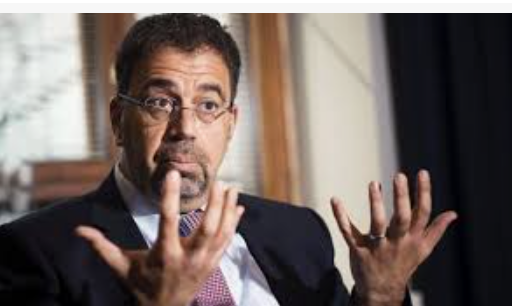 daron acemoglu
Nobel Prize-winning economist Daron Acemoglu says the true danger of artificial intelligence isn’t a future where machines take all our jobs — it’s a world filled with “so-so automation,” where mediocre AI replaces human workers without delivering real productivity gains.
“We’re Automating the Wrong Things”
At the Massachusetts Institute of Technology (MIT), Professor Daron Acemoglu has been warning for years about a looming technological trap. He calls it so-so automation — tools and systems that allow companies to cut labor costs without making work more efficient or meaningful.
Think of self-checkout kiosks or automated customer service menus — technologies that save money for corporations but often frustrate consumers and fail to raise productivity.
“When hype takes over, companies start automating everything — including tasks that shouldn’t be automated,” Acemoglu said. “You end up with no productivity gains, damaged businesses, and people losing jobs without new opportunities being created.”
AI Hype Meets Economic Reality
The launch of ChatGPT-5 in August reignited debate over whether artificial intelligence has hit a plateau. According to McKinsey’s 2025 survey, only 1% of global executives say AI is fully integrated into their operations and producing measurable results. Yet nearly all plan to increase their AI spending.
Acemoglu fears this combination — overhyped technology and underwhelming results — could lock economies into a dangerous “halfway” zone: not human-centered innovation, but costly and unproductive automation.
The Klarna Lesson: When AI Backfires
Swedish fintech firm Klarna became a cautionary tale after it tried to replace customer service staff with AI chatbots.
Within 18 months, the company reversed course amid widespread customer complaints. CEO Sebastian Siemiatkowski later admitted the cost-cutting effort “went too far,” damaging service quality and trust.
Other industries have experienced similar missteps.
Self-checkout kiosks, once hailed as retail’s future, now dominate supermarkets — appearing in 99% of U.S. grocery stores by 2024. But while they reduced labor costs, they also led to massive job losses: nearly 300,000 U.S. cashiers disappeared between 2019 and 2023.
Meanwhile, theft and maintenance costs have forced retailers like Target and Walmart to scale back the technology. Customer frustration remains high — and according to the Food Industry Association, self-checkout usage actually fell from 44% to 36% of U.S. grocery transactions last year.
“So-So AI” in the Corporate World
Acemoglu points to growing evidence that AI is often producing disappointing returns.
An MIT-linked study found that 95% of AI pilot projects launched by corporations yielded no measurable productivity improvement.
In many cases, companies invested heavily in automation systems that were not ready for complex, real-world workflows — eroding efficiency rather than improving it.
Beyond the Hype: The Limits of Current AI
Despite progress in reducing so-called “hallucinations,” AI systems still make factual and logical errors that limit their reliability. Many researchers argue that the current architecture of AI models lacks true reasoning and continuous learning capabilities.
Simply feeding models more data will not solve this — a point Acemoglu and other experts stress repeatedly. Real breakthroughs, they say, will require a new generation of AI systems built to complement, not replace, human expertise.
Meanwhile, tech vendors continue to market thousands of “AI agents” promising revolutionary results. Yet consultancy Gartner estimates that of these, only about 130 products are genuinely capable of autonomous work.
“The Problem Isn’t AI — It’s How We Use It”
According to Kristina McElheran, an economics professor at the University of Toronto, the real issue lies in implementation, not in the technology itself.
“AI’s limitations are less about code and more about context — tax systems, labor laws, management decisions,” McElheran said. “If those frameworks are flawed, automation will always be ‘so-so.’”
McElheran, along with Stanford economist Erik Brynjolfsson, found that companies adopting AI often suffer a short-term productivity dip, before rebounding once they refine workflows and retrain staff — a pattern they describe as the J-curve effect.
Acemoglu’s Advice: “Augment, Don’t Replace Humans”
Acemoglu urges executives to slow down and rethink what kind of automation they actually need.
“No worthwhile technology can just be sprinkled over a business like pepper,” he said. “Think about what’s special about your company and your workforce — and use technology to amplify that, not to replace it.”
He warns that the obsession with cutting costs through AI risks not only stagnating productivity but also eroding the dignity of work itself.
Source: Bloomberg
IMPORTANT DISCLOSURE: PA Turkey intends to inform Turkey watchers with diverse views and opinions. Articles on our website may not necessarily represent the view of our editorial board or count as endorsement.
Follow our English-language YouTube videos @ REAL TURKEY:
👉 YouTube Channel
Twitter: @AtillaEng
Facebook: Real Turkey Channel
Related articles
Economy czar Simsek: Turkey on her way to single digit inflation

IMF on TURKEY: Slower growth, disinflation on the horizon, but many downside risks to economic stability
A rare piece of good news: Turkey’s current account deficit shrinks to 1% of GDP