Cyprus President Urges EU to Reset Ties with Turkey
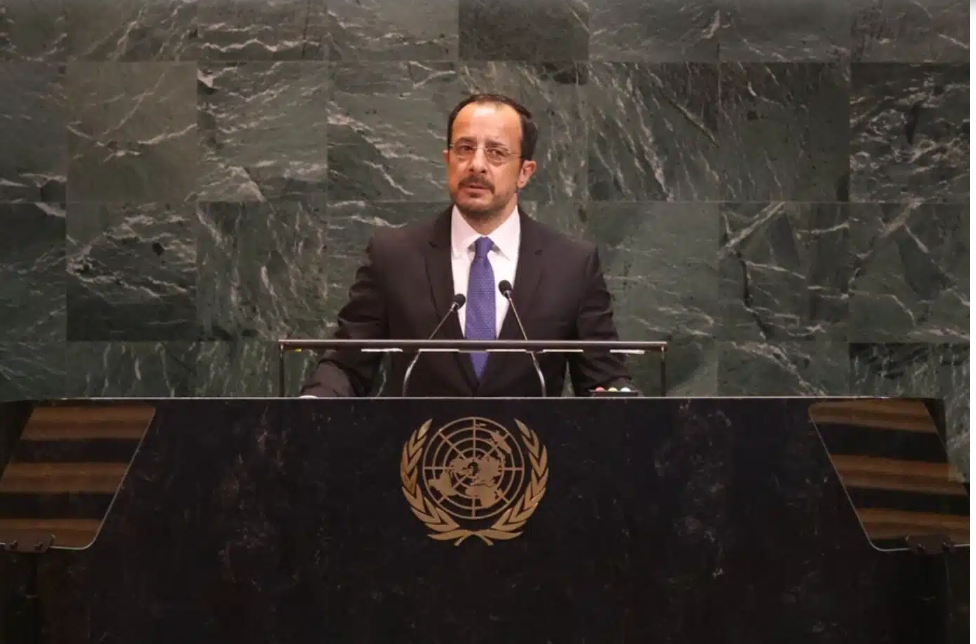 christodoules-gca
Christodoulides says embracing Ankara is key to peace on the island and stability in the Eastern Mediterranean
Summary: As Cyprus prepares to assume the EU’s rotating presidency in January, President Nikos Christodoulides is calling for a “new realism” in Europe’s relationship with Turkey. Speaking to the Financial Times, he urged Brussels to re-engage Ankara directly—inviting President Recep Tayyip Erdoğan or Foreign Minister Hakan Fidan to EU meetings—and to restart stalled peace talks on Cyprus, last held in 2017. The initiative is drawing cautious interest from Berlin, where Chancellor Friedrich Merz voiced support for closer EU-Turkey cooperation given the region’s shifting geopolitics.
“We Cannot Change Geography”
Christodoulides told the FT that Cyprus’s upcoming EU presidency will mark an opportunity to redefine Europe’s approach to Turkey, arguing that isolation has failed.
“We changed our approach regarding the EU–Turkey relationship. We cannot change our geography. Turkey will always be a neighbor of Cyprus—so I prefer a neighbor that is close to the European Union,” he said.
The president proposed inviting Erdoğan or Fidan to informal EU summits during Cyprus’s presidency, calling it a “symbolic but necessary” gesture to signal a fresh start between Brussels and Ankara.
Reviving the Cyprus Peace Talks
Christodoulides also wants to restart reunification talks following the election of Turkish Cypriot leader Tufan Erhürman, describing the moment as a rare opening for progress.
He said negotiations should resume “from where we left off” at the Crans-Montana talks in 2017, when the two sides came close to a federal framework for the island.
“We came so close. If we start from where we left off, it is possible,” Christodoulides said, stressing that the EU must have a direct seat at the negotiating table this time.
Brussels, he argued, can offer Ankara meaningful incentives such as visa liberalization for Turkish entrepreneurs and customs modernization, which could help unlock a deal.
He suggested small confidence-building measures—like Turkey opening one of its ports to Cypriot-flagged vessels for the first time since 1987—as a “goodwill signal” toward normalization.
Internal Resistance and the Role of Berlin
Despite the momentum, Christodoulides acknowledged that his outreach faces resistance within the EU.
“The Commission may be ready. I am not sure if the member states are ready—or if they are hiding behind Cyprus,” he said.
German Chancellor Friedrich Merz, who met with Christodoulides in Berlin this week, appeared to share the Cypriot leader’s pragmatic tone.
Merz said the two discussed Turkey-EU relations, Ukraine, and Cyprus’s 2026 EU presidency, emphasizing the need to “build closer cooperation with Ankara” given current geopolitical realities.
“I underlined the necessity of cooperation with Turkey. We are ready to take part in this process,” Merz told reporters, adding that Germany hopes to help “overcome the island’s division step by step” through diplomatic engagement.
He confirmed that Germany is willing to participate actively in Cyprus’s EU presidency initiatives and said the first “small, practical steps” could begin within weeks.
Bridging with Washington and the Middle East
Christodoulides also highlighted Cyprus’s role as a bridge between Europe and the Middle East, positioning Nicosia to mediate between the EU and a second Trump administration in Washington if needed.
“It doesn’t matter if you agree or disagree. He is the president of the United States. We must find a way to cooperate,” he said.
“In our region, he is the leader, and we are already seeing positive developments thanks to his leadership.”
The Cypriot president said Cyprus could facilitate coordination among the EU, U.S., and regional actors on security and energy, particularly amid ongoing turbulence in Gaza and Lebanon.
A New Pragmatism in the Eastern Mediterranean
Analysts see Christodoulides’s initiative as a shift toward strategic pragmatism.
By seeking engagement rather than confrontation, Cyprus hopes to recast itself as a bridge-builder, not just a divided island.
Whether the EU—and Ankara—will seize the moment remains uncertain.
But as Berlin’s involvement deepens and geopolitical tensions mount, the coming months may determine whether Cyprus’s “new realism” can revive one of Europe’s longest-running frozen conflicts.
PA Turkey intends to inform Turkey watchers with diverse views and opinions. Articles in our website may not necessarily represent the view of our editorial board or count as endorsement.
Follow our English language YouTube videos @ REAL TURKEY: https://www.youtube.com/channel/UCKpFJB4GFiNkhmpVZQ_d9Rg
And content at Twitter: @AtillaEng
Facebook: Real Turkey Channel: https://www.facebook.com/realturkeychannel/***