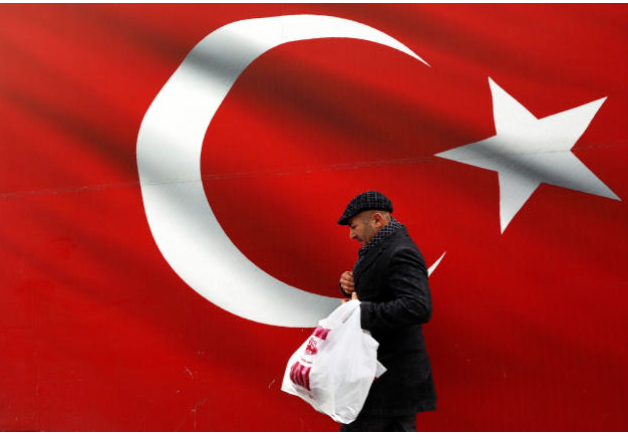
Contradictions Emerge as Turkey Talks Peace but Prepares for Escalation in Syria
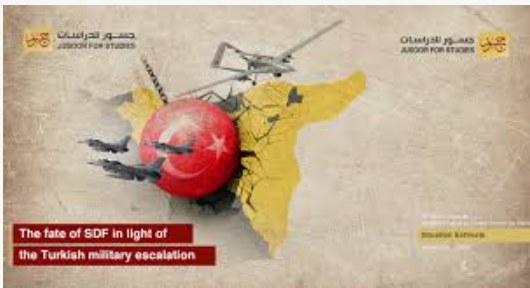 sdg
sdg
Summary:
Amid rising hopes for a renewed peace process in Turkey and northern Syria following Abdullah Öcalan’s historic February appeal, signs of military buildup and mixed messaging from Ankara are casting doubt on the sincerity of official peace rhetoric. While Turkish officials publicly emphasize stability and dialogue, recent National Security Council (NSC) decisions, cross-border troop movements, and statements from Syrian Kurdish leaders reveal a far more complex and contradictory picture.
Peace Rhetoric Collides with Security Posturing
Since Öcalan’s February 27 call for “a democratic solution and social peace” across Turkey and northern Syria, Kurdish political actors and civic groups have stepped up discussions on reconciliation and disarmament.
However, the Turkish National Security Council’s September 30 meeting appeared to signal a different course. The council’s statement that “no form of terrorism in the neighboring geographical region will be tolerated” was widely interpreted as a warning of renewed military operations in northern Syria, undermining the emerging discourse of de-escalation.
Adding to the ambiguity, Parliament Speaker Numan Kurtulmuş said progress in the peace process would be impossible “unless the Syrian Democratic Forces (SDF) are disarmed.”
Observers saw this as an attempt to tie Turkey’s domestic peace process to external military preconditions, effectively linking internal dialogue with the fate of Kurdish-led territories beyond Ankara’s control.
Field Developments Suggest Military Preparation
On the ground, reports indicate a series of security and military fortifications across Syria’s north.
The Syrian transitional government has reportedly begun building earthen barriers around Aleppo’s Ashrafiyah and Sheikh Maqsoud neighborhoods, interpreted by local sources as precursors to potential operations.
Simultaneously, Iraqi authorities have completed construction of a barrier along the border between northern Syria and the Kurdistan Region of Iraq, tightening isolation on Kurdish-held areas.
Military observers warn these steps reflect regional coordination aimed at restricting Kurdish self-administration zones — even as Ankara publicly speaks of peace and stability.
In a particularly alarming turn, armed factions affiliated with the Syrian transitional government, allegedly acting under Turkish direction, have attacked positions in Deir Hafer, coinciding with ISIS activity along the Euphrates corridor from Raqqa to Deir ez-Zor.
Sources quoted by Kurdish and regional media suggest tactical coordination between Ankara-backed groups and ISIS remnants — a claim Turkish officials strongly deny but which adds to growing mistrust.
Renewed Deployments and the Risk of Escalation
Turkey has reportedly deployed additional mercenary contingents and Syrian opposition forces to areas under its control near Manbij, Tel Rifat, and Ayn Issa, heightening tensions along the front lines with the Kurdish-led administration.
Analysts note that despite Ankara’s conciliatory language, military posturing and logistical movements point to preparations for a possible new phase of conflict, potentially undermining the broader regional peace agenda that began earlier this year.
Proposal for Mazloum Abdi to Join a Future Syrian Army
Amid this uncertainty, Ilham Ahmed, head of foreign affairs for the Autonomous Administration of North and East Syria (AANES), revealed to Al Majalla magazine that multiple proposals — both domestic and foreign — have been floated suggesting that SDF commander Mazloum Abdi, or another senior SDF officer, could serve as defense minister or chief of staff in a restructured Syrian national army.
Ahmed said the talks focus on two main issues:
-
The future relationship between the SDF and any reconstituted Syrian military, and
-
The status of the Autonomous Administration — particularly the balance between centralization and local self-governance.
She dismissed reports that transitional Syrian president Ahmad al-Sharaa threatened Turkish military action if no SDF deal was reached by year-end, calling such deadlines “problematic and counterproductive.”
Signs of Limited Dialogue Between Ankara and Kurdish Authorities
In a separate part of her interview, Ahmed disclosed that a preliminary agreement had been reached with Turkey to reopen the Nusaybin border crossing between Qamishli (in Syria) and Mardin’s Nusaybin district, marking a rare moment of coordination between Ankara and the Kurdish-led administration.
“A consensus or preliminary understanding has been achieved,” Ahmed said, noting that further talks will determine implementation details.
The reopening of the crossing, closed since 2012, could restore trade routes and boost local economies across Kurdish- and Arab-majority areas under the SDF.
Ahmed linked the thaw to Abdullah Öcalan’s February call for the PKK to disband, suggesting that the gesture may have opened limited communication channels with Ankara for the first time in over a decade.
Between Normalization and Distrust
Despite a history of hostility, backchannel contacts between Turkish officials and the SDF are reportedly taking shape through ceasefire coordination and informal diplomacy.
These interactions, while fragile, point to a potential normalization process driven by shared concerns over ISIS resurgence and border security.
Still, Turkey’s core demand remains unchanged: the complete removal of PKK influence from Syria’s autonomous regions.
Ahmed urged Turkey to act as a neutral mediator in talks with Damascus, saying Ankara’s current approach has slowed political progress.
“We know Turkey has influence over decision-making centers in Damascus,” she said. “But we hope it will play a mediating role — and remain neutral, even if that seems impossible.”
Conclusion: Peace or Prelude to Conflict?
The mixed signals — peace overtures on one side and military mobilization on the other — suggest that Turkey’s strategic calculus remains divided between diplomacy and deterrence.
As the year-end approaches, the region faces a precarious balance: the promise of reconciliation coexisting with the threat of renewed conflict.
Whether Ankara’s actions represent leverage in negotiations or preparations for a wider offensive will determine if the current peace discourse becomes a turning point — or just another prelude to escalation in Syria.
ANHA, Syrian Arab Sources
IMPORTANT DISCLOSURE:
PA Turkey intends to inform Turkey watchers with diverse views and opinions. Articles on our website may not necessarily represent the view of our editorial board or count as endorsement.
Follow our English-language YouTube videos @ REAL TURKEY:
https://www.youtube.com/channel/UCKpFJB4GFiNkhmpVZQ_d9Rg
Twitter: @AtillaEng
Facebook: Real Turkey Channel
Related articles

ANALYSIS: Turkish inflation stickier than molasses
BREAKING: Did the Turkish Armed Forces Enter Syria? Conflicting Reports Emerge

Polls: Turks distrust political parties, Religious Affairs Directorate, support for EU membership, NATO rises