COMMENTARY: SDF’s New Deal with Damascus: Conditional Surrender or Political Illusion?
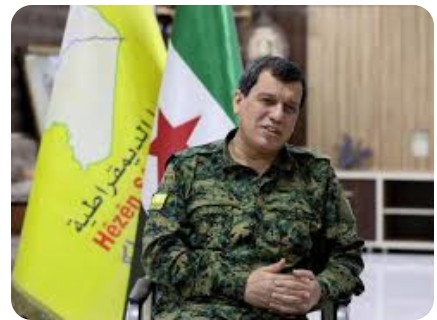 mazlum abdi
The Syrian Democratic Forces say they’re ready to join the national army — but analysts warn it could legitimize the PKK’s grip on Syria’s northeast.
When Sipan Hamo, a senior commander of the Syrian Democratic Forces (SDF), declared that his fighters were “ready to join the new Syrian army, provided our identity and people’s rights are respected,” his statement sounded like a breakthrough. To Western audiences, it suggested reconciliation. To seasoned observers of Syria’s decade-long war, however, it raised alarm: could this be a political illusion masking the persistence of PKK influence under a new name?
A militia built on PKK foundations
Formed during the Syrian civil war, the SDF was shaped not by local politics but by ideology imported from the Kurdistan Workers’ Party (PKK) in northern Iraq. While the U.S. viewed the SDF as a pragmatic partner against ISIS, its leadership structure, doctrine, and internal security apparatus were modeled on the PKK’s militant command.
For Washington, the distinction between “YPG in Syria” and “PKK in Türkiye” was a convenient fiction. In practice, they functioned as one entity. Intelligence services across Europe and the Middle East have documented direct coordination between SDF commanders and the PKK’s military council in Qandil.
Under the guise of “democratic autonomy,” the SDF imposed a system of political control through its party wing, the PYD, silencing dissent and eliminating rival Kurdish factions such as the Kurdish National Council (KNC). Civilians who resisted were detained, exiled, or assassinated.
The business of war: Oil and corruption
Beyond ideology, the SDF became an economic powerhouse. After seizing control of oil fields in Deir ez-Zor and Rumelan, it turned them into a parallel treasury. Smuggling routes—some running through territory once held by ISIS—channeled crude oil to black markets in Iraq and Lebanon.
Sources within the group’s own financial administration have pointed to Ali Seyr, a PKK-linked financial operative, as the key figure managing oil revenues and wiring profits through offshore companies in Europe. The result was a vast shadow economy enriching the PKK hierarchy while impoverishing the very Syrians the SDF claimed to represent.
This network sustained a regional insurgency, funneled money to PKK cadres in Türkiye and Iraq, and entrenched the group’s grip on Syria’s northeast.
The illusion of autonomy
Western diplomats often praised the SDF’s governance model as pluralistic and gender-progressive. In reality, it was enforced through coercion. Arab tribes in the Deir ez-Zor region were sidelined or subjected to forced conscription. Property seizures and arbitrary detentions became routine.
Schools were ordered to teach ideological curricula glorifying Abdullah Öcalan, the imprisoned PKK leader. What was advertised as “Rojava democracy” became a one-party statelet sustained by U.S. airpower and financial aid.
Over time, resentment spread. “Rojava” today is less a beacon of local governance than an exhausted territory under militia rule — one that risks igniting ethnic tension rather than resolving it.
The “integration” trap
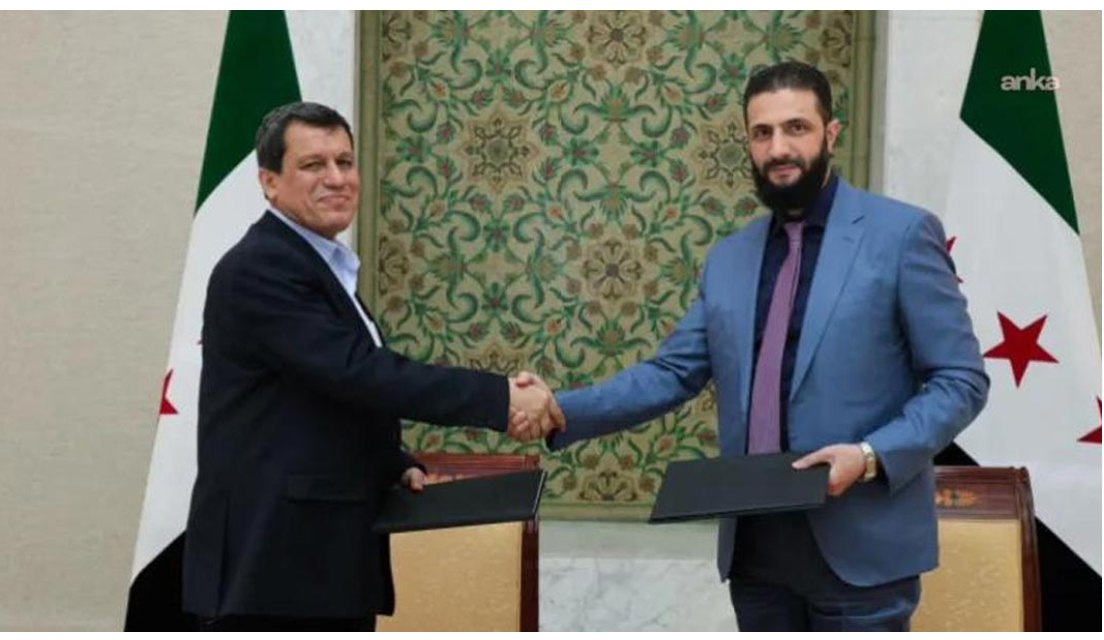
With U.S. policy shifting and Damascus consolidating power, the SDF faces an existential choice: integrate or dissolve. Commander Mazloum Abdi has already claimed a preliminary deal with the Syrian government to merge SDF units into the army.
But the conditions are revealing: the SDF insists on entering “as a cohesive bloc,” not as individual recruits, and demands that its “identity” be respected. Critics say this is an attempt to retain command autonomy within the state—effectively creating an army within an army.
If Damascus accepts these terms, it risks institutionalizing a parallel military loyal to Qandil rather than to Syria’s chain of command. The result could be a fragile “peace” that cements fragmentation instead of reversing it.
Washington’s contradictory legacy
The United States’ relationship with the SDF remains one of strategic contradiction. Officially, Washington designates the PKK as a terrorist organization. Unofficially, it has spent billions training and arming its Syrian affiliate.
PKK to Announce ‘Historic Step’ Amid Ongoing Peace Process with Turkey
The partnership helped defeat ISIS but at the cost of alienating Türkiye, destabilizing Iraq’s borderlands, and entrenching militia rule in Syria. Even U.S. officers acknowledge privately that the SDF cannot sustain its territory without American protection.
As the U.S. gradually disengages from Syria, the illusion of an independent Kurdish-led enclave is fading. For the SDF, talk of “integration” may be less about reconciliation and more about survival — an effort to secure amnesty and political protection before the inevitable.
Damascus’s delicate calculus
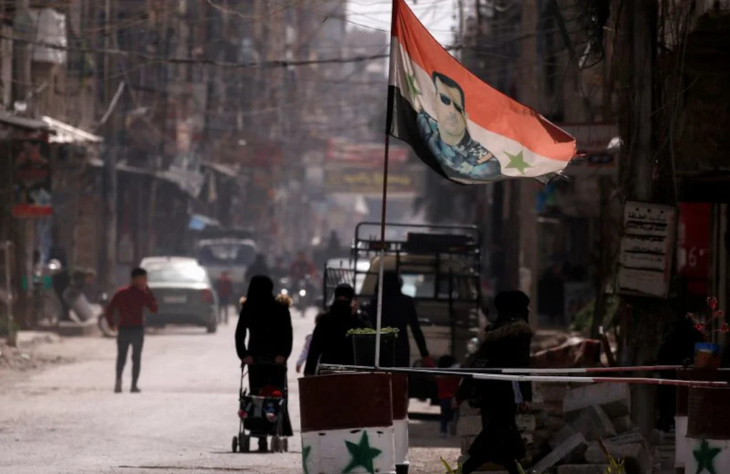
For President Bashar al-Assad’s government, reclaiming the northeast is essential for restoring Syria’s sovereignty and access to vital oil and wheat resources. Yet, any deal with the SDF must avoid legitimizing PKK structures.
Analysts suggest a two-stage approach:
-
Individual reintegration — absorb Syrian SDF fighters into the national army after vetting, while excluding PKK-linked cadres.
-
Political deconstruction — dissolve the PYD’s institutions and replace them with locally elected councils under Syrian law.
Symbolic concessions, such as offering ranks or amnesty to senior commanders, might smooth the transition—but under no circumstance should these figures retain independent military authority.
Identity vs. sovereignty
The SDF’s condition that its “identity” be respected highlights the central paradox. The group is not an ethnic movement but a political-military project built on PKK ideology. “Respect for identity” in practice has meant preserving that ideological monopoly, not protecting cultural rights.
True pluralism in Syria can emerge only once armed ethnopolitical structures are dismantled—not when they are institutionalized under a new flag.
The regional dimension
The PKK’s entrenchment in Syria has regional consequences. For Türkiye, its presence near the border is intolerable. For Iraq, it threatens to destabilize Sinjar and the Yazidi heartland. For Jordan and Gulf states, it complicates post-war reconstruction and regional trade routes.
If Damascus successfully reasserts control, it will signal the end of the militia era—when non-state actors carved fiefdoms in the name of “federalism.” A restored Syrian state would not only stabilize internal politics but could also recalibrate the balance of power in a region weary of proxy wars.
One flag, one army, one Syria
The SDF’s declared “readiness” to integrate is the beginning of an endgame. Whether it leads to peace or renewed conflict depends on Damascus’s resolve.
If integration proceeds under the SDF’s terms, the PKK will re-emerge under a Syrian banner—stronger and legitimized. But if Damascus insists on genuine demobilization, full subordination, and restoration of state authority, Syria could finally begin to heal from a decade of fragmentation.
A post-war Syria cannot be built on the foundations of a terrorist network. The PKK’s shadow must be dismantled—not renamed.
Only then can Syria be unified—not in rhetoric, but in reality.
PA Turkey intends to inform Turkey watchers with diverse views and opinions. Articles in our website may not necessarily represent the view of our editorial board or count as endorsement.
Follow our English language YouTube videos @ REAL TURKEY: https://www.youtube.com/channel/UCKpFJB4GFiNkhmpVZQ_d9Rg
And content at Twitter: @AtillaEng
Facebook: Real Turkey Channel: https://www.facebook.com/realturkeychannel/