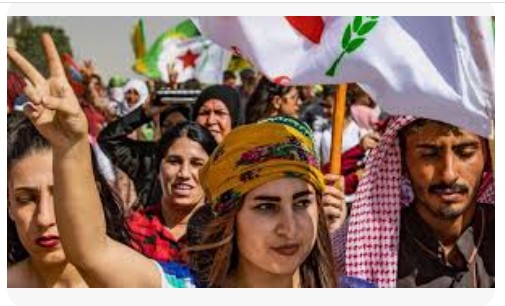
Civil War Returns to Syria: Druze Clashes Threaten Kurdish Disarmament and Sharaa’s Presidency
 syria-clashes
Escalating violence in Sweida stokes fears of sectarian collapse, derails Kurdish peace efforts, and risks renewed conflict with Israel and Turkey
The Syrian government’s effort to reassert control over southern Syria is rapidly spiraling into a crisis that could undermine President Ahmed al-Sharaa’s fragile transition and derail the country’s landmark Kurdish disarmament deal. After days of bloody sectarian clashes between Druze militias and Bedouin clans in the southern province of Sweida, the government is preparing to redeploy security forces to quell the unrest—just days after announcing a withdrawal.
The unrest erupted following a highway robbery and escalated into full-scale violence involving militia groups and government forces. Human rights organizations report that hundreds have died, with atrocities including summary executions and civilian massacres documented.
The fragile peace in Sweida broke down further when Israeli forces launched a wave of strikes targeting Syrian military installations, including the Defense Ministry in Damascus, citing protection of the Druze population. Israel demanded Sharaa’s immediate withdrawal from the province, raising the specter of a wider regional war. The United States has since intervened diplomatically, attempting to de-escalate tensions between Damascus and Jerusalem.
A Test of Sharaa’s Power—and a Turning Point for Syria
The violence marks the gravest threat yet to Ahmed al-Sharaa’s presidency, just eight months after his forces ousted Bashar al-Assad and ended Syria’s 14-year civil war. Malik al-Abdeh, a London-based Syrian analyst, warned that “this could be Sharaa’s first major mistake,” adding that the president’s handling of the Sweida crisis “may define the rest of his presidency.”
Sharaa’s administration had hoped to reunify Syria’s fractured sectarian landscape. But the government’s heavy-handed attempts to disarm Druze militias in recent months, including an incident in April that ended in a fragile ceasefire, fueled distrust and set the stage for today’s collapse.
This latest crackdown, involving brutal treatment of Druze civilians, including symbolic humiliation such as shaving detainees’ moustaches, may have permanently alienated a community long ambivalent toward central rule.
Israel Steps In, Kurds Watch Closely
Israel has used the post-Assad power vacuum to assert control in Syria’s south, launching airstrikes under the pretense of protecting minority groups like the Druze. With Druze figures such as Hikmat al-Hijri advocating for greater autonomy from Damascus, Israeli involvement has only deepened the internal fracture lines.
Meanwhile, Kurdish leaders in northeastern Syria—who in March signed a tentative agreement to merge their Syrian Democratic Forces (SDF) with the national army—are growing skeptical of Damascus. Implementation of the deal has stalled, and the Sweida crackdown is raising new fears.
“The government came out of this looking weak,” said Dareen Khalifa, senior adviser at the International Crisis Group. “This is going to complicate Kurdish integration talks significantly.”
Risks of Regional Spillover: Turkey Eyes the Kurds
The stakes are not limited to Israel. Ankara, which views the SDF as an extension of the outlawed PKK, is closely monitoring the situation. Turkish defense officials, speaking anonymously, stated that Ankara is ready to assist Damascus militarily if requested. Analysts say this could revive dormant talks of a Turkish-Syrian defense pact.
With the Kurds increasingly disillusioned by Damascus and wary of Turkish hostility, some may even seek support from Israel—a move that could enrage Ankara and bring a new front to the Syrian conflict.
US Tries to Salvage Peace
Despite the escalating tensions, the Trump administration remains committed to brokering a long-term solution. US Ambassador to the UN Dorothy Shea told the Security Council that Washington is “engaging diplomatically with Israel and Syria at the highest levels.” However, she noted that the US does not support recent Israeli strikes.
The violence is not just military—it is deeply political. Minorities like the Druze and Kurds say they’ve only been offered token representation in Sharaa’s interim government. “This should be a dialogue-based transition,” said Bassam Alahmad of Syrians for Truth and Justice. “Instead, the message from Sweida is that force will be used to control every part of Syria.”
The Cost of Failure: A Fragmented Future
If the Syrian government concedes control of Sweida, it could set a precedent for other minorities to demand autonomy—something officials fear could permanently fragment the country. “If Damascus gives Sweida to the Druze, then every other group will want their own region,” warned Abdel Hakim al-Masri, a former opposition official in Syria’s northwest.
Syria’s descent into renewed sectarian strife now threatens the momentum gained after Assad’s fall. “This country was so close to turning a corner,” said one Syrian official. “But this could derail everything.”
IMPORTANT DISCLOSURE: PA Turkey intends to inform Turkey watchers with diverse views and opinions. Articles in our website may not necessarily represent the view of our editorial board or count as endorsement.
Follow our English language YouTube videos @ REAL TURKEY: https://www.youtube.com/channel/UCKpFJB4GFiNkhmpVZQ_d9Rg
And content at Twitter: @AtillaEng
Facebook: Real Turkey Channel: https://www.facebook.com/realturkeychannel/**
Related articles
A New Sunni-Islamist Axis? Turkey’s Role in Syria’s Military Buildup
Head of Turkish medical association arrested for ‘terror propaganda’
Wladimir van Wilgenburg: Turkey aims to ‘secure’ Tal Rifaat: Turkish President Erdogan