CHP Crackdown Seen Undermining ‘Terror-Free Turkey’ Peace Initiative
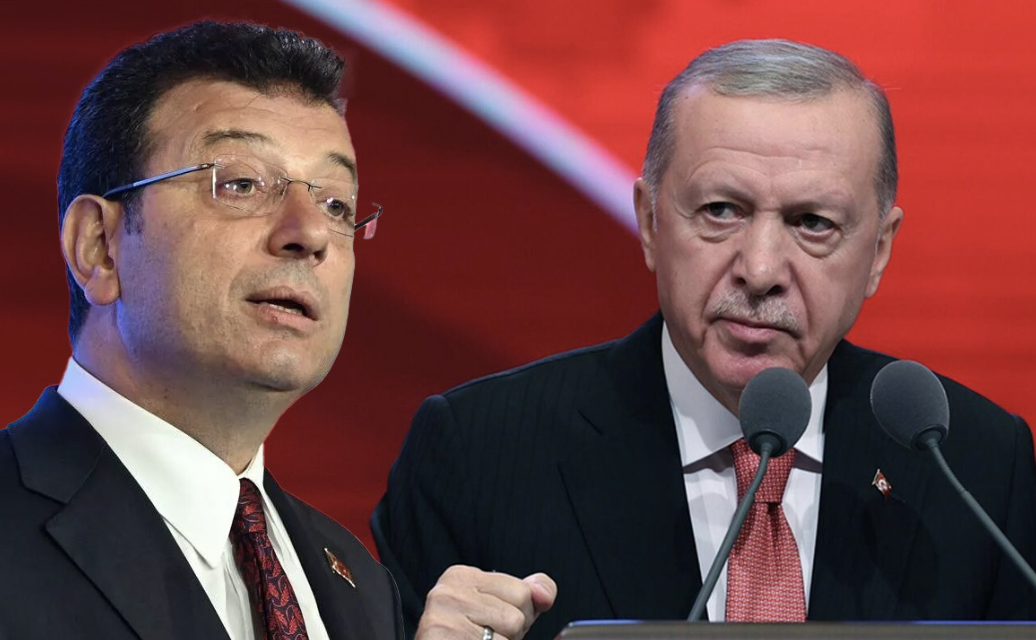 imamoglu erdogan
At a high-level workshop in Ankara, political leaders, civil society experts and policy analysts voiced growing concern that ongoing judicial and administrative moves against the CHP are weakening public trust and undermining the government’s “Terror-Free Turkey” initiative—an emerging process aimed at ending decades of PKK-linked violence. While participants acknowledged progress over the past year, they warned that political tensions, developments in Syria, and legitimacy challenges could derail the effort unless managed carefully.
Broad Participation, High-Level Debate in Ankara
On 1 December, the Diyarbakır-based Rawest and Kurdish Studies Center, together with İzmir’s Bayetav, hosted a major workshop titled “Looking Together Toward Our Common Future.”
Approximately 60 participants attended, including representatives from:
-
AK Party, CHP, DEM Party, and the New Path (Yeni Yol) group
-
business associations
-
civil society organizations
-
research institutes
-
and the media
Discussions were held under Chatham House rules, allowing the content to be shared without attributing comments to individuals.
The primary focus was the evolving “Terror-Free Turkey” process initiated by the AK Party–MHP bloc, exploring its political, economic, security and legal dimensions.
Assessment of the ‘Terror-Free Turkey’ Process
Participants broadly agreed that meaningful progress has been made over the past year, though significant disagreements remain.
Key Evaluations:
-
PKK’s disbandment claims:
Some argued the PKK remains active despite statements, while others pointed to symbolic acts—such as weapons-burning ceremonies and withdrawals into northern Iraq—said to be coordinated with Turkish intelligence and security agencies. -
Special legal framework:
A widely discussed next step is a “Special Law” governing the status of militants who lay down arms. Many stressed the need for a comprehensive, credible legal structure to encourage demobilization. -
Shift in legitimacy model:
Unlike the 2012–2015 peace process—which sought societal legitimacy—participants noted that the current process appears driven primarily by state legitimacy, with institutions taking a more prominent role.
There was general approval of MİT chief İbrahim Kalın’s handling of the process, with participants highlighting his tone, communication, and coordination skills.
Main Risks: Syria, SDG, and PKK Internal Dynamics
When asked what could derail the process, nearly all participants pointed to one factor:
“If anything breaks this process, it will be Syria.”
Concerns include:
-
The Syrian Democratic Forces (SDG) distancing themselves from PKK structures
-
SDG’s reluctance to align with PKK’s disarmament timeline
-
Internal disagreements within PKK ranks after the 24 November visit to İmralı
-
Israel’s potential efforts to disrupt Ankara’s initiative
-
Rumors of “good cop–bad cop” strategies inside the PKK leadership to buy time before a possible SDG–Damascus agreement
Another point raised was the potential PKK rejection of the forthcoming Special Law, though many believe the state has already passed a point of no return.
Emerging Scenarios
Participants discussed several options under consideration:
-
Screening non-Syrian PKK members from SDG ranks
-
Securing buy-in from Arab tribes
-
A decentralization formula for Syria—similar to autonomous local governance systems in the UK or a U.S.-style state model—provided it preserves Syrian territorial integrity
There was strong consensus that Israel may attempt to undermine the process, especially through PKK factions opposed to a settlement.
CHP Crackdown Seen “Infecting” the Process
One of the most heated topics was the ongoing detentions and legal actions targeting CHP mayors and the party’s refusal to join the İmralı Committee.
Some participants argued:
-
CHP should play a more constructive role, especially in a process that even the MHP supports.
Others countered that:
-
It is reasonable for CHP to distrust the government while “being politically assaulted five times a day.”
Critics warned that simultaneous discussions about:
-
integrating former PKK cadres into political life,
-
while opposition mayors face imprisonment and potential trusteeship,
is creating a legitimacy gap that risks “infecting” the process and weakening its democratic foundations.
Participants agreed that easing political tensions between AK Party and CHP would greatly benefit the success of the initiative, though the process is unlikely to collapse solely due to these frictions.
AK Party Faces Its Own Constraints
The workshop also examined AK Party’s approach.
Findings included:
-
The party is adopting a cautious posture amid changing geopolitical dynamics.
-
Kurdish voters prioritize economic hardships (60%) over a Kurdish settlement (21%), according to October 2025 SAMER polling.
-
Time is running short with the 2028 elections approaching, while successful peace processes—such as Ireland’s—can take years to mature.
Participants stressed that long-term success requires continuity across political cycles and a healthier government–opposition relationship.
By Murat Yetkin, Yetkin Report
PA Turkey intends to inform Turkey watchers with diverse views and opinions. Articles in our website may not necessarily represent the view of our editorial board or count as endorsement.
Follow our English language YouTube videos @ REAL TURKEY and social media channels for more analysis.