



Breaking Move in Parliament: Immunity Files for 11 Lawmakers Sent to Key Commission
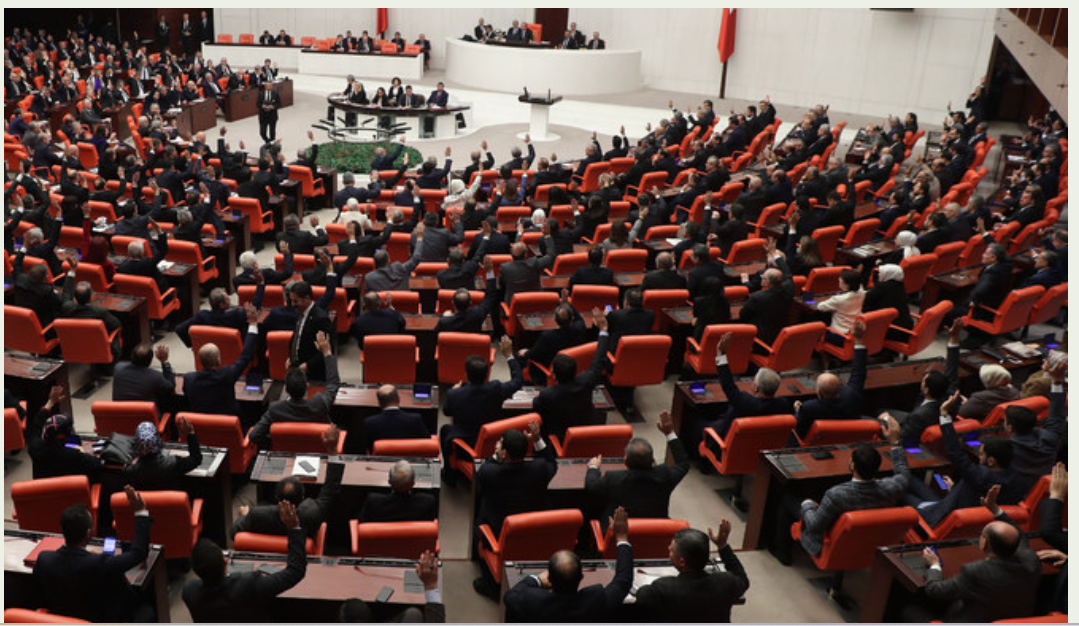 Turkish Parliament
Turkey’s political arena has entered a tense new phase as the Office of the Speaker of the Grand National Assembly of Turkey (TBMM) formally submitted immunity files for 11 sitting lawmakers, including CHP Chair Özgür Özel and DEM Party Co-Chair Tülay Hatimoğulları. These files, transmitted as Presidential memoranda on lifting legislative immunity, have now been forwarded to the Joint Committee, composed of members from the Constitution and Justice Commissions.
This step marks the beginning of a multi-stage legislative process that could, depending on committee findings and General Assembly decisions, reshape the legal and political standing of several high-profile MPs. While immunity files are a periodic feature of parliamentary life in Turkey, the inclusion of multiple party leaders adds heightened national attention. It intensifies the public conversation around judicial processes, parliamentary oversight, and political accountability.
Who Is on the List?
The immunity files referred to the Joint Committee concern lawmakers from multiple parties, underscoring the cross-party nature of the issue. The MPs whose files were transmitted include:
-
Özgür Özel, CHP Chair and Manisa MP
-
Tülay Hatimoğulları, DEM Party Co-Chair and Adana MP
-
Ümit Dikbayır, CHP Sakarya MP
-
Mustafa Adıgüzel, CHP Ordu MP
-
Deniz Yavuzyılmaz, CHP Zonguldak MP
-
Ahmet Şık, TİP Istanbul MP
-
Kamuran Tanhan, DEM Party Mardin MP
-
Sabahat Erdoğan Sarıtaş, DEM Party Siirt MP
-
Onur Düşünmez, DEM Party Hakkari MP
-
Nevroz Uysal Aslan, DEM Party Şırnak MP
-
Zeynep Oduncu Kutevi, DEM Party Batman MP
The files reportedly relate to various legal claims and ongoing judicial processes. At this stage, details of the allegations remain part of the confidential documentation sent to the committee, as per parliamentary procedure.
What Happens Next? The Process Behind the Headlines
Under Turkish law, lifting parliamentary immunity follows a structured path designed to balance legislative independence with judicial accountability. Once the files reach the Joint Committee, its members conduct a detailed review, examining both the legal content of the files and the procedural validity of the claims.
This review can include examining case documents, hearing defenses if requested, and compiling a report that consists of the committee’s final recommendation. That report is then forwarded to the General Assembly, where all MPs vote on whether to remove immunity for each lawmaker.
The General Assembly’s vote is decisive:
-
A yes vote opens the way for judicial proceedings to resume or begin.
-
A no vote preserves the lawmaker’s immunity.
This mechanism ensures that prosecution cannot proceed without explicit legislative approval, embodying a fundamental principle of parliamentary governance: protecting democratic representation while upholding the rule of law.
Why This Development Matters
While immunity files are not new to Turkish politics, several aspects of this development increase its national significance:
1. High-profile party leaders included
The presence of both a prominent opposition leader (Özgür Özel) and a co-chair of a key parliamentary group (Tülay Hatimoğulları) elevates the political weight of the process.
2. Multi-party representation
Files pertain to members from CHP, DEM Party, and TİP, reflecting a broad institutional impact rather than an isolated political issue.
3. Potential effects on parliamentary dynamics
If any immunities are lifted, judicial cases could alter political strategies, parliamentary voting behavior, or even committee compositions during ongoing legislative cycles.
4. Heightened public interest
Immunity debates traditionally generate strong reactions among voters, legal experts, and civil society, especially when they involve prominent figures.
A Broader Context of Legal and Political Intersections
This latest development arrives in a period where legal matters surrounding lawmakers—such as judicial inquiries, parliamentary investigations, and constitutional debates—are increasingly visible in public discourse. For observers, this raises broader questions:
-
How frequently should parliamentary immunity be lifted?
-
How effectively can legal proceedings remain independent of political influence?
-
What precedents do such decisions set for future legislative cycles?
The answers, as always, lie in the constitutional balance between safeguarding democratic participation and ensuring accountability under the law.
As the Joint Committee prepares to examine the files, all eyes now turn to its forthcoming report—and to the decisions that the General Assembly will ultimately make.