ANALYSIS: Turkish Industrial Production Sustains Strong Annual Growth on Low Base Effect
 sanayi-uretim
Summary:
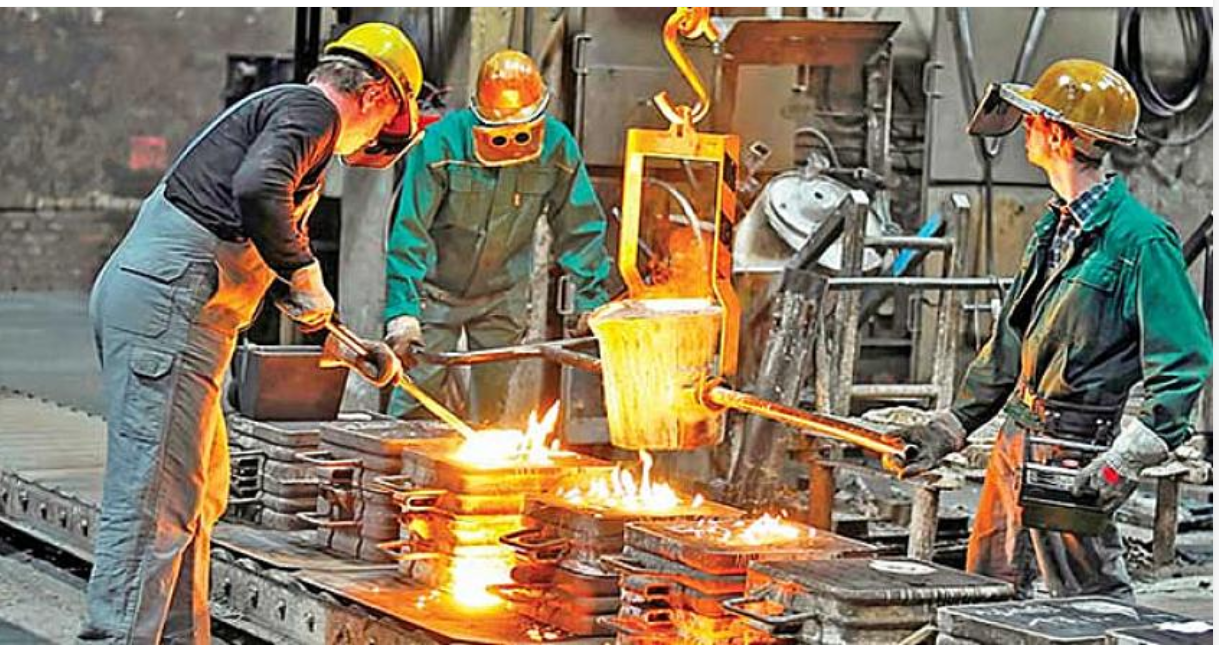
Turkey’s industrial production contracted by 1.8% month-on-month in July but maintained a solid 5% annual growth thanks to a favorable low base effect. Capital goods manufacturing led the recovery with double-digit gains, while textiles, apparel, and machinery production continued to shrink. Despite signs of partial investment revival, external demand weakness and global growth uncertainties remain key risks for the outlook.
Industrial production up 5% year-on-year in July
According to the latest data from TurkStat, seasonally and calendar-adjusted industrial production fell 1.8% month-on-month in July. However, on an annual basis, production rose 5% (unadjusted +5.1%), supported by a strong base effect from last year’s slowdown.
In comparison, production increased 0.7% in June and 3.1% in May, highlighting a modest slowdown on a monthly basis while maintaining solid annual growth.
Figures broadly in line with expectations
Analysts had anticipated a mild contraction in monthly production for July while expecting annual growth to remain robust due to the low base effect.
The actual data confirmed these forecasts: while production declined on a sequential basis, the 5% year-on-year gain reflects the underlying resilience of industrial activity.
Notably, industrial production growth accelerated from just 0.7% in Q1 to 5.5% in Q2, marking a significant improvement.
Capital goods drive sectoral divergence
A closer look at sectoral performance reveals strong divergences within the industrial complex. The standout performer was capital goods manufacturing, which surged 20.1% year-on-year.
Other sectors posting strong gains included:
-
Fabricated metal products (excl. machinery) → +14.4%
-
Non-metallic mineral products → +13.6%
-
Motor vehicles manufacturing → +7.4%
-
Basic metals → +5.8%
-
Food products → +5.8%
-
Electricity, gas, and water → +5.8%
-
Energy sector → +3.7%
Overall, manufacturing expanded 5.5% annually, while mining and quarrying contracted 0.5%.
Weakness persists in key industries
Several sub-sectors, however, continued to struggle:
-
Durable consumer goods → -5.4%
-
Apparel manufacturing → -17.9%
-
Machinery & equipment → -5.8%
-
Textiles → -7.7%
-
Electrical equipment → -0.2%
This highlights the uneven nature of the recovery, with investment-oriented industries outperforming consumer-related segments.
Mixed performance in January–July period
For the first seven months of 2025, industrial production showed partial recovery but remained imbalanced across sectors.
Sectors reporting growth included:
-
Capital goods → +9.1%
-
Fabricated metals → +11.0%
-
Energy → +6.2%
-
Basic metals → +3.9%
-
Non-metallic minerals → +5.0%
-
Food products → +5.8%
-
Chemicals → +0.5%
By contrast, declines were recorded in:
-
Machinery & equipment → -5.3%
-
Apparel → -5.2%
-
Textiles → -3.0%
-
Durable consumer goods → -1.9%
-
Motor vehicles → -0.8%
-
Plastics & rubber → -0.3%
Investment revival amid external headwinds
The double-digit surge in capital goods production suggests a partial recovery in investment appetite. However, domestic demand weakness continues to weigh on many sub-sectors.
Expectations of interest rate cuts and looser credit conditions in the coming months provide a cautiously optimistic backdrop. Still, external demand weakness and global growth uncertainties remain the most significant risks for industrial production.
PMI and electricity data signal modest rebound
Turkey’s manufacturing PMI index has remained below the 50 threshold since April 2024, indicating contraction in factory activity. The PMI fell to 45.9 in July but rebounded to 47.3 in August, suggesting a limited recovery.
Electricity consumption — closely correlated with industrial output — also showed a slight improvement in August, further hinting at a modest rebound ahead.
With the low base effect continuing to support annual comparisons, analysts expect industrial production to maintain above 5% year-on-year growth throughout Q3.