Analysis | Güldem Atabay: Kurdish Question Re-Emerges in the U.S.–Syria–Turkey Triangle
 al sara trump
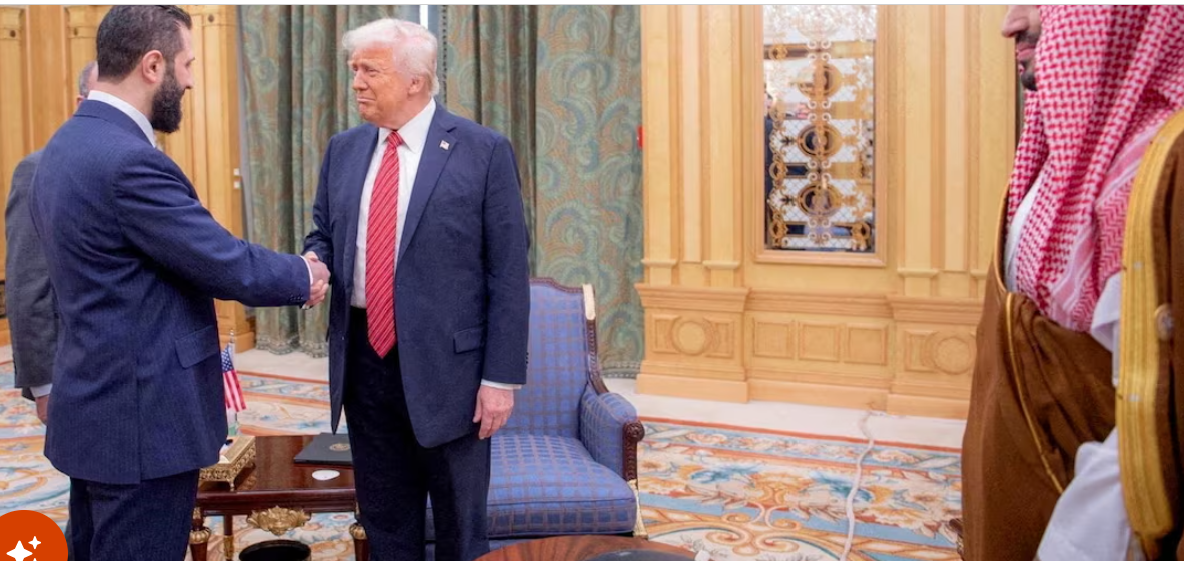
Syrian interim leader Ahmed al-Sharaa will be received at the White House this week by President Donald Trump, marking a symbolic shift in U.S. policy after years of isolating Damascus. Washington is preparing to bring Syria back into regional diplomacy and formally integrate the country into the anti-ISIS coalition. The move carries major consequences for Turkey, which fears that new U.S.–Syria engagement could lead to Kurdish political concessions in northern Syria.
Washington turns the page on a decade of isolation
After more than ten years of diplomatic freeze and sanctions, Syrian interim President Ahmed al-Sharaa is set to visit the White House for talks with President Donald Trump.
Newly released images of Sharaa playing basketball with U.S. military officers — distributed by U.S. officials ahead of the visit — indicate a significant shift: from isolation to partnership.
For Washington, the visit marks the symbolic start of a “new chapter” in Middle East policy. The U.S. spent years pursuing a “regime-change and isolation” strategy against Bashar al-Assad. Now, the focus has moved to realignment and containment, built around counter-terrorism and regional stabilization.
According to analysis by Turkish economist and political commentator Güldem Atabay, the visit signals that the United States is ready to normalize relations with Damascus under Sharaa’s leadership and bring Syria back into regional diplomacy.

Syria signals readiness: operations against ISIS ahead of the visit
Almost simultaneously with Sharaa’s departure for Washington, Syrian security forces launched large-scale operations against ISIS cells across the country.
-
More than 60 raids conducted,
-
Over 70 suspects detained.
Diplomatic sources note that the timing is strategic: the operation is meant to show Washington that Damascus is now committed to the same counter-terrorism priorities as the U.S.
Sources in Washington say the White House meeting is expected to produce a commitment to formally integrate Syria into the international anti-ISIS coalition.
In the U.S., the visit will be sold as a foreign policy “win”
The White House is expected to frame the meeting as a major diplomatic achievement.
With tensions ongoing with Iran and Russia’s renewed assertiveness in the region, Trump will present Sharaa’s outreach as evidence that former adversaries are willing to partner with Washington.
The ground for the visit was prepared by a recent UN Security Council resolution lifting sanctions on Sharaa and Syrian Interior Minister Hassan Hattab. The move allows Trump to host Sharaa without appearing to negotiate with a “designated terrorist.”
Turkey’s quiet but crucial role
Behind the scenes, Ankara has indirectly facilitated Sharaa’s rise.
Turkey was one of the first regional actors to advocate recognition of Sharaa as a legitimate figure for the “post-Assad transition.” According to analysts in Ankara, the White House meeting reflects not only U.S. strategic recalibration but also the emerging Erdoğan–Trump regional cooperation axis.
For Trump, the optics are clear:
-
A diplomatic breakthrough,
-
A symbolic step closer to stabilizing Syria,
-
Continued cooperation with Turkey.
For Sharaa, the meeting offers survival and legitimacy
For Damascus, the U.S. opening is existential.
Syria remains geopolitically fragmented:
-
North controlled by Türkiye,
-
South influenced by Israel,
-
Coastal west under Russian protection,
-
East tied to U.S. security structures.
Sharaa is positioning himself as a leader able to speak to all sides, but this balancing act has limits. Maintaining simultaneous proximity to Russia and the United States is not considered sustainable over the long term.
Yet external recognition brings Sharaa what he currently lacks at home: legitimacy, financing, sanctions relief, and eventually, access to reconstruction capital.
The real tension emerges in Ankara
Foreign Minister Hakan Fidan’s visit to Washington is scheduled for the same day Sharaa enters the White House. Ankara sees this as anything but coincidence.
According to Atabay, Turkey fears that:
-
U.S.–Syria normalization could pave the way for Kurdish political status in northern Syria,
-
Sharaa may keep communication channels open with the Syrian Democratic Forces (SDF).
For Ankara, the SDF — led by the YPG — remains indistinguishable from the PKK, considered a top national security threat.
Turkey’s message to the U.S. is straightforward:
“Reconstruction of Syria, yes. Constitutional recognition for Kurds, absolutely not.”
Atabay notes that Ankara is not opposed to Syria’s reintegration but wants guarantees that it will not come at the expense of Turkish security interests.
Ankara’s “Terror-Free Türkiye” strategy faces stress test
Turkey’s post-2023 regional strategy has been built on one core idea:
neutralize threats beyond the border and maintain long-term military control in northern Syria and Iraq.
The Sharaa–Trump meeting introduces a new actor into this equation:
Washington will now engage not only with the SDF, but with Damascus as well.
This challenges Ankara’s assumption that the security environment could be shaped unilaterally through military pressure and diplomatic isolation.
The European Union and the United States now favor a different approach:
“Re-integrate Syria diplomatically to stabilize the security environment.”
This forces Turkey to recalibrate.
Implications: politics at home may be affected
Atabay argues that the consequences may extend beyond foreign policy.
As Kurdish political status in northern Syria becomes part of Washington’s negotiating toolkit, domestic legal debates in Turkey could also shift.
The possibility of Selahattin Demirtaş and Figen Yüksekdağ’s release — long resisted by Ankara — is increasingly being discussed in Western diplomatic circles, especially in the European Court of Human Rights context.
The Syrian file and the Kurdish question are again becoming intertwined — both outside and inside Turkey’s borders.