



Amundi: Slow TL Depreciation Will Likely Continue
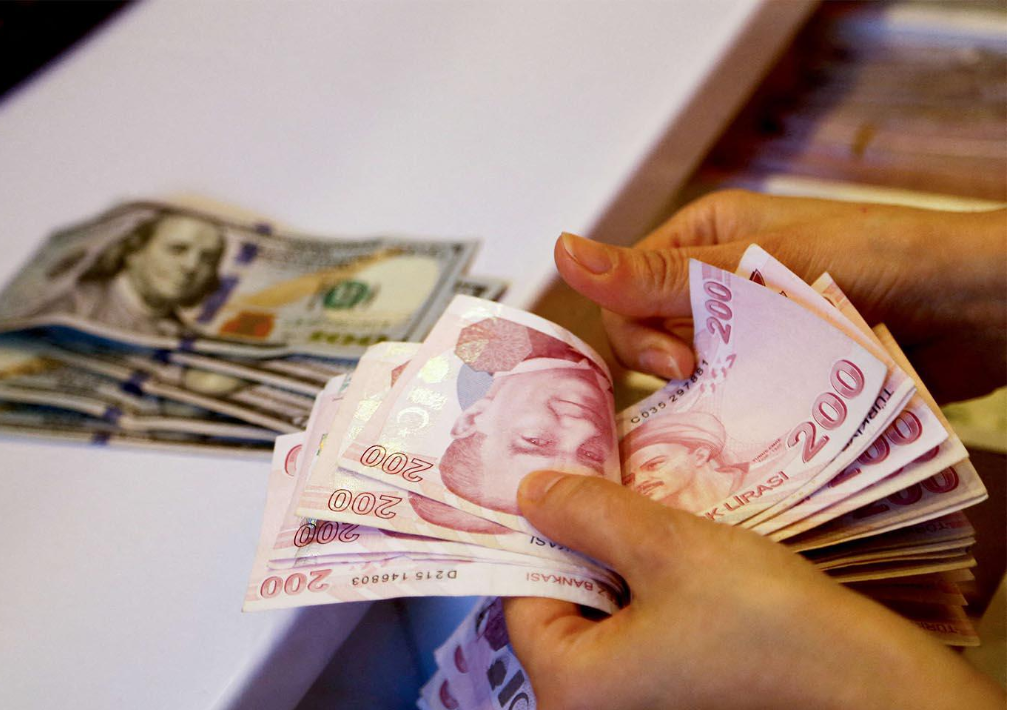 TL
TL
Europe’s leading asset manager, Amundi, has reiterated its cautiously optimistic stance on the Turkish Lira (TL), stating that although the currency is expected to continue its slow and controlled depreciation, Turkey’s exceptionally high interest-rate environment still creates one of the most attractive carry trade opportunities across emerging markets. The firm also highlighted the strong potential of local Turkish bonds, noting that elevated yields offer another layer of return for investors who can stomach currency volatility.
In its latest evaluation shared with Bloomberg News, Amundi maintains its view that the Lira will continue to lose value gradually. This trend has characterized much of the past year as Turkey has tightened monetary policy and pursued disinflation.
Despite this ongoing weakening, Amundi stresses that the pace of depreciation remains orderly, suggesting that the currency is no longer experiencing the sharp instability that previously defined market sentiment.
This slower momentum, combined with Turkey’s significantly higher interest-rate differentials compared to developed markets, remains central to Amundi’s constructive outlook on TL-based strategies.
High Carry Trade Returns Seen Offsetting the Weak Lira
A key message from the firm is that Turkey’s high policy rates deliver enough yield to offset the currency’s measured depreciation, effectively keeping net returns in positive territory for investors engaging in a carry trade.
Carry trade involves borrowing in a low-interest currency and investing in a higher-yielding one—a strategy that becomes increasingly appealing when rate spreads widen.
Amundi notes that even if the Lira softens gradually, the magnitude of Turkey’s interest-rate premium means that investors can still achieve attractive net returns, particularly under a scenario where FX volatility remains moderate.
The firm added that, for investors comfortable with risk, TL exposure retains strategic value, especially in an environment where developed-market yields are expected to return to lower levels as global disinflation progresses.
Local Turkish Bonds Offer Strong Yield Potential
Beyond the currency itself, Amundi also highlights Turkey’s local-currency bonds as an area rich with opportunity.
The reasoning is straightforward: Turkish domestic bonds offer high nominal yields, which translate into elevated carry—a key driver of returns for both institutional and sophisticated private investors.
Amundi emphasizes that the combination of controlled currency depreciation and strong local yields forms a compelling setup:
• High carry compensates for FX weakness
• Volatility has moderated, improving overall risk perception
• Longer-duration bonds offer additional upside if inflation expectations continue easing
This dual appeal—currency-based carry and bond-based carry—positions Turkey favorably within Amundi’s broader emerging-market strategy.
Why Carry Trade Matters in the Turkish Context
The report also revisits the mechanics of carry trade, underscoring why Turkey has emerged as a preferred destination.
Carry trade is effectively a yield-arbitrage strategy, where investors borrow in low-interest currencies—such as the yen or Swiss franc—and invest in higher-yielding currencies, such as the TL.
As long as the exchange rate does not move sharply in the wrong direction, investors can capture the difference between the two interest rates.
However, the article notes a crucial caveat: currency depreciation is the leading risk factor.
If the high-yielding currency (in this case, the TL) loses value faster than the interest-rate advantage, the investor may incur losses. Amundi argues that Turkey’s depreciation is currently slow enough that this risk is manageable—and in many cases, outweighed by the carry return.