



28-Year-Old AI Billionaire’s One-Sentence Advice: “Spend All Your Time Learning AI Coding”
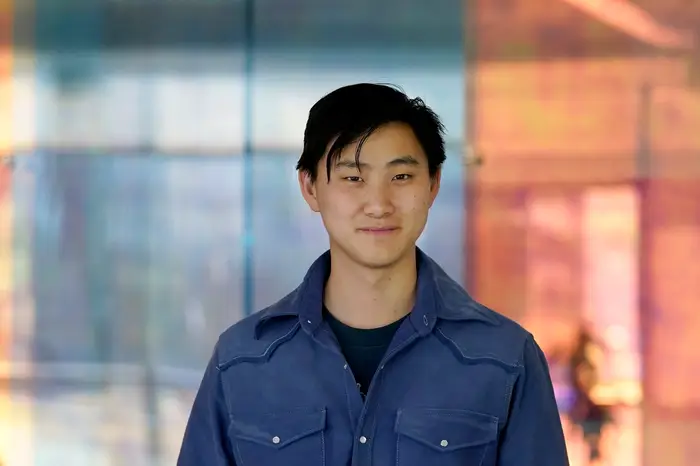 Alexandr Wang
At just 28 years old, Alexandr Wang has built a fortune of $3.2 billion, according to Forbes, as the co-founder of Scale AI, one of Silicon Valley’s fastest-growing artificial intelligence companies. Recently appointed as Meta’s Director of Artificial Intelligence, Wang has become a leading voice in the industry, inspiring the next generation to seize what he believes is a once-in-a-lifetime opportunity.
During an appearance on the “TBPN” podcast, Wang delivered a single, striking piece of advice to young people hoping to succeed in technology: “You need to learn to use AI coding tools as efficiently as possible. If you spend 10,000 hours playing with these tools and learn to use them better than anyone else, you will gain a huge advantage.”
Comparing AI to the Early Days of the Computer Revolution
Wang likens today’s AI revolution to the early years of personal computers, when pioneers who experimented tirelessly with new technology eventually shaped the future of the digital world. He believes that today’s 13-year-olds face the same transformative opportunity — but this time, it lies in AI-assisted coding.
His message was clear and concise: “If you’re 13 years old, you should spend all your time vibe coding.” In Wang’s words, “Dedicate all your time to learning to code with artificial intelligence.”
What Is “Vibe Coding”?
“Vibe coding” is Wang’s shorthand for experimenting creatively with AI tools to write, refine, and test code — not through rigid instruction, but through hands-on practice and exploration. In his view, those who approach AI coding with curiosity, persistence, and dedication will be best positioned to capture future opportunities.
This advice resonates with the long-standing principle of deliberate practice: mastery comes through thousands of hours of engagement. By treating AI coding tools as an extension of one’s creativity, Wang suggests that young innovators can achieve the same breakthroughs that early programmers did with mainframes and personal computers in past decades.
The Power of Artificial Intelligence
For Wang, the potential of AI is staggering. He offered a bold forecast during his podcast appearance: “All the code I’ve written in my life, AI models will be able to produce within the next five years.”
This statement highlights both the disruptive potential of AI and its role as a force multiplier. Rather than replacing human creativity, Wang envisions AI amplifying it — enabling developers to move faster, experiment more broadly, and solve problems that once seemed insurmountable.
Why Wang’s Advice Matters
Wang’s rise to prominence underscores why his words carry weight. After dropping out of MIT to launch Scale AI, he built a company that quickly became indispensable to firms developing machine learning systems. Scale AI specializes in data annotation and infrastructure, powering projects in autonomous vehicles, natural language processing, and computer vision.
With global corporations and governments relying on AI to transform industries, Wang’s vision reflects the urgency of skill acquisition. Those who can harness AI coding tools effectively will not just adapt to change — they will help drive it.
AI as the New “Digital Literacy”
Experts increasingly describe AI literacy as the new basic skillset for the workforce of the future. Just as computer skills became essential in the late 20th century, familiarity with AI coding tools is quickly becoming a baseline requirement.
Wang’s advice — to spend thousands of hours mastering these tools — is essentially a call for young people to treat AI as the new language of opportunity. Early adopters, he argues, will shape how the next phase of technology unfolds.
Inspiring the Next Generation
For teenagers just beginning to explore coding, Wang’s guidance offers both a roadmap and a challenge. While the notion of dedicating “all your time” may sound extreme, the underlying message is one of focus, persistence, and experimentation.
In a world where distractions are constant, carving out the time to immerse in AI tools could mean the difference between being a passive consumer of technology or an active shaper of it.
The Broader Implication: Future Jobs and Industries
Wang’s remarks also connect to larger questions about the future of work. As AI becomes capable of generating code, designing solutions, and automating tasks, the demand for workers will shift toward those who understand how to collaborate with AI systems.
In this sense, Wang’s advice is not just for aspiring developers but for anyone hoping to remain relevant in tomorrow’s economy. The future, he suggests, will belong to those who can “vibe code” — working with AI tools seamlessly, creatively, and productively.