2025: A Silent Collapse in Turkey’s Real Economy
 reel sector
Macro data shows growth, but beneath the surface, businesses are falling one by one. Is the real economy in freefall while the headlines suggest stability?
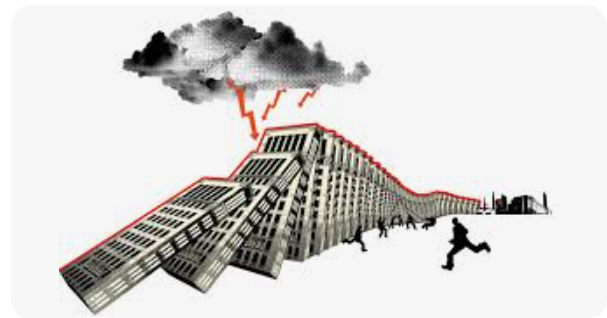
While Turkey’s macroeconomic indicators continue to suggest resilience, the ground-level reality for the country’s real sector paints a far darker picture. 2025 may well be remembered as the year of a historic collapse in Turkey’s productive economy. From rising bankruptcies and exploding enforcement files to a surge in zombie firms and record-high non-performing loans, the signs of distress are mounting rapidly.
According to economist Erol Taşdelen, the contrast between official growth data and real-sector performance has become so stark that it raises fundamental questions about economic sustainability—and the credibility of some headline metrics.
Non-Performing Loans at All-Time High
Turkey’s banking sector is witnessing an alarming rise in non-performing loans (NPLs). As of June 2025, NPLs reached TL 425 billion, up from TL 287 billion at end-2024—a staggering 48% jump in just six months, marking the highest level in the past five years.
Unpaid commercial and SME loans now account for TL 243 billion of that total. Importantly, these figures exclude nearly TL 15 billion in bad debts already sold to asset management companies. In addition, “zombie loans”—restructured or close-watch credits—now represent roughly 15% of all outstanding loans, signaling a systemic cash flow crunch.
With public banks tightening lending and loan channels closing across the board, businesses face a credit drought that is eroding the financial core of the real economy.
Turkey’s Enforcement Offices Drowning in Files
The Ministry of Justice reports that nearly 26 million enforcement files were opened in the first half of 2025—surpassing even the peak levels seen during the COVID crisis in 2020.
The top categories include bank debts, bounced checks, promissory notes, and commercial rent disputes. Most worrying is the surge in legal action among companies, suggesting widespread inter-firm insolvency risk.
Zombie Companies on the Rise
Defined as firms that can barely meet interest payments but can’t service principal debt, zombie companies now make up 18% of large-scale enterprises in Turkey, according to Central Bank and industry data.
These are companies that may still appear active but are essentially non-viable, surviving on rollover debt, public guarantees, or political favoritism. Their persistence distorts productivity, ties up capital, and slows recovery.
Wave of Concordatos Signals Structural Decay
Court-approved bankruptcy protection filings (concordato) are soaring. In just the first half of 2025, 2,776 applications were filed, compared to 1,500 for the entire year in 2023.
Major players across textile, construction, food, and agriculture are among the latest to collapse. Even listed companies or firms awaiting IPO approval are now seeking legal protection from creditors.
Recent filings include big names from the ISO500 index like Sıddık Kardeşler Haddecilik, Modern Çikolata (3,000 employees), Staret Entegre Gıda, GNS Alüminyum, and Arslan Alüminyum. The number is expected to rise significantly by year-end.
GDP Growth Masks a Hollow Economy
Despite all this, Turkish Statistical Institute (TÜİK) data shows that Turkey continues to grow. But as Taşdelen stresses, the growth is driven by consumption, not production. The Central Bank of Turkey has acknowledged this imbalance in its own reports.
At the same time, core inputs like energy and fuel imports consume over $100 billion annually, while imported consumer goods make up less than 10% of total imports. Recent tax hikes on overseas e-commerce are political optics, not structural fixes.
Meanwhile, energy costs remain a critical concern for manufacturers. Instead of supporting industrial energy investments, the Ministry of Industry and Technology has restricted solar power subsidies, and required so-called “domestically produced” solar cells—which turned out to be rebranded Chinese imports. Only an investigation by the Energy Ministry revealed the truth.
Structural Reforms, Not Credit Band-Aids, Are Needed
While banks post record profits and the Treasury claims fiscal control, the productive sector is collapsing quietly beneath the surface.
Many firms still don’t even differentiate between accounting and finance departments—a fatal oversight. It’s no coincidence that virtually all collapsed companies had accounting teams but no professional finance staff.
“Our forests aren’t the only thing burning—Turkey’s industrial base is also ablaze,” Taşdelen warns. He argues that band-aid solutions like cheap SME credit or symbolic guarantees are insufficient.
A Final Warning
Turkey’s policymakers must abandon the illusion that inflation can be crushed by simply suppressing demand, and instead prioritize a return to production-led, sustainable growth.
If current trends continue, Turkey risks becoming an economic junkyard of collapsed companies, sustained by data illusions and political spin.