Female Employment in Türkiye Drives Massive Losses
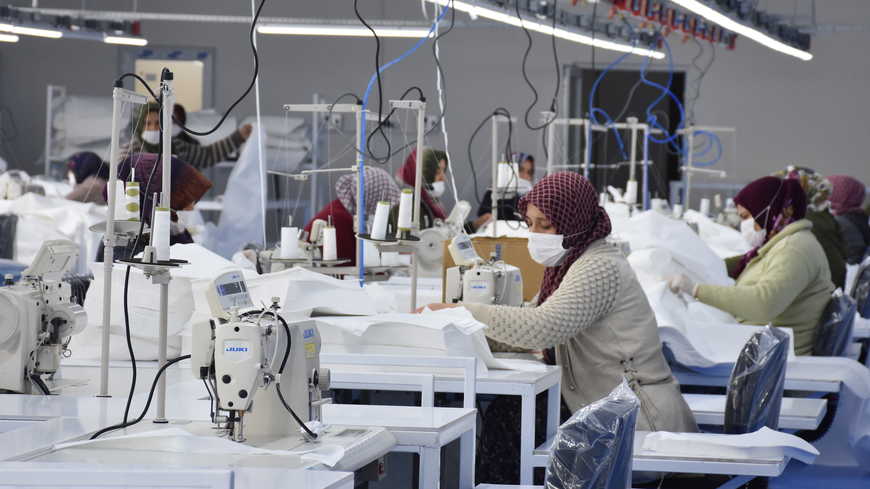 Textile industry
Female employment in Türkiye is at a critical crossroads, as new data reveal that mothers’ departure from the workforce is costing the state hundreds of billions of liras. A landmark report titled “Family-Friendly Policies on the Axis of Female Employment,” developed by the Ministry of Labor and Social Security in collaboration with the United Nations Population Fund (UNFPA), underscores a troubling trend. After consulting with 1.4 million women, the findings show that the inability to balance career and childcare is creating a significant vacuum in the national budget.
The One-Year Exit Trend in Female Employment in Türkiye
The research indicates that the disconnect from the workforce is a gradual but aggressive process. In the first two months following childbirth, only 3.7% of women resign. However, this number surges to 39.9% by the sixth month and culminates in 56.5% of women leaving their positions by the end of the first year.
Experts point to “the heavy burden of caregiving falling primarily on women” and the “scarcity of accessible childcare services” as the primary drivers behind this exodus. Currently, only 24.22% of women take advantage of unpaid leave, suggesting that existing legal rights are either underutilized or difficult to access in practice.
Calculating the Billions Lost in Revenue
The financial implications of declining female employment in Türkiye are staggering. The report calculates that between 2016 and 2024, nearly 310,000 women failed to return to work post-childbirth. If just half of those women had stayed employed, the government would have collected 797 billion TL in insurance premiums and 491 billion TL in tax revenue. This massive fiscal gap underscores that retaining women in the workforce is not just a social issue but a vital economic necessity for the country’s growth.
Institutional Support and the Path Forward
The report highlights a sharp divide between corporate environments. In large-scale enterprises with established HR policies, the resignation rate stays around 15%. In contrast, small businesses experience a 43% loss of female talent, largely due to a lack of flexible work arrangements. To reverse this, the UNFPA and the Ministry recommend a “holistic policy” approach.
This includes expanding affordable nurseries, incentivizing employers who support mothers, and implementing flexible, secure work models. Strengthening female employment in Türkiye through these measures is seen as the only way to recover the lost billions and ensure long-term industrial stability.
Source: türkiyegazetesi