



Russia-Türkiye Tension: Moscow Labels Two Turkish Firms as Military Targets
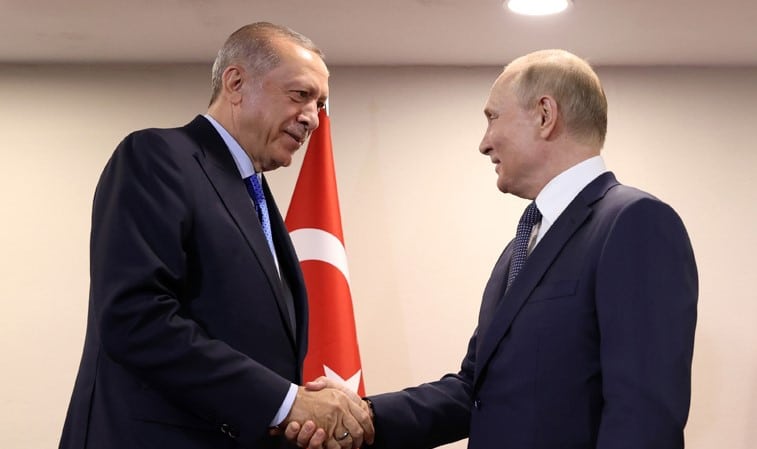 Erdoğan and Putin
Russia-Türkiye tension escalated significantly on April 15, 2026, after the Russian Ministry of Defense published a detailed list identifying international companies supplying Unmanned Aerial Vehicles (UAVs) to Ukraine. The list explicitly includes the names and legal addresses of two Turkish technology firms, classifying them as part of Ukraine’s “strategic rear front.” This move was followed by a direct threat from Dmitry Medvedev, Deputy Chairman of the Russian Security Council, who characterized these civilian facilities as “potential military targets.”
Turkish Tech Firms in the Crosshairs
The Russian Ministry of Defense justified the publication by claiming that European and allied nations are transforming their industrial bases into supply hubs for “Ukrainian terror scenarios.” The inclusion of Turkish companies marks a critical shift in the diplomatic balancing act between Ankara and Moscow. The two firms identified in the report are:
-
T… (Ankara): Operating out of ODTÜ Teknokent and Kahramankazan HAB OSB, this company is targeted for producing “space radio navigation receivers,” which are vital for drone guidance systems.
-
D… (Yalova): This firm was listed for producing high-durability “carbon fiber” materials used in the construction of UAV fuselages.
By releasing the exact coordinates and operational sites of these companies, Moscow has bypassed traditional diplomatic protocols, effectively placing civilian industrial zones in Ankara and Yalova under a shadow of military threat.
Medvedev’s “Potential Targets” Ultimatum
The situation reached a fever pitch when Dmitry Medvedev shared the list on social media, adding a provocative warning to European and Turkish partners. Medvedev stated that the list should be taken “word for word” as a roster of potential targets for the Russian Armed Forces. “Sleep well, European partners!” he added, suggesting that the transition from a list to an active strike depends on future geopolitical developments.
The Russia-Türkiye tension resulting from this announcement has caused concern in Western capitals and Ankara. Analysts suggest that labeling civilian factories in a NATO member state as military targets is a form of psychological warfare intended to deter private sector support for Ukraine.
While the Turkish government has yet to issue a formal diplomatic protest, the move is seen as a direct challenge to Türkiye’s defense industry, which has become a global leader in drone technology.
Source: karar