Kurdish Factor Raises Regional Stakes in Iran Conflict
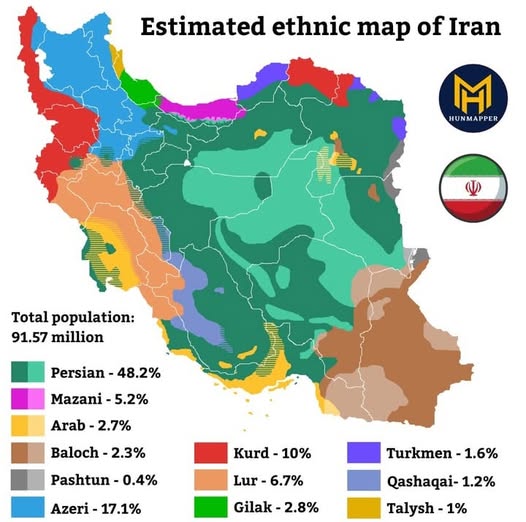 kurds in iran
Early in the Iran conflict, Washington and Tel Aviv reportedly explored supporting Kurdish militant groups along the Iran–Iraq border, but abandoned the plan amid regional pressure and security risks. The episode has heightened concerns in Ankara and Baku, where officials fear that Kurdish involvement could destabilize border regions, trigger military responses, and complicate already fragile geopolitical balances.
Reports indicate that the United States and Israel briefly considered providing political and logistical backing to Iranian Kurdish militant groups during the early stages of their confrontation with Iran. The proposal, however, was shelved within weeks due to mounting diplomatic pressure, Iranian countermeasures, intelligence crackdowns, and leaks that exposed the plan.
Early Plans, Rapid Reversal
The initiative reportedly aimed to leverage Kurdish groups operating near the Iran–Iraq border. However, Tehran responded swiftly with military strikes targeting Kurdish-populated areas in both Iran and Iraq, signaling a clear deterrent.
At the same time, inconsistent backing from Washington and Tel Aviv, combined with concerns from regional actors, contributed to the abandonment of the plan by late March.
Türkiye Draws a Clear Red Line
The prospect of Kurdish militant involvement has raised immediate concerns in Türkiye, which has consistently opposed any expansion of armed Kurdish movements in the region.
From the outset of the conflict, Ankara signaled that it could consider military intervention in northern Iraq’s Kurdistan Region if Kurdish insurgent activity were to escalate. Turkish officials also held high-level talks with the Kurdistan Regional Government (KRG), urging it to avoid any involvement in the conflict.
Despite a history of tensions between Türkiye and Iran, bilateral relations have remained functional, largely due to shared economic interests and mutual concerns over Kurdish separatism.
Iran’s Pezeshkian Praises Türkiye’s Stance as It Demands Reparations from 5 Others
Post-PKK Landscape, Persistent Sensitivities
Türkiye’s long-running conflict with Kurdish militants formally entered a new phase in May 2025, following the initiation of the disarmament process of the Kurdistan Workers’ Party (PKK).
However, Ankara’s sensitivity to Kurdish armed movements remains unchanged. Any revival or expansion of such groups beyond Türkiye’s borders is still viewed as a direct national security threat.
Meanwhile, a temporary ceasefire between the United States, Israel, and Iran remains fragile, with its expiration approaching—raising the risk of renewed escalation.
Iran Targets Kurdish Positions
Shortly after reports of potential Kurdish involvement surfaced, Iran launched missile strikes on Sulaimaniyah in Iraq’s Kurdistan Region. The strikes were widely interpreted as a preemptive warning to deter Kurdish groups from entering the conflict.
In parallel, several Iranian Kurdish political factions had formed a coalition earlier in the year, further heightening Tehran’s concerns about coordinated activity along its western borders.
Azerbaijan Watches Closely
The Kurdish dimension of the conflict is also closely monitored by Azerbaijan, where officials are concerned about both internal and cross-border implications.
Iran is home to a significant ethnic Azerbaijani population, and any escalation involving Kurdish groups could intensify interethnic tensions—particularly in West Azerbaijan province, where Azerbaijani and Kurdish communities coexist.
Historically, tensions between these groups have occasionally turned violent, and analysts warn that renewed instability could revive dormant fault lines.
Strategic Routes and Regional Risks
From Baku’s perspective, the potential expansion of Kurdish militant activity into Iran’s West Azerbaijan province poses strategic risks. It could disrupt regional stability, weaken links with ethnic Azerbaijani communities, and complicate major infrastructure projects.
One such initiative is the planned transport corridor linking Azerbaijan to its Nakhchivan exclave and onward to Türkiye. Kurdish instability near these routes could undermine long-term connectivity plans across the South Caucasus.
Joint Security Concerns Drive Coordination
Both Ankara and Baku view the Kurdish question within a broader security framework involving non-state actors and shifting regional alliances.
Türkiye’s concerns are primarily driven by domestic security considerations, while Azerbaijan’s focus centers on regional stability and strategic connectivity.
Recent joint military exercises between the two countries—held in eastern Türkiye—underscore growing coordination in response to potential regional escalation.
Conclusion: A Fragile Balance
The brief consideration of Kurdish involvement in the Iran conflict highlights how quickly local dynamics can evolve into broader geopolitical risks.
While the plan was ultimately abandoned, the episode underscores the حساس interplay between state actors, non-state groups, and regional power balances.
As tensions persist, Türkiye and Azerbaijan are likely to remain vigilant, preparing for scenarios in which Kurdish militancy could once again become a central factor in regional security calculations.
PA Turkey intends to inform Turkey watchers with diverse views and opinions. Articles in our website may not necessarily represent the view of our editorial board or count as endorsement.
Follow our English YouTube channel (REAL TURKEY):
https://www.youtube.com/channel/UCKpFJB4GFiNkhmpVZQ_d9Rg
Twitter: @AtillaEng
Facebook: Real Turkey Channel: https://www.facebook.com/realturkeychannel/***