Ukraine War Signals New Era: Are Robot Soldiers the Future of Warfare?
 robot asker
A recent battlefield development highlighted by Ukrainian President Volodymyr Zelenskyy suggests warfare may be entering a निर्णायक technological phase. An operation conducted entirely with unmanned systems—without human troop involvement or casualties—has intensified debate over whether robotics and AI-driven systems will redefine military power. Analysts argue that this shift could fundamentally alter how wars are fought, potentially diminishing the role of human soldiers.
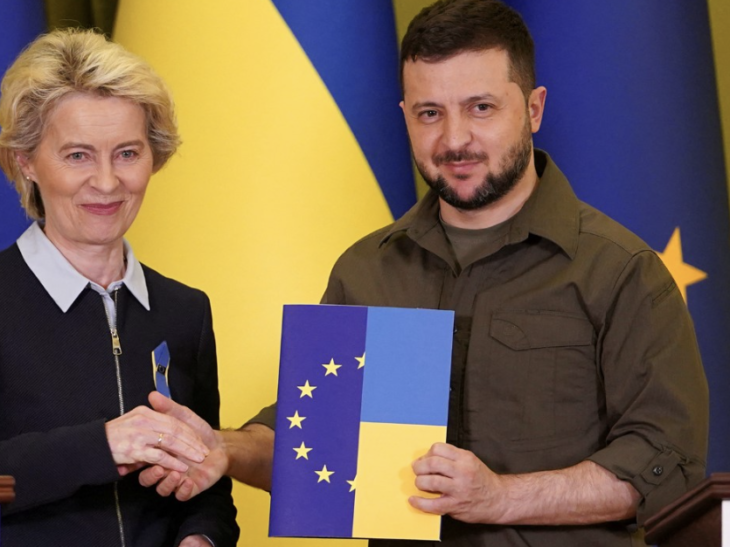
A statement by Ukrainian President Volodymyr Zelenskyy has brought renewed attention to the rapidly evolving role of technology in modern warfare. Posting on X, Zelenskyy claimed that Ukrainian forces successfully captured a Russian position using only unmanned systems, including ground-based robotic units and drones.
According to Zelenskyy, the operation was executed without deploying infantry and resulted in no Ukrainian casualties. Russian soldiers at the position were reportedly captured. If verified, this would mark a significant milestone in military history, demonstrating the potential of fully autonomous or remotely operated combat systems.
Turkish Hunter Drone: Skydagger Unveils High-Speed Interceptor
Technology as the Decisive Factor in War
Military history consistently shows that technological superiority often outweighs traditional factors such as troop numbers, morale, or battlefield bravery. While human elements remain important, they tend to be decisive only when opposing forces possess comparable technological capabilities.
The Ukraine war has underscored this dynamic. When Russian President Vladimir Putin launched the invasion in 2022, many analysts expected a swift Ukrainian collapse. Instead, the conflict has stretched into a prolonged and costly war, in part due to Ukraine’s innovative use of drone warfare across air, land, and maritime domains.
These technologies have disrupted conventional military tactics, imposing significant costs on Russian forces and reshaping battlefield dynamics.
Early Stage of Robotic Warfare
The current conflict is widely seen as an early testing ground for robotic and autonomous systems in combat. While existing technologies are still evolving, their effectiveness suggests a broader transformation is underway.
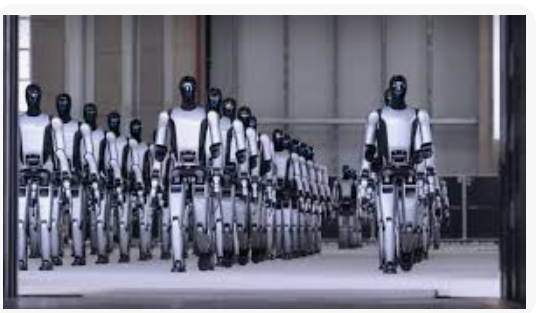
Future warfare may rely increasingly on unmanned platforms, including autonomous ground vehicles, aerial drones, and AI-assisted command systems. This shift could reduce direct human involvement in combat operations while increasing reliance on technological capabilities.
From Population Power to Technological Power
Historically, population size has been a critical determinant of military strength, enabling countries to mobilize large armies. However, this paradigm may be changing.
Advances in robotics and automation mean that smaller nations with advanced technological infrastructure could potentially field more effective fighting forces than larger, less technologically advanced rivals.
In such a scenario, the number and sophistication of robotic systems deployed on the battlefield may become more important than the number of human soldiers.
Advantages of Robotic Soldiers
Compared to human troops, robotic systems offer several operational advantages:
- They do not fatigue, fear, or suffer from psychological stress
- They can operate continuously with minimal logistical support
- They can be rapidly produced and replaced if destroyed
- They enable faster and more reliable data communication
In contrast, training a skilled human soldier requires years of investment, and human vulnerability remains a critical limitation in high-intensity combat environments.
Emerging Risks: Privatized Military Power
The rise of robotic warfare also introduces new risks. One of the most significant is the potential for non-state actors, including private corporations, to develop and deploy their own armed systems.
Traditionally, military power has been concentrated in the hands of states. However, as technology becomes more accessible, barriers to entry may decline, raising concerns about the proliferation of autonomous weapons and the erosion of state control over organized violence.
A Digitized Battlefield
Experts increasingly describe the future battlefield as highly digitized, network-driven, and reliant on real-time data integration. Autonomous systems are expected to play a central role, supported by artificial intelligence and advanced communications infrastructure.
Zelenskyy’s announcement may represent an early glimpse of this future—one in which wars are fought not by massed human armies, but by coordinated networks of machines.
Conclusion: A Structural Shift in Warfare
Developments in Ukraine suggest that warfare is undergoing a structural transformation. Technological capability is becoming the primary determinant of military effectiveness, potentially reshaping global power balances.
While robotic systems may reduce human casualties in some scenarios, they also raise complex ethical, legal, and strategic questions. As countries accelerate investment in defense technologies, the nature of conflict—and the definition of military power—may be permanently altered.
Adapted from Murat Sururi Özbülbül, Yeni Cag Gazette
***PA Turkey intends to inform Turkey watchers with diverse views and opinions. Articles in our website may not necessarily represent the view of our editorial board or count as endorsement.
Follow our English YouTube channel (REAL TURKEY):
https://www.youtube.com/channel/UCKpFJB4GFiNkhmpVZQ_d9Rg
Twitter: @AtillaEng
Facebook: Real Turkey Channel: https://www.facebook.com/realturkeychannel/***