Orbanomics Collapses — Is Erdoganomics Next?
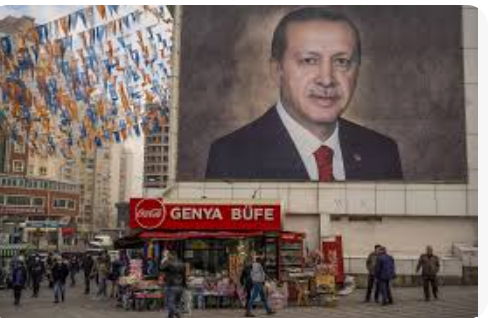 erdoganomics
By Güldem Atabay
Hungarian Prime Minister Viktor Orbán lost power in a critical election on Sunday, as the economic model he had built over 16 years reached its structural limits.
Often described as “socialism for the rich, markets for the rest,” the Orbán-era system relied on expanding the state’s role in the economy — not to distribute welfare broadly, but to consolidate control. Under this framework, the government acted as a strong protector and enabler for selected sectors and actors, while exposing the rest of society to harsher market conditions.
A State-Centered Model with Selective Winners
Strategic sectors such as banking, energy, media, and construction saw the rise of politically aligned business groups. These actors benefited from public tenders, tax advantages, and regulatory support, effectively transferring much of their risk to the public sector.
In contrast, small businesses, wage earners, and independent economic actors were left exposed to market volatility. High VAT rates, limited social support, and weak labor unions amplified the economic pressure on these groups. Over time, the system evolved into a top-down allocation mechanism in which winners were largely predetermined.
Growth with Weak Foundations
The model delivered short-term growth. Between 2014 and 2019, Hungary recorded strong economic performance, supported by relatively stable public finances, low unemployment, and rising investment.
However, the quality of that growth was questionable. Expansion depended heavily on external financing, European Union funds, and low value-added production. Hungary became a key manufacturing hub for German automakers, but remained positioned at the lower end of global value chains. Domestic productivity and innovation capacity remained limited, creating a disconnect between headline growth and household welfare.
Rising Fragility and Policy Distortions
Over time, increasing politicization of the economy further distorted resource allocation. A “loyalty-based economy” emerged, driven by public tenders and state support mechanisms. This structure reinforced existing power dynamics rather than improving efficiency.
At the same time, underinvestment in education, research, and human capital constrained long-term growth potential.
External shocks — including the pandemic and the Ukraine war — exposed these vulnerabilities. However, the scale of deterioration after 2020 was shaped less by external factors and more by domestic policy responses. Expansionary fiscal policies, uncontrolled spending, and price interventions ahead of elections drove inflation sharply higher.
Simultaneously, tensions with the European Union led to the freezing of billions of euros in funding, removing a key source of growth. Weakening institutional independence and the politicization of the rule of law eroded investor confidence. As a result, the economy became trapped between low growth, high inflation, and rising fiscal pressures.
By 2026, Hungary had settled into what could be described as a state of “stable stagnation” — neither in full crisis nor in meaningful recovery.
Political Change Driven by Economic Reaction
The rise of Orbán’s challenger, Péter Magyar, reflects less an ideological shift and more an economic reaction. His platform emphasizes restoring institutional quality, improving relations with the EU, fighting corruption, reestablishing the rule of law, and ensuring more transparent use of public resources.
These proposals aim to rebuild the structural foundations of the economy.
Beyond Hungary: A Broader Model Under Strain
The developments in Hungary extend beyond domestic politics. What has effectively collapsed is not only a political leadership, but a governance model that centralized economic decision-making and distributed resources based on political loyalty.
While resource allocation is inherently political, under Orbán it became detached from institutional frameworks and legal norms, evolving into a direct extension of political power. Over time, this reduced investment quality and excluded large segments of society from economic gains.
The election outcome reflects the accumulated consequences of this model.
Parallels with Türkiye
The comparison with Recep Tayyip Erdoğan is structural rather than superficial. Particularly under the presidential system, transparency and competition in public resource allocation have weakened, while specific sectors and actors have moved to the center of policy design.
Growth has been supported through large infrastructure projects, public-private partnerships, credit expansion, and regulatory measures. However, the composition of that growth has become increasingly fragile. Since 2018, the weakening of institutional checks has led to declining investment quality, productivity losses, and rising inflation, alongside erosion in real incomes.
In Hungary, tensions with the EU and the loss of external financing accelerated the stress on this model. In Türkiye, the adjustment has been more gradual due to the economy’s larger size and greater flexibility. Nevertheless, the underlying dynamics remain broadly similar.
Ultimately, the election defeat in Hungary represents not only the fall of Orbán, but the limits of a governance model that centralizes economic decision-making within a narrow political circle — a model that, over time, collides with its own structural constraints.