Can Istanbul Rival Dubai? Türkiye Courts Investors as Iran War Reshapes Regional Finance
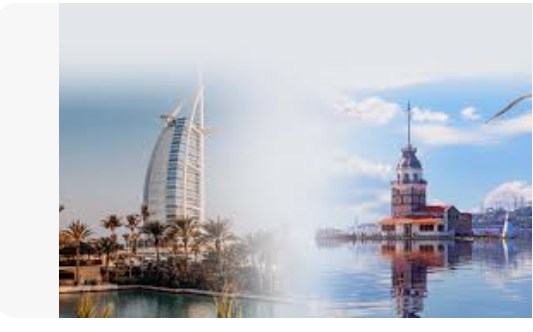 istanbul dubai
Türkiye is ramping up efforts to position Istanbul as a regional financial hub, offering expanded tax incentives to attract multinational firms—particularly from the Gulf—as geopolitical risks rise amid the Iran war. While Ankara sees an opportunity to compete with Dubai, concerns over inflation, currency volatility and the rule of law remain key obstacles.
Ankara Sees Opportunity in Regional Turmoil
Türkiye is seeking to capitalize on shifting investor sentiment triggered by the Iran war, which has exposed vulnerabilities in Gulf financial hubs such as Dubai and Abu Dhabi.
Officials believe heightened geopolitical risk could encourage multinational companies—especially in finance, technology and logistics—to consider relocating part of their operations to Istanbul.
A senior Turkish official told international investors that Ankara plans to expand tax incentives and support mechanisms, building on existing advantages offered at the Istanbul Financial Center (IFC).
Expanded Incentives at Istanbul Financial Center
The IFC, already positioned as Türkiye’s flagship financial hub, offers significant tax benefits, including:
- Full corporate tax deductions on income from exported financial services
- Exemptions from transaction-related charges
- Income tax breaks of up to 80% for qualified international employees
The government is now preparing to extend some of these incentives more broadly to multinational firms.
Under proposed measures, companies could deduct up to 50% of income generated from goods sourced abroad—even if those goods do not physically enter Türkiye.
Global CEOs Signal Growing Interest
There are early signs that international interest in Türkiye may be increasing.
President Recep Tayyip Erdoğan recently hosted around 40 global CEOs in Istanbul at a meeting organized by the World Economic Forum (WEF), marking a rare high-level engagement after years of distance from Davos.
Among the participants was BlackRock CEO Larry Fink, highlighting the scale and strategic importance of the gathering.
WEF officials emphasized Türkiye’s growing role in global trade and production networks, while analysts described the meeting as a signal of renewed confidence in the Turkish economy despite ongoing vulnerabilities.
War Drives Strategic Repositioning
The Iran conflict has disrupted traditional investment assumptions in the Middle East.
Key sectors concentrated in the Gulf—such as banking, fintech, AI, and data infrastructure—now face elevated geopolitical risk, prompting some firms to explore diversification strategies.
Officials at the Istanbul Financial Center confirmed discussions with dozens of companies from East Asia and the Gulf considering partial relocation or expansion in Türkiye.
Challenges: Inflation, Currency and Legal Concerns
Despite Ankara’s ambitions, significant challenges remain.
Türkiye continues to grapple with:
- High inflation, projected around 25%
- Currency volatility
- A widening trade deficit
More critically, investor confidence is constrained by concerns over the rule of law.
International bankers and analysts point to recent government interventions in private firms as a major deterrent.
“No one trusts the Turkish courts,” one international banker said, reflecting a widely held concern among investors.
Dubai’s Structural Advantages
Dubai’s financial centers, particularly the Dubai International Financial Centre (DIFC), operate under independent legal frameworks based on English common law, with separate courts and regulatory systems.
Replicating such a model in Türkiye would be politically and historically sensitive, given longstanding resistance to dual legal systems.
While Ankara may seek alternative legal assurances, analysts believe bridging this gap will be difficult.
Tax Advantage vs. Risk Perception
On paper, Türkiye’s tax incentives can rival—or even surpass—those offered in Dubai.
Banks operating at the IFC can effectively pay zero corporate tax on financial services exports until 2031, compared to a 9% rate applied to banks and insurers in Gulf financial centers.
However, investors are less focused on tax comparisons and more concerned with macroeconomic stability.
Key issues include:
- Lira depreciation risk
- Sovereign credit ratings
- Policy predictability
Analysts note that Türkiye’s appeal could improve if macroeconomic stability strengthens under its current policy framework.
Sectoral Opportunities: Manufacturing and Domestic Market
Türkiye’s strongest competitive advantage lies outside finance—in manufacturing.
The country remains one of the region’s leading industrial bases, offering proximity to Europe and access to a large domestic market of 85 million people.
Additionally, Türkiye’s relatively underdeveloped non-bank financial sector presents long-term growth opportunities in:
- Insurance
- Asset management
- Pension systems
This could be a more compelling value proposition than competing directly with Dubai on tax incentives.
Strategic Alternatives and Execution Risks
Some analysts suggest Türkiye could adopt a more targeted approach by:
- Positioning secondary cities as fintech or back-office hubs
- Concentrating regulated financial activity within the IFC
However, success will depend on coherent policy execution and institutional credibility.
Political developments, including actions against opposition figures and municipalities, also weigh on investor sentiment.
Turkish press, Middle East Eye, PA Turkey newsdesk
PA Turkey intends to inform Turkey watchers with diverse views and opinions. Articles in our website may not necessarily represent the view of our editorial board or count as endorsement.
Follow our English YouTube channel (REAL TURKEY):
https://www.youtube.com/channel/UCKpFJB4GFiNkhmpVZQ_d9Rg
Twitter: @AtillaEng
Facebook: Real Turkey Channel: https://www.facebook.com/realturkeychannel/***
Related articles

MARKET PREVIEW: Turkish Markets Brace for Volatility Amid Escalating Iran Conflict and Key Inflation Data

Morning Brief: Markets whipsawed by Iran war headlines as brief “Trump rally” fades
The bitter truth, from the mouth of Mehmet Simsek