Türkiye, Syria Reopen Transit Route to Gulf as Hormuz Crisis Reshapes Trade
 MENA transport corridor
Türkiye has announced that transit trade through Syria to the Middle East and Gulf is now operational, marking a significant shift in regional logistics. The move comes amid disruptions in the Strait of Hormuz, accelerating efforts to establish alternative land corridors linking the Levant and Gulf economies.
Ankara Signals New Phase in Türkiye–Syria Economic Ties
Türkiye’s Trade Minister Ömer Bolat said transit trade routes passing through Syria toward Middle Eastern and Gulf markets are now functional, highlighting deepening economic cooperation between Ankara and Damascus.
Speaking at the Türkiye–Syria Business and Investment Forum, Bolat said bilateral engagement is expanding across multiple sectors, including trade, industry, transport, customs, energy, and finance.
Trade between the two countries has rebounded strongly, reaching $3.7bn last year—up 40% year-on-year. Bolat emphasised the importance of building a more balanced and sustainable trade relationship going forward.
He also confirmed that Türkiye has shared plans to revive the pre-2011 Free Trade Agreement and is exploring a broader framework for economic integration.
Customs Integration and Institutional Cooperation
Bolat noted that a joint customs committee agreement entered into force on March 26, with both countries working to streamline border procedures and reduce bureaucratic barriers.
The announcement coincided with a visit by a Syrian delegation led by Economy and Industry Minister Nidal al-Shaar to Istanbul for the first meeting of the Joint Economic and Trade Committee (JETCO), aimed at formalising and expanding bilateral economic ties.
Officials on both sides expressed confidence that closer integration would support long-term economic recovery and regional trade flows.
Hormuz Disruptions Accelerate Land Corridor Plans
The reopening of transit routes comes as the Strait of Hormuz crisis continues to disrupt maritime shipping, forcing regional economies to pivot toward land-based logistics.
Attacks on vessels and ongoing instability in the waterway have significantly reduced shipping flows, pushing freight traffic onto alternative routes.
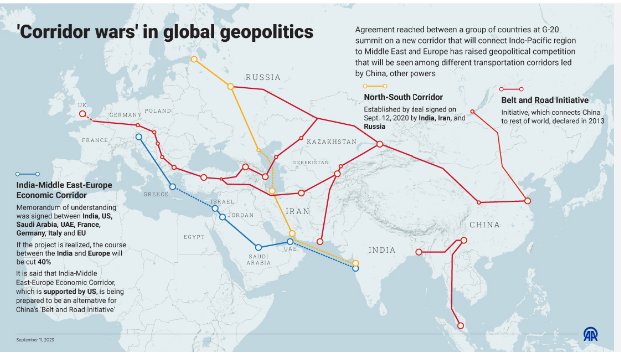
In response, Türkiye, Syria and Jordan signed a memorandum of understanding to develop a regional transport corridor linking road, rail and maritime networks across the Middle East.
The agreement aims to facilitate cargo movement by reducing visa restrictions, transportation costs, customs duties and administrative hurdles, while also upgrading infrastructure.
Emergence of a MENA Land-Sea Trade Network
The corridor is expected to form part of a broader “land-sea bridge” connecting Mediterranean ports in Türkiye and Syria with Jordan’s Red Sea port of Aqaba.
According to Syrian state media, the project could take up to three years to fully develop, though initial transit operations are already underway.
Parallel initiatives are also gaining momentum. Türkiye and Saudi Arabia have agreed to open a new land corridor to maintain supply chains disrupted by the war and maritime bottlenecks in the Gulf.
Bolat said the new route would allow goods that cannot pass through Hormuz to reach regional markets via pipelines and road transport.
Iraq Shifts Oil Exports to Türkiye as Middle East War Redraws Energy Routes
Strategic Shift in Regional Trade Flows
The emerging corridor is expected to pass through Jordan and Syria, the latter having recently stabilised after more than a decade of conflict that severely disrupted regional trade networks.
Traffic along the Jordan–Syria border has already surged, with thousands of tonnes of cargo diverted from sea routes to land since the outbreak of the Iran war.
The shift underscores a broader realignment in regional trade architecture, as countries seek to reduce reliance on vulnerable maritime chokepoints.
Geopolitical Constraints Remain
Despite progress, regional trade integration continues to face political challenges. Previous initiatives, including proposed Gulf-to-Levant corridors involving Israel, have stalled due to geopolitical tensions.
Saudi Arabia, for instance, still lacks formal diplomatic relations with Israel, and prospects for normalization remain distant following the Gaza war and recent US-Israeli strikes on Iran.
Turkish and Arab sources