The Ukraine Black Swan: Sabotaging Russia-Turkey Pipelines
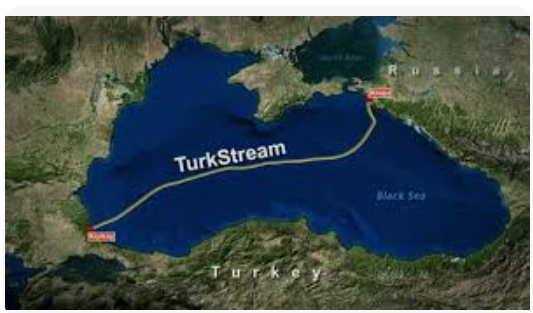 turkstream
Why Turkey’s Economic Lifelines are Under Fire from Ukraine?
The year 2026 has brought a terrifying clarity to the term “geopolitical risk.” For Turkey, a nation traditionally positioned as the bridge between East and West, that bridge is now being rigged with explosives—both literal and figurative. As the conflict between Ukraine and Russia escalates into a total economic war, and the Iran-Israel axis threatens to permanently shutter the Strait of Hormuz, Turkey find itself in a precarious position where its very survival depends on “umbilical cords” that are increasingly easy to sever.
The warning signs are no longer theoretical. Recent months have seen a surge in “gray zone” operations targeting regional infrastructure. We have witnessed the suspected drone-led harassment of commercial tankers in the Black Sea, a series of “unexplained” technical failures at major gas compressor stations near the Russian border, and the high-profile detention of several groups allegedly planning “kinetic interference” near the landfall points of the TurkStream pipeline. These are not isolated incidents; they are the opening salvos of a campaign designed to bankrupt Russia by strangling its most vital export route: the Turkish energy corridor.
The Energy Umbilical Cord: A Sitting Duck
Turkey’s industrial heartland, centered around the automotive and textile hubs of Bursa and the megalopolis of Istanbul, runs on Russian natural gas. Currently, nearly 45% of Turkey’s gas arrives via two underwater arteries: Blue Stream and TurkStream. In the current 2026 climate, these pipelines represent a “Single Point of Failure” for the Turkish state.
Following the precedent set by the Nord Stream sabotage in the Baltic, the technical feasibility of deep-sea destruction has moved from the realm of Bond movies to standard military doctrine. Modern Unmanned Underwater Vehicles (UUVs) can now reach these depths with ease, operating with a level of deniability that makes retaliation nearly impossible. Should these lines be severed, Turkey would face an immediate 50% shortfall in electricity generation capacity. We are not talking about simple “energy hikes”; we are talking about a total industrial blackout that could last for the 18 to 24 months required for deep-sea repairs.
EPDK Electricity Price Hike: How Bills Hide an 880pct Surge
The Black Sea: From Trade Route to Kill Zone
While the pipelines are the most dramatic targets, the “soft sabotage” of Black Sea cargo shipping is perhaps a more immediate threat. Turkey relies on this body of water for the vast majority of its grain and steel trade. The strategy of “maritime exclusion” practiced by Ukraine and supported by advanced surface drones aims to make the Black Sea uninsurable.
When a sea becomes a “kill zone,” the physical sinking of a ship is unnecessary to achieve economic collapse. The mere spike in insurance premiums—often referred to as “war risk surcharges”—can render the port of Samsun or Trabzon effectively closed. For a Turkish economy already battling a “Stone Age” energy shock where physical brent is trading at $140, the addition of a food supply chain crisis would be catastrophic. If the wheat ships stop sailing, the 2.5 TL hike in bread prices we saw recently will seem like a distant, fond memory.
The Stagflationary Trap
The mechanical result of these disruptions is a “supply-side” catastrophe that defies traditional central bank solutions. As noted by leading economist Atilla Yeşilada, Turkey is entering a period where “it is already too late” for standard interest rate adjustments to fix the underlying rot. We are witnessing the classic definition of Stagflation: an economy that is contracting in production while exploding in costs.
A 25% hike in electricity and natural gas prices—already a reality for many—acts as a regressive tax on the poorest citizens while simultaneously destroying the profit margins of Turkey’s most successful exporters. If the sabotage of Russian lines succeeds, this 25% hike will inevitably become a 100% surge. At that point, the “Strong Lira” policy currently defended by the TCMB through aggressive reserve management will become unsustainable. No amount of “gold-backed” reserves can defend a currency when the factories that back its value have no power to turn on their machines.
The Probabilistic Reality
Our assessment suggests a cumulative 15% probability that at least one of Turkey’s primary energy lifelines will be physically or digitally disabled by the end of 2026. While the political cost of hitting a NATO member’s infrastructure is high, the strategic desperation of the warring parties often outweighs diplomatic caution. Cyber-sabotage remains the most likely “silent” weapon, with an 80% attempt rate aimed at the SCADA systems controlling the flow of gas from the East.
Conclusion: The Survival Doctrine
Turkey’s 2026 tourism targets of $68 billion are already being revised downward by as much as $25 billion due to the regional war. When combined with the threat of energy and cargo sabotage, the nation faces a “perfect storm.” To survive, Turkey must pivot from a “Neutral Hub” strategy to an “Infrastructure Fortress” doctrine. This involves not only naval protection of its underwater assets but a rapid, albeit painful, diversification of its energy sources.
The “umbilical cord” that once provided Turkey with cheap energy and a seat at the diplomatic table has now become a noose. Whether the nation can cut itself loose before the saboteurs do will determine if 2026 is remembered as a year of transition or a year of total economic eclipse.
Contributors: Geopolitical Risk Unit, Energy Markets Desk, and Maritime Security Analysis.
By Atilla Yesilada and Gemini
Related articles
MEE: The soaring rise and devastating fall of Turkey’s building boom | The Big Picture EP7
Atilla Yesilada video: Erdogan wants to be president for life

Atilla Yesilada: 2026 Investment Outlook: Navigating Global Shocks and Turkey’s High-Growth Themes