Turkey’s Year of the Family: Pivot to Family-Centric Governance
 erdogan
In response to a sharp decline in fertility rates—dropping from roughly 14 per 1,000 in 2019 to historic lows—the Turkish government has reframed population growth as a matter of national resilience and security. By declaring 2025 the “Year of the Family,” the administration is positioning the traditional household not just as a social unit, but as the primary site for demographic recovery and a “civic duty” for citizens.
The Ideological Shift: From Welfare to Normative Regulation
While many nations face aging populations, Turkey’s approach is distinct in its political reframing. Rather than addressing structural barriers like skyrocketing housing costs or job insecurity, the official narrative attributes declining birth rates to “Western gender ideologies” and rising individualism.
This shift redirects state energy away from expanding public childcare and toward the normative regulation of the private sphere. Key institutional players now include:
-
The Family Institute & Population Policies Board: New bodies coordinating demographic strategy.
-
The Diyanet (Religious Affairs): Utilizing a significant budget (0.8–1.2% of total public expenditure) to promote “natural” gender roles and the “sacred foundation” of the family.
-
Directorate of Communications: Managing public messaging that links motherhood to national strength while stigmatizing LGBTQ+ identities as “harmful movements.”
Fiscal Constraints and the “Privatization” of Care
The “Year of the Family” is also a response to narrowing fiscal space. Since the economic instability of 2018, Turkey has faced pressure to limit long-term social spending. By framing care work as a “family responsibility,” the state shifts the burden of eldercare, childcare, and disability support onto women within the household.
The Ministry of Family and Social Services has seen its budget share fluctuate, dropping to an estimated 2.8% in 2025. This suggests that while the rhetoric surrounding the family is expanding, the financial commitment to public infrastructure is retracting. Women are left to bridge this gap, often forced to choose between precarious employment and unpaid domestic labor.
Institutional Pressures and International Realignment
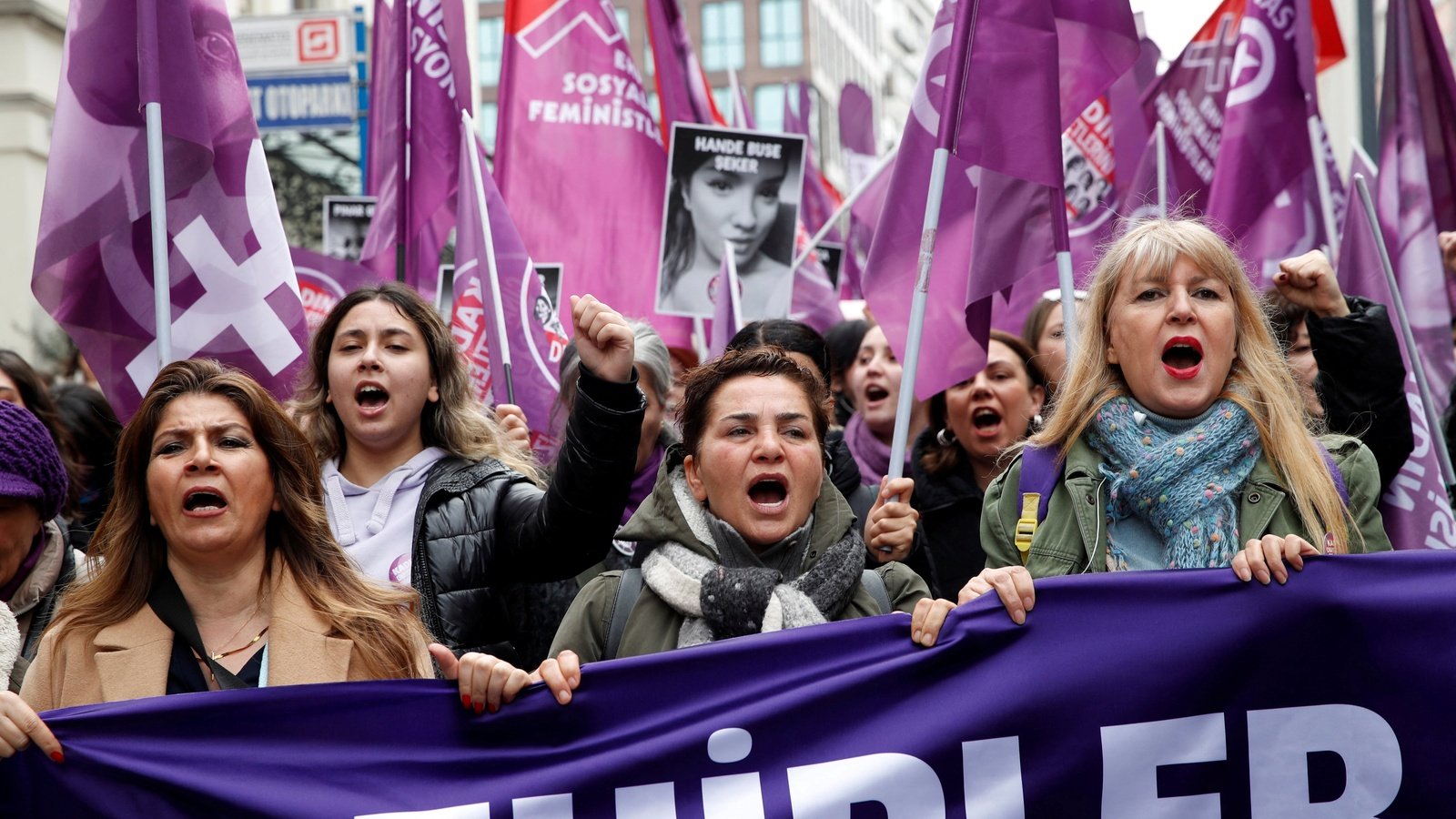
The 2021 withdrawal from the Istanbul Convention marked a pivotal moment in this “anti-gender” strategy. Government officials argued that national laws were sufficient, yet advocacy groups note that institutional capacity for preventing violence hasn’t kept pace with demand. In 2025 alone, at least 294 women were victims of femicide, highlighting a gap between symbolic “family protection” and actual safety implementation.
As Turkey embarks on its “Decade of Family and Population,” the strategy serves a triple function:
-
Base Consolidation: Re-centering the heteronormative family to appeal to conservative voters.
-
Economic Management: Using households as a shock absorber for limited welfare spending.
-
Security Framing: Treating demographic decline as a civilizational threat to justify increased state intervention in private life.
Source: swpberlin