“Less U.S., More Türkiye”: Israeli Analysis Points to Shifting Middle East Power Balance
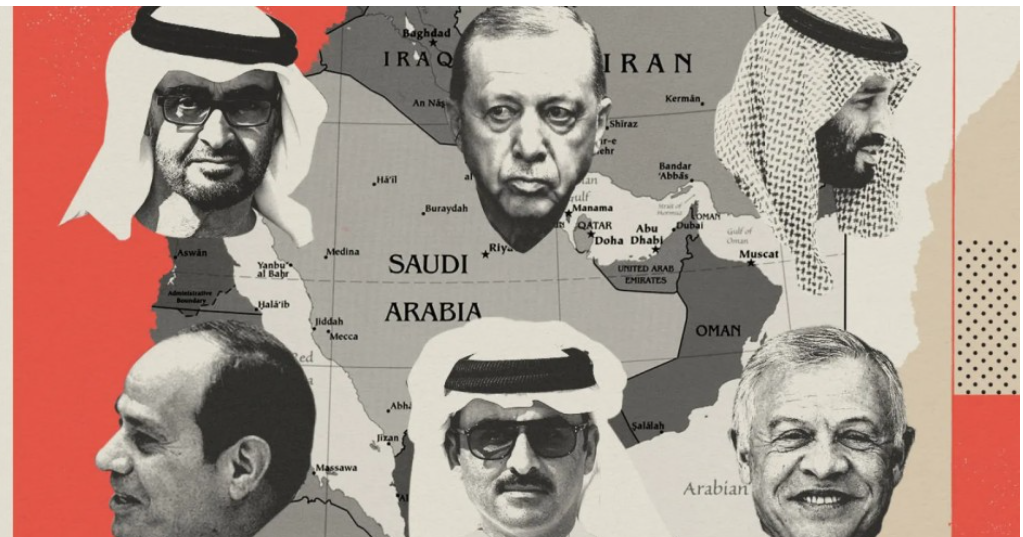 orta dogu liderler
A new analysis published by Israeli daily Haaretz argues that the ongoing Iran war is accelerating a strategic shift in the Middle East, with regional powers—particularly Türkiye—gaining influence as Gulf states reconsider their long-standing dependence on the United States for security.
Gulf States Reassessing Security Dependence
As the war between the U.S.-Israel alliance and Iran intensifies, attention has largely focused on military developments. However, according to Israeli analyst Elad Giladi of the University of Haifa, a deeper transformation is unfolding behind the scenes.
Giladi notes that Gulf countries are actively discussing a new regional security architecture, one that would:
- Reduce reliance on the United States
- Increase cooperation among regional actors
- Diversify security partnerships
These discussions are reportedly taking place through closed-door diplomatic channels in Riyadh, signaling a strategic recalibration rather than a temporary adjustment.
Türkiye Emerging as a Central Actor
A key takeaway from the analysis is Türkiye’s rising influence in this evolving landscape.
Giladi highlights that:
Türkiye’s role is not only “important” but increasingly decisive in shaping the region’s future.
Several factors underpin Ankara’s growing weight:
- Improved relations with Saudi Arabia and the UAE after years of tension
- Expanding security cooperation with regional actors, including Egypt and Pakistan
- A strong defense industry and operational military capacity
- Increasing diplomatic engagement across the Middle East
According to the analysis, Türkiye is now seen by Gulf states as a credible and capable partner in regional security matters.
NATO Multinational Corps-Turkey: Ankara Strengthens Deterrence
Strategic Shift: From U.S. Dependence to Multipolar Security
The emerging framework is not about replacing the United States outright, but rather about diversifying security sources.
Giladi suggests that Gulf countries are adopting a more pragmatic approach:
- The U.S. remains an important actor
- But reliance on a single security provider is no longer seen as sufficient
In this context, Türkiye stands out alongside:
- Pakistan (strategic capabilities)
- Egypt (military depth)
- Saudi Arabia and the UAE (financial power)
Together, these actors could form the backbone of a more regionally anchored security system.
“The Beginning of a New Era”
One of the most striking conclusions of the analysis is the prediction of a post-war order defined by:
👉 “Less U.S., more Türkiye”
Giladi argues that:
- The current war is accelerating structural geopolitical change
- Regional actors will assume greater responsibility for security
- Türkiye’s influence will expand both during and after the conflict
He adds that Ankara could play a central role not only in managing current dynamics but also in shaping the post-war order.
War as a Catalyst for Structural Change
The analysis concludes that the Iran war is not just a military confrontation but a turning point in regional geopolitics.
Key implications include:
- A gradual shift toward multipolar regional security
- Increased autonomy for Middle Eastern powers
- A more visible and assertive role for Türkiye
Conclusion
While the United States remains a dominant global power, its relative influence in the Middle East may be evolving. According to Israeli analysis, the region is entering a new phase where local actors—led increasingly by Türkiye—play a more decisive role in shaping security and political outcomes.
Related articles
Türkiye pushes top ten in global renewable energy capacity
Neo-Ottoman Vision of Turkey: Strategic Pillars Face Strain

How Experts Read the Markets: Stocks Caught in a Triangle of War, Rates and Uncertainty