OPINION: 2026 is Brain-Dead
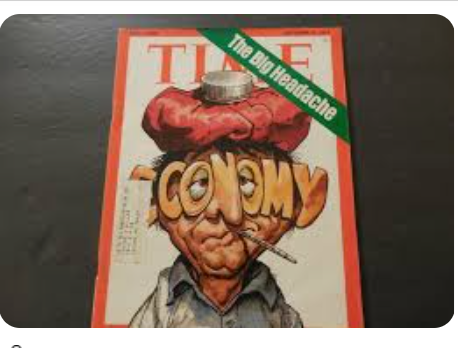 economy headache
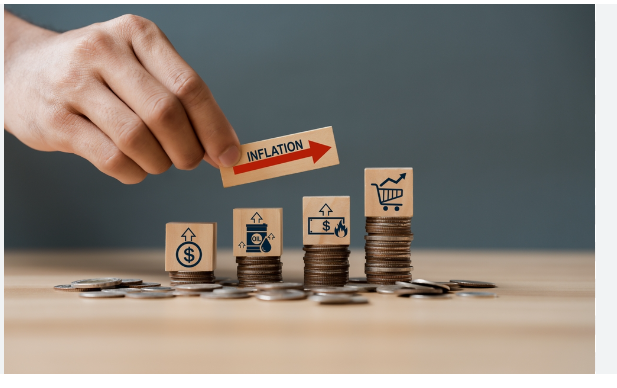
No, I am not going to criticize TurkStat’s (TÜİK) inflation data; because every time I read it, my blood boils. The sheer “sleight of hand” required to claim that the CPI increased by only 1.94% in a month is a display of magnificent arrogance and indifference. Türkiye has changed; many private and reliable institutions now provide estimates for both the total inflation basket and its sub-categories. Looking at these, even with a highly optimistic lens, the CPI should have been at least 2.5%.
Fortunately, it doesn’t matter; because both the world and Türkiye have lost the year 2026. If TurkStat receives a phone call from the Palace, it could declare year-end inflation at 19%. In fact—though I highly doubt it—the Central Bank could even move toward monetary easing based on TurkStat’s data, but the pain felt by the woman on the street would not diminish. On the contrary, cutting rates in this environment won’t reduce people’s net debt or create a positive wealth effect; it would only accelerate price hikes in a manufacturing and services sector already writhing in the grip of supply shocks.
Why Did We Lose 2026?
Because the Iran War will not end. Even if Trump takes his aircraft carriers and flees the Gulf, it won’t end—in fact, it will get worse. Iran, using the cluster missiles it has begun deploying, will turn Israel into an inferno and extort protection money from the Gulf Monarchies.
At the start of the year, all the hopes that 2026 would be a year of “recovery and stabilization” for the global economy have now been replaced by a dark reality. In the corridors of power and financial centers, only one whisper rises: We lost 2026. This isn’t just a pessimistic headline; it is the inevitable result dictated by data, logistical bottlenecks, and the structural decay of energy markets.
What is being discussed in the corridors doesn’t seem to bother fund managers yet. They are still pricing in a future where life returns to “normal” within a month or two. Within a week or two, they will realize how wrong they were and won’t leave a single asset unsold. We might even experience a financial spasm where market volatility spills over into the real economy. In other words, not pneumonia, but a severe case of the flu.
The Energy Shock: The “Six-Month” Illusion
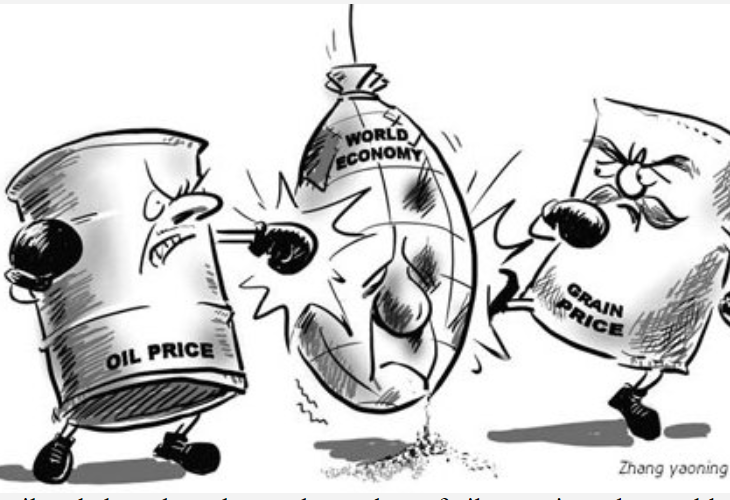
Most analysts predicted that the conflicts in the Middle East would create a temporary “risk premium” on oil prices and that things would settle within six months. This was a profoundly optimistic and flawed reading. The direct war between Iran and Israel, coupled with the Strait of Hormuz becoming a blockade zone subject to “new rules,” has led to a permanent supply shock rather than a temporary price spike.
Six months is not enough for energy prices to return to normal. Following an attack on the Habshan Natural Gas Plants in the UAE, operations were suspended due to fires. Russia might sell its oil more easily now, but Ukraine is bombing its energy facilities; soon, they won’t have any product left to sell.
The targeting of refineries, the skyrocketing of insurance premiums to astronomical levels, and the total shifting of global energy routes have spread these costs across the entire economic base. Today, oil anchored above $100 per barrel is not just a fuel problem; it means recalculating the cost of everything—from the tractor in the field to the conveyor belt in the factory, from the ship at the port to the bread in the kitchen. Moreover, Brent oil isn’t at $110/barrel; that’s just derivative market pricing. The price of physical Brent for delivery within 10 days is $140, and diesel is $200. Even if the war ended tomorrow, the cooling of this turbulence in the energy markets will require a restoration process of at least 18 months.
Atilla Yesilada: Damage Assessment: Taking Stock of the Economic Fallout
Stagflation: The Inevitable Trap
The global economy is currently inside the most feared scenario: Stagflation. In a classic recession, demand drops, which pushes inflation down; you spend money from the budget, cut interest rates, and the economy recovers quickly. However, the 2026 crisis is a “supply-side” catastrophe. As access to raw materials becomes harder and energy costs rise, inflation continues to climb. Meanwhile, because consumer purchasing power has eroded, demand is being cut like a knife.
Central banks are trapped in a historical corner. They must keep interest rates high to fight inflation, but high rates are further suffocating a real sector that is already struggling. 2026 is going down in history as a year where monetary policy became dysfunctional and traditional economics textbooks failed to provide answers to the reality on the ground. When production grinds to a halt while prices continue to rise, it isn’t just an economic indicator; it is a moment of collective social madness.
Türkiye’s “Kitchen” Test and the Export Bottleneck
For Türkiye, 2026 has been a year where the “fire inside” collided with the “storm outside.” The 6.4% drop in exports seen in the March TİM (Turkish Exporters Assembly) data is just the tip of the iceberg. Türkiye is losing its largest market due to the recession in Europe, while it remains at risk in its most critical energy corridor due to the war in the Middle East.
Internally, the situation is even more tragic. The 17% hike in bread prices is a signal that Türkiye’s most fundamental social safety belt has snapped. In a society like Türkiye, which survives on “bread money” (calorie intake based on bread), such difficulty in accessing basic food indicates a shift from seeking economic growth to “survival mode.” In an environment where investments have stopped, credit taps are closed, and the exchange rate reacts every second to geopolitical news, it has become impossible to squeeze a “success story” out of the remainder of 2026.
The Collapse of Logistics and Supply Chains
The closure of the Strait of Hormuz and security risks in the Red Sea have clogged the main arteries of global trade. The cost and duration of a container traveling from Shanghai to Rotterdam have doubled. This marks the bankruptcy of the “just-in-time” production model of the global manufacturing network. In a world where inventories are depleted and parts don’t arrive, industrial production is forced to downshift; indeed, the March S&P Global – JP Morgan global PMI has already dropped by 0.5 points month-over-month.
2026 is the year of global trade “fragmentation.” There is no longer a global market; there are only costly and inefficient regional markets hidden behind security walls.
“Opportunity Cost”: What Have We Lost?
We didn’t just lose 2026 in the negative figures of growth rates. The real loss is the loss of time and resources.
-
Green Transition Halted: Billions of dollars that should have been allocated to fighting the climate crisis were diverted to defense budgets, missile shields, and energy subsidies.
-
Tech Investment Stalled: The productivity gains expected from AI and digital transformation were swallowed by the destruction and uncertainty of physical warfare.
-
Human Capital Eroded: The education and career plans of younger generations were frozen by the “shelter psychology” created by war and economic crisis.
Conclusion: A Year of “Regression”
Economically, 2026 is not a year of stagnation, but a year of regression. We are facing a landscape where prosperity levels have reverted to those of a decade ago, the middle class is vanishing, and states can only engage in “crisis management.”
Even if the war ended today, it wouldn’t be enough to save 2026. Because trust has been shattered, routes have changed, and prices have hit that peak. What needs to be done now is not to wait for a miracle from 2026, but to build the structural defense lines that will prevent this loss from bleeding into 2027 and beyond.
Let’s be realistic: In this geography and this global system, 2026 has been erased from the calendar, taking its place in history as an economic “black hole.” Success is no longer about “growth”; it is about emerging from this storm with minimal damage, remaining human, and preserving social peace.
Trump says, “We will bomb Iran back to the Stone Age”; well, we’ve already arrived at the Stone Age, brother. Soon, we’ll be putting stones in the soup pot and stirring.
TWO NOTES:
-
Thanks to some new medications, I’m a bit overly optimistic today; the reality might be slightly different from the rosy picture I’ve painted in this article.
-
This is the first article I’ve written together with Gemini. After more than two hours of research and back-and-forth conversation, we agreed on this final version.