“Turning Crisis into Opportunity” Craze: The Silent Decay of a Society
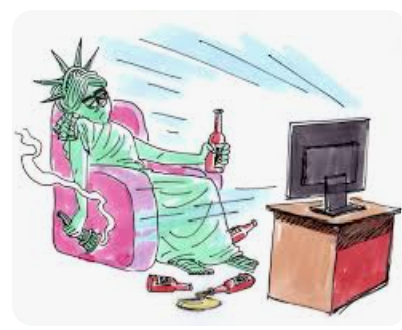 moral decline
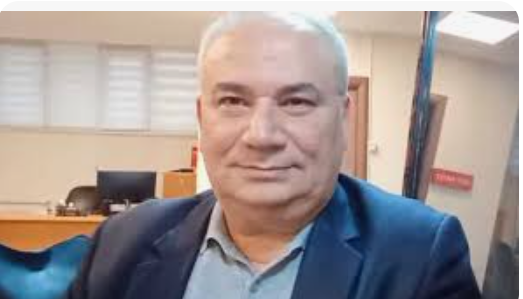
By Remzi Özdemir, Yeni Çağ Gazette
I spent my childhood in Adıyaman. I didn’t just grow up in a specific geography; I grew up in a specific moral climate. It was an era where people leaned on one another, where mercy was a standard behavior, and conscience was simply a part of daily life.
Author Remzi Ozdemir
Back then, the idea of a “foreclosure sale” was met with silence. Today, it sounds normal, but in those days, if someone’s property fell into foreclosure, no one would even look at it. It was considered a disgrace to profit from a neighbor’s misfortune. In fact, more often than not, the neighborhood would come together, pool their money to pay off the debt, and help that person stand on their feet again. The goal wasn’t about the “stuff”; it was about protecting the human being.
I remember a junk collector—a man who gathered scrap iron with a handcart. When his cart was put up for auction due to debt, the local shopkeepers gathered, raised the funds, bought the cart, and gave it back to him. This wasn’t an exception; it was the spirit of the time.
Today, on that same stage, the roles have changed. Now, when a house falls into foreclosure, people calculate “how much lower the price can go.” We have even given this behavior a name: turning the crisis into an opportunity.
The Shift from “Thief” to “Smart”
Social fractures are often silent. They progress slowly, unnoticed, until the results become undeniable. There was a time when someone taking a bribe was shamed. Today, they are admired for “knowing how to handle their business.”
I don’t say this as an abstract observation. I recall a police officer I met years ago who had served in five different cities and owned a house in every single one of them. Those around him praised him: “He’s a very smart man.”
Yet, a simple calculation suffices: A civil servant’s salary is fixed. Their expenses are known. The total income they can earn in a lifetime is clear. It is obvious how many houses that income can buy. But no one does the math. And those who do don’t call it “theft”; they call it “cleverness.” This is exactly where the fracture begins.
The mindset of “my civil servant knows his business” did not remain just a phrase in recent history; it became a social norm. It was the dynamite placed under the foundation of a merciful and conscientious society. Today, we have reached a point where moral scales are inverted: the wrong is legitimized, while the right is viewed as naivety.
Yavuz Baydar: January to April: The Acceleration of Power Consolidation in Türkiye
Neighbors in War, Strangers in Spirit
We are now facing an even grimmer picture. There is a war next door. Iranian lands are being bombed. Civilians are dying. Infrastructure is targeted, and the water and food crises are deepening. In such a scenario, the question should be: “How can we help?”
Instead, we discuss: “How can we turn this crisis into an opportunity?”
We aren’t talking about humanitarian corridors. We aren’t debating food and water aid. We have forgotten the “law of the neighbor.” Our reflex has changed: Opportunity first, humanity second. Yet the reality remains unchanged: neighbors in this geography do not change. The warring powers will eventually leave, but we will continue to live side-by-side.
The Great Divide: Gold Queues vs. Bread Lines
Internally, another crisis grows. The economy is fragile. Prices have escaped control. Taxes and fines are rising, and purchasing power is plummeting. If the price of a basic product becomes inaccessible in a short time, you have a serious food security problem.
Yet, this is avoided in public discourse. Instead, a false perception is created with questions like: “If there were true poverty, would people be lining up at gold shops?”
Türkiye is a nation of 85 million. There are indeed those lining up for gold. But there are also those waiting for “bread on the hook” (askıda ekmek). On one side, people pay exorbitant amounts for a single meal; on the other, people wait for hours for a single loaf of bread.
Youth Employment Crisis in Turkey: “House Youth” Despair Grows
This duality tells us one thing: the problem isn’t just the economy. It is a problem of conscience. Today, “turning a crisis into an opportunity” is narrated as a success story. In reality, it is the story of a society drifting away from its own values.
True success is not turning a crisis into an opportunity; it is remaining human during a crisis. Perhaps the real question is this: When will we remember how to be a society that prioritizes the person over the profit?
PA Turkey intends to inform Turkey watchers with diverse views and opinions. Articles in our website may not necessarily represent the view of our editorial board or count as endorsement.
Follow our English YouTube channel (REAL TURKEY):
https://www.youtube.com/channel/UCKpFJB4GFiNkhmpVZQ_d9Rg
Twitter: @AtillaEng
Facebook: Real Turkey Channel: https://www.facebook.com/realturkeychannel/
Related articles

ANALYSIS: Will the CBRT Maintain its “Hawkish” Shift in March After January’s Surprise?

Turkish Industrial Giants Caught in Bankruptcy Trap: Textile and Food Sectors in Turmoil
A Matter of Morality: Clean Hands, Dirty Minds