Istanbul Earthquake Risk: Experts Challenge “Magnitude 8” Claims
 Istanbul-earthquake
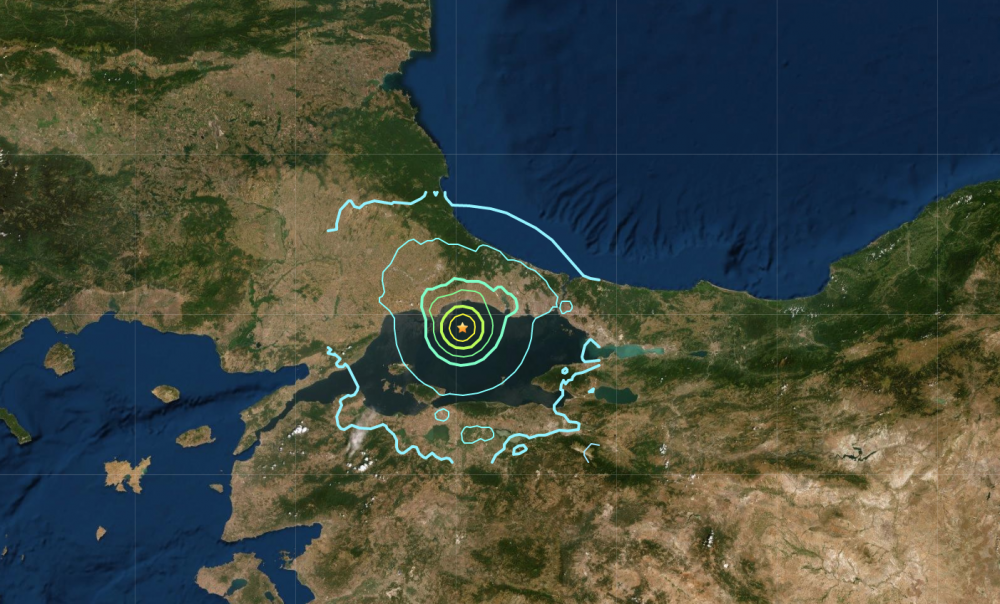
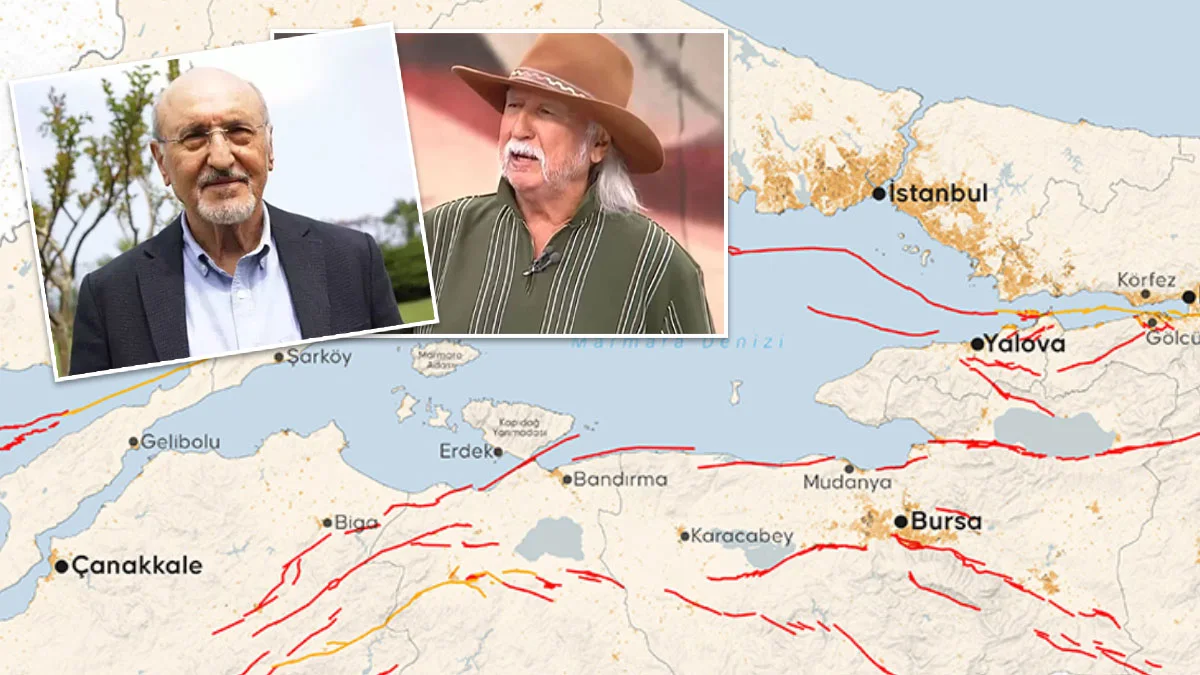
As the debate over the Istanbul earthquake risk continues to dominate public discourse, prominent geologists are pushing back against recent “doomsday scenarios” suggesting a potential magnitude 8.0 event. Experts Prof. Dr. Osman Bektaş and Prof. Dr. Şener Üşümezsoy have released detailed scientific critiques, arguing that such a massive tremor is mathematically and geologically improbable given the structure of the Marmara fault lines.
Prof. Dr. Üşümezsoy: The Mathematics of Fault Length
Prof. Dr. Şener Üşümezsoy addressed the issue with a blunt mathematical comparison. He emphasized the direct correlation between the length of a fault rupture and the resulting seismic magnitude.
“To produce a magnitude 8.0 earthquake, you would need a continuous fault line of approximately 500 kilometers to rupture,” Üşümezsoy explained. “The entire length of the Marmara Sea is only 150 kilometers. Mathematically speaking, you would need three Marmara Seas lined up to generate an 8.0.”
He pointed to the February 6, 2023, earthquakes in Kahramanmaraş as a benchmark, noting that a 400-kilometer rupture produced a magnitude 7.8 earthquake. Based on the 150-kilometer limit of the Marmara segments, he argues that the expected Istanbul earthquake cannot physically reach the catastrophic levels cited by some international models.
Prof. Dr. Bektaş: “Creep” Phenomenon and Energy Release
Prof. Dr. Osman Bektaş provided a different geological perspective, focusing on the behavior of the fault segments. Using satellite (GPS-InSAR) data, Bektaş argues that the risk is often exaggerated because the fault is not “fully locked.”
-
Partial Creep: Some segments of the Marmara fault are experiencing “creep,” where the tectonic plates slide past each other slowly.
-
Silent Energy Release: This creeping motion allows accumulated energy to dissipate quietly through micro-tremors rather than building toward a single massive explosion.
-
Segmented Structure: Bektaş asserts that the Marmara fault is not a single, continuous line but a series of fragmented segments, making a simultaneous total rupture unlikely.
Istanbul Earthquake Risk: Reassuring News for Gemlik and İznik
Addressing local fears in the Gemlik and İznik regions, Prof. Dr. Üşümezsoy clarified the nature of recent seismic activity. He noted that the faults in these areas are “vertical-dip” (sinking) rather than “strike-slip” (tearing) faults like the one that caused the 1999 Gölcük earthquake.
According to Üşümezsoy, the sinking of historical structures (such as the submerged basilica in Lake İznik) indicates vertical settlement rather than a massive lateral tear. He concluded that the activity in Gemlik is largely characterized by micro-earthquakes interacting with thermal waters, which does not indicate a pending major disaster.