Market Brief: BIST 100 Clings to 12,600 Support Amid Geopolitical Turbulence
 piyasa3
The Geopolitical Crucible: Trump, Tehran, and Market Whiplash
The global financial landscape remains tethered to the volatile headlines emerging from the Middle East. U.S. President Donald Trump has recently intensified the atmosphere with a series of contradictory statements, creating a “pendulum effect” in market sentiment. His latest assertions—suggesting a potential move to seize Iranian oil assets and take control of Kharg Island, Iran’s primary export hub—have sent ripples of anxiety through energy markets. In response, Iranian officials, including Vice President Reza Arif, have issued stern warnings, suggesting that while Trump may decide to send troops, he will not be the one to decide on their safe return.
Amidst this bellicose rhetoric, White House Press Secretary Leavitt has attempted to maintain a thread of diplomatic hope, noting that private talks with Tehran are progressing and that the U.S. has seen some of its demands met. However, Iranian President Pezeşkiyan remains firm: a ceasefire is only on the table if the safety and interests of the Iranian people are fully guaranteed. For investors, this back-and-forth means that any relief rally in stocks or gold remains fleeting. Until a formal ceasefire is signed or the Strait of Hormuz is demonstrably reopened, risk management remains the priority.
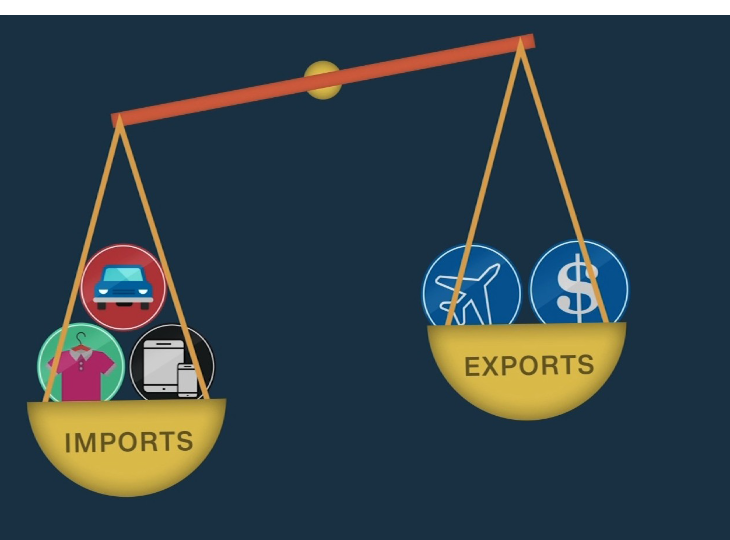
Robin Brooks: Türkiye’s Growing External Imbalance Raises Red Flags
BIST 100 Technical Analysis: Searching for a Double Bottom
The Borsa Istanbul (BIST 100) has found itself caught in a downward channel after failing to hold the 12,900 threshold. In recent sessions, the index has retreated to its previous low of 12,600, a level that technical analysts are watching with bated breath.
-
The Bullish Case: If the index can sustain its position above 12,600, it confirms a “double bottom” formation. This technical setup typically precedes a trend reversal, potentially inviting a wave of bargain hunting.
-
The Resistance Path: To regain short-term momentum, the index must clear the 12,800 and 12,900 hurdles. Successful consolidation above 12,900 would open the door to the 13,000–13,100 range.
-
The Downside Risk: A decisive break below 12,600 would be a major warning sign, likely triggering a slide toward the next major support at 12,400, a level last seen in mid-March.
For active traders, the 12,600 level serves as a mandatory stop-loss point. Additionally, the Capital Markets Board (SPK) has extended the ban on short selling and capital-related flexibilities until April 10, 2026, providing a regulatory buffer against extreme speculative volatility.
Fixed Income and Monetary Tightening
The domestic bond market remains under significant pressure. Despite sporadic attempts at recovery, the general trend for Turkish Lira (TL) bonds is bearish. The benchmark bond yield recently climbed to 42.75%, while the 10-year yield sits at 34.17%.
The Central Bank of the Republic of Türkiye (TCMB) has played a decisive role in this tightening environment. By suspending weekly repo auctions and shifting funding to the upper bound of the interest rate corridor (effectively 40% instead of 37%), the bank has significantly increased funding costs. This liquidity squeeze is a headwind for bonds. Market participants should monitor the 44% mark for benchmark bonds and 36% for 10-year notes as critical resistance levels. Furthermore, Turkey’s 5-year Credit Default Swap (CDS) has climbed back to 312, reflecting a heightened perception of country risk.
Atilla Yesilada: Damage Assessment: Taking Stock of the Economic Fallout
Currency Outlook: Controlled Ascent of the Dollar
The USD/TRY pair continues its “controlled climb.” After breaching the 44.40 resistance, the greenback is now eyeing the 44.50 mark. The TCMB’s active participation through FX selling auctions has been the primary factor preventing a more aggressive breakout.
-
Support: 44.40.
-
Resistance: 44.50, followed by 44.60.
In the global arena, the EUR/USD pair is struggling. Despite temporary “yapıcı” (constructive) comments from the Trump administration, the overarching war environment favors the safe-haven dollar. The parity has dipped slightly below the 1.15 support level. Maintaining 1.15 is essential to protect the short-term rising channel; otherwise, a retreat to the 1.14 “floor”—the lowest level in seven months—becomes inevitable.
Commodities: Gold and the Global Yield Pressure
Gold remains sensitive to the interplay between geopolitical fear and rising global yields. While the war should theoretically drive prices higher, the strength of the U.S. dollar and hawkish central bank expectations have acted as a ceiling.
-
Spot Gold: Currently oscillating between $4,400 and $4,600. A break above $4,600 is required to signal a move toward $4,735.
-
Gram Gold (TL): Buoyed by the rising USD/TRY, Gram Gold is tracking between 6,140 TL (support) and 6,560 TL (resistance). A move above 6,600 TL would signal the start of a fresh bullish trend.
Data Watch: The Economic Calendar
Investors should brace for a busy data week. In Turkey, today’s focus lies on the Foreign Trade Balance (expected at -$8.4 billion) and the Unemployment Rate (8.1%). On Friday, the domestic inflation print for March will be paramount; we anticipate a monthly increase of 2.5% due to soaring energy costs, pushing annual inflation slightly up to 31.6%.
Globally, the Eurozone inflation (expected at 2.7%) and U.S. consumer confidence data will provide clues on how major central banks will navigate the remainder of the year. Given the high-risk environment, we recommend defensive positioning, with a preference for diversified funds and high-grade fixed income to weather the ongoing storm.