



OPINION: The US Needs Turkey
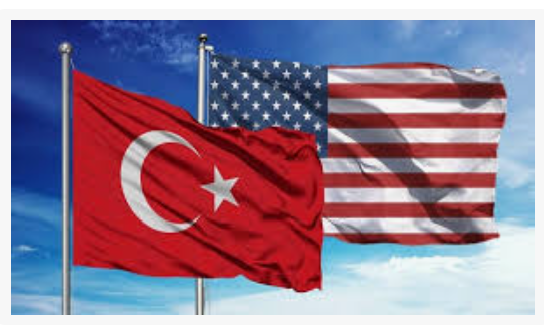 tr abd
Ankara Emerges as Primary Anchor in New Regional Security and Energy Architecture
ANKARA — As the conflict involving the United States, Israel, and Iran enters a volatile second month, military analysts in Ankara suggest a fundamental realignment of Washington’s Middle East strategy is underway. Retired Major General Erdoğan Karakuş argues that the failure of local proxy forces and mounting threats to global energy supplies have forced the U.S. to re-evaluate Turkey’s role as its indispensable regional partner.
In a comprehensive assessment, Karakuş posited that the U.S. has reached a point of strategic “dependency” on Turkish cooperation to secure its interests across the Middle East and the Black Sea.
Murat Yetkin: Why Did Trump Praise Erdoğan? Questions Behind Washington’s “Strategic Appreciation”
A New NATO Command in the Turkish Straits
Karakuş highlighted the recent establishment of a Naval Element Command in the Turkish Straits and plans for a reinforced military structure in Adana as evidence of this shift.
“The United States has realized that the YPG in Syria—which they previously labeled their ‘ground force’—is insufficient for a conflict of this scale,” Karakuş stated. “They have become dependent on Turkey.” He noted that the recent diplomatic flurry involving U.S. officials was aimed at securing Turkish cooperation for a grander regional defense plan.
The “Lifeline” Corridor: Energy and Water
According to Karakuş, the centerpiece of the revised U.S. strategy is the creation of a secure resource corridor stretching from the Persian Gulf to Turkey’s Mediterranean coast.
-
The Yumurtalık Hub: The plan involves transporting Gulf oil and gas via Iraq directly to Turkey’s Yumurtalık region, bypassing the increasingly dangerous maritime routes of the Strait of Hormuz.
-
The Ceyhan Water Project: In a striking revelation, Karakuş suggested the revival of a 1990s-era plan to pipe fresh water from Turkey’s Ceyhan River to Saudi Arabia, Bahrain, Qatar, and Kuwait.
-
Strategic Context: Iran has threatened to destroy the desalination plants of Gulf nations if its own energy infrastructure is targeted. For these desert nations, Turkish water is becoming more valuable than oil. Karakuş added that the U.S., which blocked similar projects in the past to prevent Turkey from gaining too much influence, is now facilitating them out of necessity.
NATO’s Expanding Footprint
Karakuş claimed that the U.S. is seeking to further integrate NATO into this architecture by establishing a dedicated corps in Adana. This move is designed to reassure Gulf allies that their energy exports will reach safe harbors under a multi-national security umbrella.
Furthermore, the proposed NATO naval command in the Turkish Straits is intended to monitor Black Sea transits more stringently. Karakuş expressed frustration over recent maritime incidents, alleging that a Turkish vessel was struck by Ukrainian forces despite Ankara’s continued support for Kyiv.
Minister Uraloğlu: Three Mega Projects Set to Transform Türkiye’s Economic Future
The “Qatar” Factor and the Fallout with Israel
The General also shed light on internal fissures within the anti-Iran coalition. While the UAE initially backed the U.S.-Israeli strikes, Qatar reportedly balked after Israeli forces struck gas fields jointly operated by Qatar and Iran.
“Trump claimed he wasn’t informed, and Netanyahu promised it wouldn’t happen again, but Qatar doesn’t believe them,” Karakuş explained. This mistrust has accelerated the push for the Turkey-centered energy corridor—a project that requires massive capital. Karakuş believes the recent high-level diplomatic visits to Istanbul are directly linked to financing this multi-billion-dollar infrastructure shift.
Source: Yeni Safak Gazette
PA Turkey intends to inform Turkey watchers with diverse views and opinions. Articles in our website may not necessarily represent the view of our editorial board or count as endorsement.
Follow our English YouTube channel (REAL TURKEY):
https://www.youtube.com/channel/UCKpFJB4GFiNkhmpVZQ_d9Rg
Twitter: @AtillaEng
Facebook: Real Turkey Channel: https://www.facebook.com/realturkeychannel/***