



Turkey’s Media Landscape: More Outlets, Less Pluralism, Report Finds
 medya raporu
A new regional report finds that despite a growing number of media outlets in Turkey, genuine pluralism remains limited. Trust in traditional media institutions is declining, shifting instead toward individual journalists and digital platforms, while legal pressure, ownership concentration, and financial fragility continue to weigh heavily on the sector.
Growth Without Pluralism
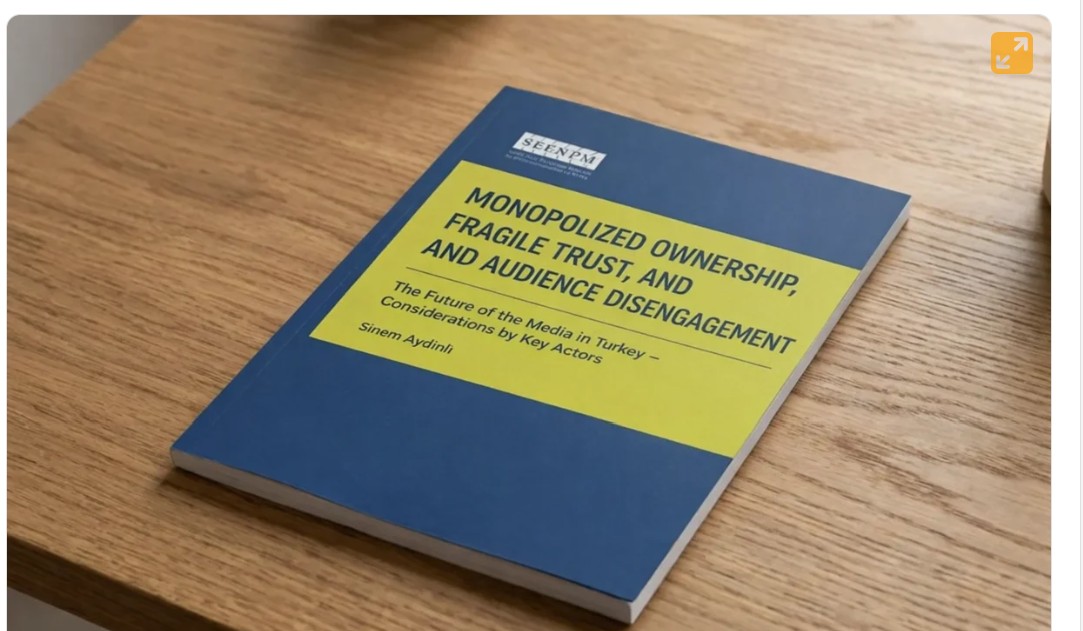
A report by the Our Media initiative, a civil society collaboration covering the Western Balkans and Turkey, concludes that the expansion of media outlets in Turkey has not translated into greater diversity of viewpoints.
Instead, the study finds:
- Increasing uniformity and polarization across media
- Concentrated ownership structures limiting editorial independence
- Structural constraints on media freedom due to political and legal pressure
The Turkey section of the report, authored by bianet researcher Sinem Aydınlı, describes the current landscape as “multiplicity without pluralism.”
Trust Shifts From Institutions to Individuals
One of the report’s key findings is a profound shift in how audiences consume and trust news.
Participants said they:
- Distrust mainstream and pro-government outlets
- Rely increasingly on individual journalists and alternative platforms
- Follow news via X (Twitter), YouTube, and independent digital outlets
Among younger audiences in particular, trust is higher for platforms that emphasize transparency and source-based reporting.
The report notes that this shift has deepened a broader legitimacy crisis for media institutions.
Democracy and Rights Erode Further in Türkiye as Executive Power Consolidates: Bertelsmann Report
Digital Platforms Dominate — But With Risks
Digital platforms have become the primary source of news, especially among younger users.
However, the report warns that these platforms also:
- Amplify misinformation and unverified content
- Encourage polarization and “cancel culture” dynamics
- Blur the line between journalism and opinion
Participants stressed that media diversity only has value when combined with critical consumption and high-quality content production.
Journalism Under Pressure
Interviews with media professionals point to a sector under severe strain.
Key challenges include:
- Legal risks, including disinformation laws and criminal charges
- Threat of detention and prosecution for journalists
- Economic fragility and declining revenues
- Heavy dependence on digital platforms for distribution
Media workers also highlighted:
- Reduced public advertising revenues
- Dominance of platforms like Google and YouTube in ad markets
- Weak regulatory frameworks for digital publishing
Financial Sustainability in Question
The report underscores the urgency of building more sustainable business models for journalism.
Suggested priorities include:
- Expanding subscription and membership models
- Diversifying revenue streams
- Strengthening labor protections and job security
- Developing collective agreements within the sector
Without such reforms, the long-term viability of independent journalism remains uncertain.
Digital Crackdown Expands in Türkiye Following İmamoğlu Case, Hundreds of Accounts Blocked
Representation Gaps Persist
The study also highlights persistent issues around representation.
Participants noted that:
- Minorities, women, and LGBTQ+ individuals are underrepresented or misrepresented
- Media coverage remains heavily Istanbul-centric
- Regional voices, particularly from areas like Mardin, are marginalized
Kurdish media, in particular, was cited as facing both visibility challenges and political pressure.
Public Demands for Better Coverage
Participants expressed demand for broader and more inclusive content, including:
- Women’s issues and gender equality
- Education and social policy
- Cultural production such as documentaries and cinema
- Minority representation and rights
They also called for:
- More inclusive language
- Stronger editorial safeguards against hate speech
- Greater visibility for marginalized voices
Policy Recommendations
The report concludes with a set of policy recommendations aimed at reversing the sector’s decline.
These include:
- Decriminalizing routine journalism
- Revising laws used to prosecute journalists
- Addressing media ownership concentration
- Increasing transparency in media financing
- Ensuring fair distribution of public advertising
It also calls for:
- Strengthening fact-checking mechanisms
- Expanding media literacy programs
- Building stronger networks between journalists, academia, and civil society
A Structural Crisis Beyond Economics
The report’s overarching conclusion is that Turkey’s media sector is facing not just an economic or technological transition, but a structural crisis linked to the state of democracy.
The weakening of public access to reliable information, it warns, affects both:
- Journalists
- Citizens
Unless issues such as monopolization, political pressure, and job insecurity are addressed, the crisis is likely to deepen further.
Source: bianet