Pro-Government Media Signals Possible Legal Pressure on Mansur Yavaş as Crackdown on CHP Deepens
 mansur yavas
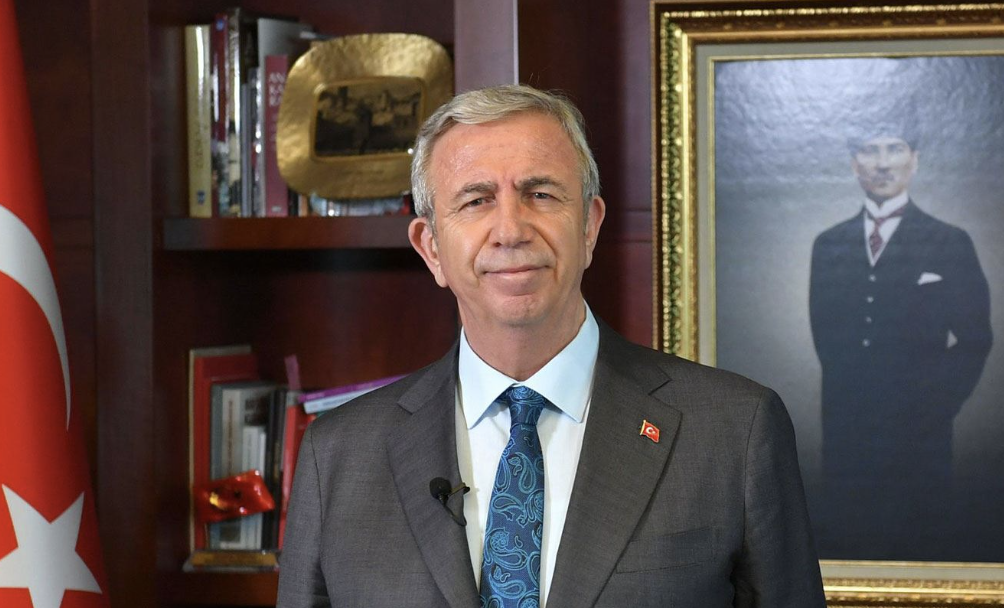
Turkey’s opposition Republican People’s Party (CHP) is facing mounting judicial and political pressure following the arrest of Istanbul Mayor Ekrem İmamoğlu, with Ankara Mayor Mansur Yavaş now increasingly seen as the next potential target. Pro-government media reports have highlighted multiple files allegedly under review concerning Yavaş and the Ankara Metropolitan Municipality, fueling accusations from the opposition that the ruling bloc is using the judiciary and state institutions to narrow the field ahead of any future presidential contest. The latest developments come as CHP leader Özgür Özel says his party is under siege, while new polling shows Yavaş remains one of the country’s most popular politicians.
Pressure on CHP Expands Beyond İmamoğlu
The crackdown on Turkey’s main opposition appears to be entering a new phase, with attention shifting from jailed Istanbul Mayor Ekrem İmamoğlu to Ankara Mayor Mansur Yavaş.
Following İmamoğlu’s arrest and prosecution on multiple charges, new developments around the Ankara Metropolitan Municipality have intensified speculation that the ruling establishment may be preparing a broader legal and political campaign against the CHP’s remaining heavyweights.
Recent reports in pro-government media said investigation permits had now been granted for 10 municipal officials in Ankara over public tenders. Those named reportedly include deputy secretaries-general and department heads, and some are expected to appear before court in May.
The move follows earlier scrutiny of municipal spending linked to concerts and zoning-related files. Taken together, the sequence has strengthened opposition claims that the government is widening its legal offensive against CHP-run municipalities.
Pro-Government Press Points to More Files Under Review
A report carried by the pro-government daily Sabah suggested that the latest investigation may be only one part of a wider process.
According to the paper, judicial sources said there were multiple additional files concerning Yavaş that remained “under examination,” covering issues such as public tenders, recruitment at municipal company ANFA, concert-related payments, and zoning plan revisions.
Those references were widely interpreted in opposition circles as a deliberate signal that Yavaş himself could face direct legal pressure in the near future.
The language used in such reports has reinforced the belief among critics of the government that legal investigations are being shaped not only as judicial processes, but also as instruments of political messaging. In this reading, the public discussion of pending files serves to weaken the standing of opposition figures even before formal charges are filed.
For CHP supporters, the concern is no longer limited to whether individual municipal officials will be prosecuted, but whether Yavaş could eventually face the kind of escalating legal pressure that has already engulfed İmamoğlu.
Yavaş Seen as a Key Figure in Any Post-İmamoğlu Scenario
The focus on Yavaş is politically significant because he is widely seen as one of the opposition’s strongest potential presidential contenders.
A recent opinion poll by ASAL Research placed President Recep Tayyip Erdoğan first among the country’s most admired politicians, with 26.6% support. Yavaş ranked second with 20.2%, ahead of İmamoğlu on 15.3% and CHP leader Özgür Özel on 7.5%.
That ranking matters because Yavaş has long been viewed as one of the few opposition figures with crossover appeal beyond the CHP’s traditional base. His relatively measured public style and strong local-government profile have made him a central name in discussions over the opposition’s future.
As a result, any legal process targeting him is likely to be viewed through a wider electoral lens, particularly in a political climate already shaped by the imprisonment of İmamoğlu and growing speculation over how the opposition’s eventual candidate could be determined.
Opposition Sees Coordinated Attempt to Narrow the Presidential Field
Within opposition circles, the emerging picture is one of a calibrated campaign designed to constrain the CHP’s room for maneuver before the next presidential race.
The argument is straightforward: if İmamoğlu is sidelined through imprisonment and legal proceedings, and Yavaş is weakened through investigations or administrative action, then the opposition’s range of credible national candidates becomes significantly narrower.
That is why the reports concerning Yavaş have generated such intense political attention. Critics believe the purpose may not necessarily be to secure immediate convictions, but to create a cloud of legal uncertainty strong enough to damage his political viability and keep him under constant pressure.
Such concerns have been compounded by the role of the Interior Ministry, which in previous cases has had the power to suspend elected mayors facing certain legal proceedings. Even the possibility of such a step carries major political weight in the current environment.
CHP Says the Party Is Under Siege
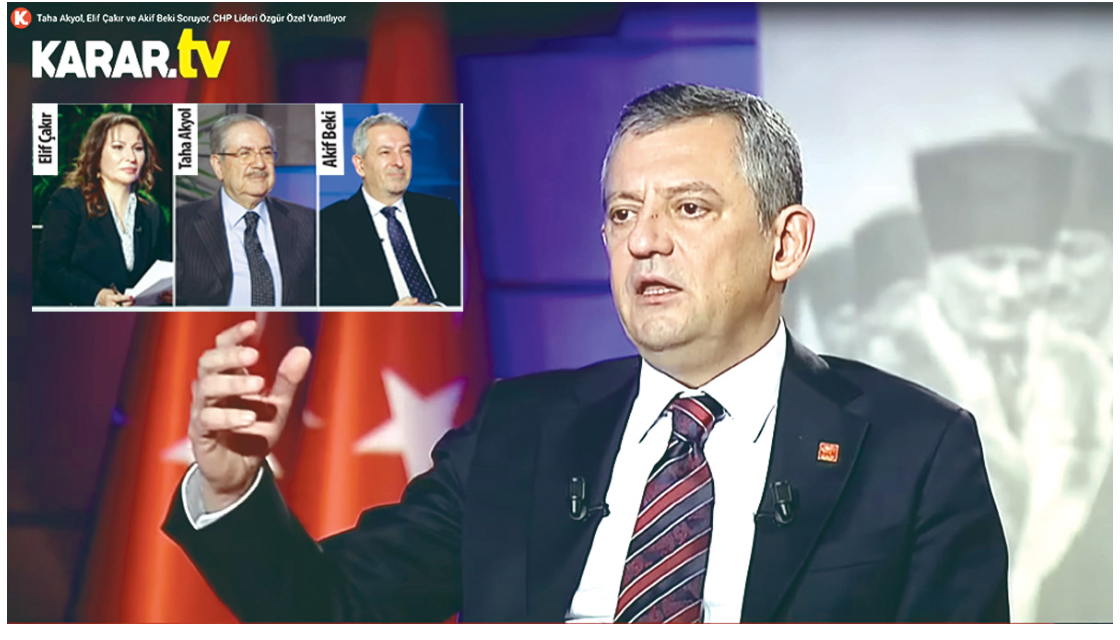
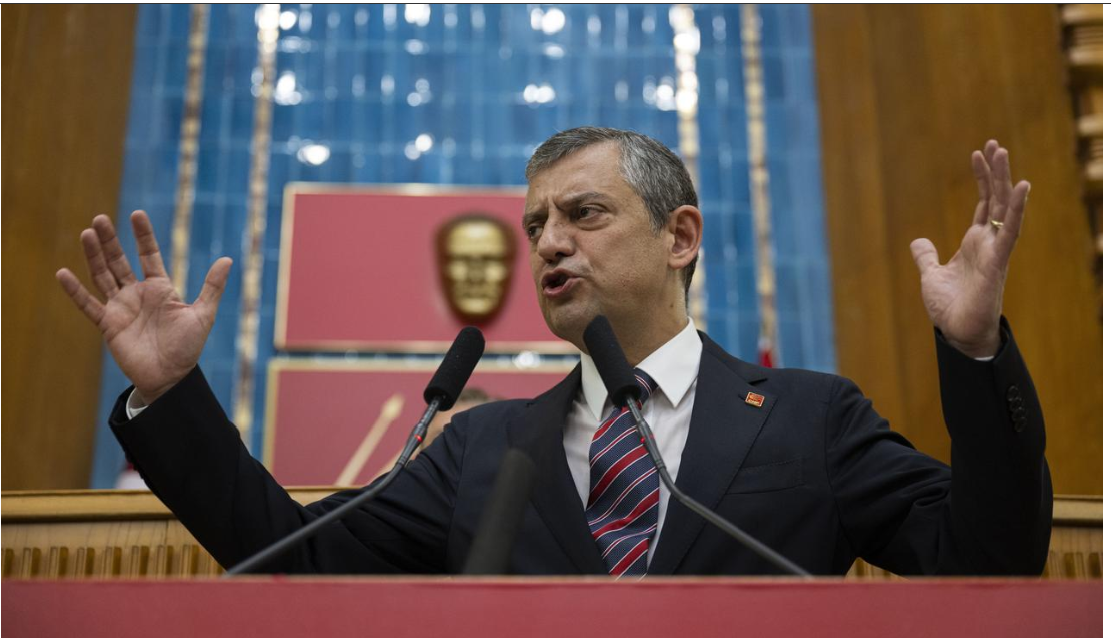
CHP leader Özgür Özel has framed the broader judicial campaign as an assault on the party itself, not merely on individual municipalities.
Speaking at the World Congress of the Socialist International Youth in Istanbul, attended by delegates from 150 countries, Özel said the party was facing an expanding wave of detentions, prosecutions, and efforts to remove elected local officials from office.
He said 19 CHP mayors were currently under arrest and alleged that even the Istanbul Metropolitan Municipality had been targeted with the intention of appointing a trustee in place of an elected mayor.
Özel argued that İmamoğlu’s imprisonment was political in nature and tied directly to his repeated success against Erdoğan-backed candidates. He revisited the history of İmamoğlu’s rise in Istanbul, from his first narrow victory to the rerun election in which the opposition candidate dramatically widened his margin, and then to his more recent reelection with a margin of more than 1 million votes.
According to Özel, the ruling bloc had failed to defeat İmamoğlu at the ballot box and had therefore turned to the judiciary.
Özel Links Legal Pressure to Electoral Competition
Özel’s remarks underscored how the CHP now interprets the legal campaign against its mayors: as an extension of electoral competition by other means.
He said the process accelerated after a former deputy justice minister was appointed Istanbul chief public prosecutor, a move he portrayed as politically motivated. He claimed operations were then launched against district municipalities before the investigation ultimately reached İmamoğlu.
Özel also said the opposition had responded by mobilizing public resistance, especially after the March 19 escalation. He described how he and CHP Istanbul provincial chair Özgür Çelik remained inside the Istanbul Metropolitan Municipality building for a week as a symbolic act of defiance, amid claims that authorities were preparing to install a trustee.
The party leader further argued that the public response had been massive, saying 16.5 million people had joined demonstrations so far and that 2.2 million attended a major rally in Istanbul’s Maltepe district.
While such figures are politically contested, the broader point of Özel’s message was clear: CHP intends to answer judicial pressure with street mobilization and international visibility.
Debate Grows Over CHP’s Future Candidate
The pressure on both İmamoğlu and Yavaş has also fed growing debate within political circles over who would emerge as the CHP’s leading presidential candidate if legal barriers continue to narrow the field.
While Yavaş has often been discussed as the most obvious alternative in an İmamoğlu-free scenario, reports from Ankara suggest there is also increasing discussion of Özel himself as the party’s preferred option under certain conditions.
That possibility reflects the fluidity of the current moment. If the crackdown continues, candidate selection may become less a matter of preference and more a question of who remains legally and politically able to run.
For now, however, Yavaş remains central to the discussion because of his popularity and because the latest wave of reports has placed him squarely in the spotlight.
Distraction, Diversion, and Political Timing
The timing of these developments has also attracted attention.
Turkey’s public agenda has in recent days been dominated by the Iran war and its economic implications, while sensational criminal investigations involving celebrities have also filled headlines. Critics of the government argue that such issues can divert attention from politically consequential judicial moves against the opposition.
In that context, the drip-feed of reports concerning Yavaş is being interpreted by many as part of a broader pattern: advancing pressure on the CHP while national attention is fragmented by war, economic anxiety, and high-profile media distractions.
That does not by itself prove political coordination. But in Turkey’s current polarized climate, the sequencing of headlines, legal actions, and political commentary is itself part of the struggle over public perception.
Polls Show CHP Still Competitive Despite Pressure
Despite the expanding legal campaign, CHP leaders continue to insist that the party remains politically resilient.
Özel said CHP had become Turkey’s leading party after local elections and claimed it still ranked first in opinion polls. He cast the current confrontation in historic terms, comparing the situation to the legal and political campaign once waged against Brazil’s Luiz Inácio Lula da Silva.
The comparison was meant to send a message both domestically and internationally: that the Turkish opposition believes it is facing a strategy of judicial containment, but also that such campaigns do not necessarily end political careers.
Whether that argument resonates widely enough to change the domestic balance remains uncertain. What is already clear, however, is that the judicial pressure on opposition municipalities is no longer confined to Istanbul.
Related articles
Özgür Özel Alleges Erdoğan Plans to Sell Major Bridges to British Firm
Sinan Goksen: Why voters showed a yellow card to Erdogan in local elections?
Özgür Özel Dares Erdoğan to Rerun Istanbul Elections, Accuses AKP of Creating 7 Million Gambling Addicts