



Iran War to Drive Food Inflation, Deepen Economic Strains
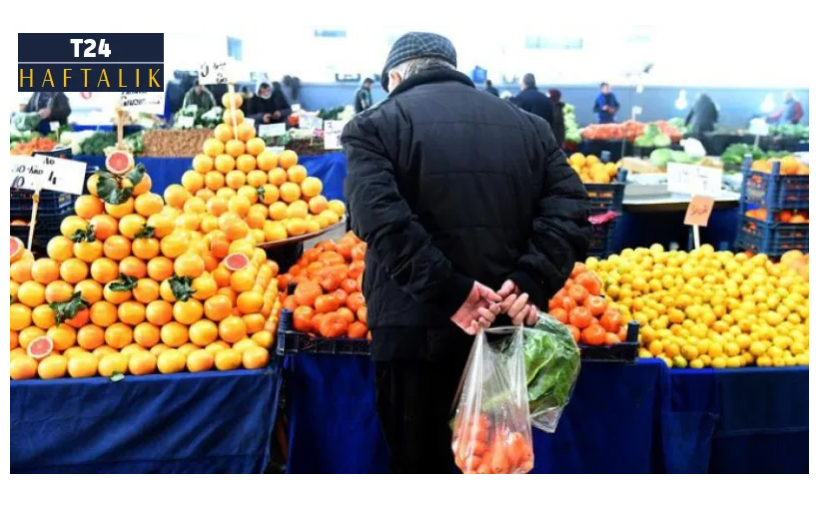 gida kitligi
The war with Iran is beginning to spill over into global food systems, with disruptions in fertilizer supply, logistics, and energy costs set to push food prices higher in the months ahead. While the immediate effects are limited, analysts warn that the real impact will emerge during upcoming harvest cycles. The crisis is already feeding into inflation pressures, particularly in vulnerable economies, and could reshape global food security if the conflict persists.
From battlefield to food prices: a delayed shock
Wars do not only destroy cities — they also disrupt food systems. The current conflict centered around Iran is rapidly evolving into a structural risk for global agriculture.
The key issue is timing. Disruptions in fertilizer supply do not immediately affect supermarket shelves. Instead, the consequences emerge months later during harvest season, when lower fertilizer usage leads to reduced crop yields and tighter supply.
This makes the current crisis less about immediate shortages and more about a looming supply shock.
Hormuz: not just oil, but fertilizer lifeline
While the Strait of Hormuz is widely known as a critical oil chokepoint, its importance for global agriculture is often overlooked.
The Gulf region sits on some of the world’s cheapest natural gas reserves — a key input in fertilizer production. Nitrogen-based fertilizers such as ammonia and urea depend heavily on gas.
Gulf countries account for:
- Around 50% of global urea exports
- Roughly one-third of ammonia exports
A disruption in Hormuz therefore does not just halt oil shipments — it directly impacts fertilizer supply and agricultural output worldwide.
Fertilizer prices surge, farmers pull back
The disruption to shipping routes and rising energy costs have already triggered a sharp increase in fertilizer prices.
According to Bank of America:
- Fertilizer prices have risen by 30% to 40%
- Urea prices have increased by more than $200 per ton in some markets
- Southeast Asia has seen price spikes exceeding 40%
Higher input costs are forcing farmers to cut back on fertilizer use, which in turn threatens crop yields — especially for nitrogen-intensive crops such as wheat and corn.
Israel-Iran Energy Escalation Tests Türkiye’s Gas Supply Resilience
Food inflation is coming — with a lag
The real impact will be visible in the coming months.
Lower fertilizer use leads to:
- Reduced yields
- Smaller harvests
- Higher food prices
The World Food Programme warns that if the conflict continues, an additional 45 million people could face severe hunger, pushing global food insecurity from 318 million to 363 million people.
The burden will fall disproportionately on import-dependent regions in Asia, Africa, and the Middle East.
Logistics disruptions amplify costs
Shipping disruptions are compounding the problem.
Vessels avoiding the Strait of Hormuz are rerouting around Africa, adding roughly 9,000 kilometers to journeys. This results in:
- Longer delivery times
- Higher fuel consumption
- Increased transportation costs
Even humanitarian aid operations are being affected, with container costs rising by $2,000 to $4,000, making food assistance more expensive.
A triple shock: fertilizer, fuel, packaging
The crisis can be summarized in three cost drivers:
- Fertilizer: Higher input costs raise production expenses
- Fuel: Increased energy prices push up transport costs
- Packaging: Rising industrial costs inflate retail prices
Together, these pressures cascade through the supply chain, ultimately reaching consumers.
Türkiye: no immediate shortage, but risks ahead
Authorities in Türkiye say fertilizer stocks remain sufficient and precautionary measures have been taken.
Steps include:
- Removing customs duties
- Expanding alternative supply routes
- Reauthorizing ammonium nitrate fertilizer use
However, officials emphasize that there is no immediate issue — a critical distinction, as the true impact is expected later.
Rising fuel costs are already increasing farmers’ expenses, suggesting that downstream price pressures are building.
War-driven inflation already visible
The war’s impact is already evident in Türkiye’s domestic economy.
Surging oil prices have led to:
- Sharp increases in fuel costs
- Rising logistics and production expenses
- Rapid food price inflation
Vegetable prices have surged significantly within weeks, with some products doubling in price.
Fuel prices have also risen sharply, with diesel up around 18% over a short period.
Inflation risks and policy pressure
Economists warn that monthly inflation could exceed 5%, putting pressure on monetary policy and economic targets.
Rising oil prices are also undermining macro assumptions:
- Each $10 increase in oil adds $3.5–4 billion to the current account deficit
- Inflation rises by 1–1.5 percentage points
This creates a dual shock for the economy: higher inflation and a wider external deficit.
Financing costs rising
Türkiye’s borrowing costs are increasing as global risk conditions tighten:
- External borrowing rates have climbed above 7%
- Policy rates remain elevated, with tightening bias
- Financing costs have risen by 4–5 percentage points
This weighs on both public finances and private sector investment.
Growth outlook deteriorates
The combined effect of higher costs and global uncertainty is weakening growth prospects.
Expected deviations include:
- Inflation exceeding targets
- Budget deficit rising above projections
- Current account deficit widening significantly
- Growth forecasts being revised downward
Outlook: a structural food and energy crisis
If the war continues for an extended period, the consequences could be severe.
Industry leaders warn that a year-long disruption would be “catastrophic” for global fertilizer supply and agricultural output.
The broader implication is clear: food, energy, and supply chains are becoming increasingly intertwined with geopolitics.
Conclusion
The Iran war is no longer just a regional conflict — it is evolving into a global economic and food security crisis.
The immediate effects are already visible in energy and transport costs, but the most severe consequences will emerge in agriculture and food prices in the months ahead.
As global supply chains strain under pressure, the crisis highlights a deeper shift: food is no longer just a commodity — it is becoming a strategic asset.
T24, HalkTV, PA Turkey newsdesk
PA Turkey intends to inform Turkey watchers with diverse views and opinions. Articles in our website may not necessarily represent the view of our editorial board or count as endorsement.
Follow our English YouTube channel (REAL TURKEY):
https://www.youtube.com/channel/UCKpFJB4GFiNkhmpVZQ_d9Rg
Twitter: @AtillaEng
Related articles
ANALYSIS: Turkish Inflation Climbs, Geopolitical Risks Force CBRT to Reconsider Rate Cuts
Türkiye Summons Iranian Ambassador: NATO Intercepts Missile in Major War Escalation
Export Prices Surge as Pusula Model Flags Sticky CPI: Cost Pressures Complicate Türkiye’s Disinflation Path
