What the First Week of the İmamoğlu Trial Reveals About Türkiye’s Political Climate
 imamoğlu dava
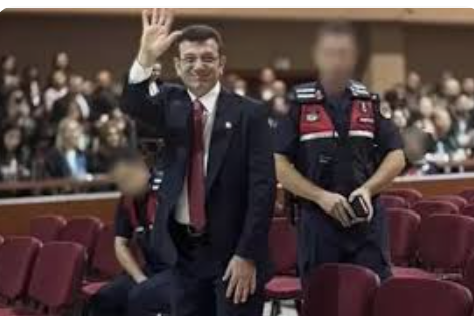
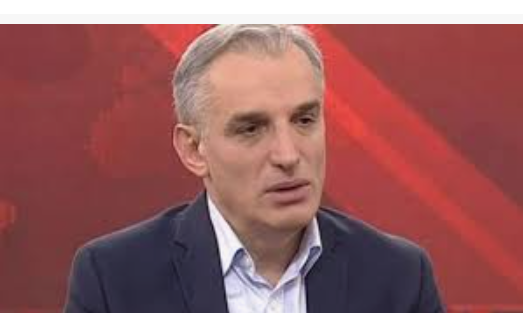
Turkish columnist Mustafa Karaalioğlu argues that the first week of the trial involving Istanbul Mayor and presidential candidate Ekrem İmamoğlu has reinforced concerns about political polarization and the state of democracy in Türkiye. Writing about the broader political environment, Karaalioğlu says the country continues to follow a rigid domestic political trajectory even as global events reshape regional dynamics. He contends that the ongoing imprisonment and prosecution of a major opposition figure risks deepening political tensions and undermining both economic stability and foreign policy credibility.
Author Mustafa Karaalioğlu
A Country Unmoved by Global Shifts
According to Karaalioğlu, one of the most striking aspects of Türkiye’s current political climate is how little it appears to change regardless of global developments.
Whether the world is facing war, diplomatic crises, or attempts at peace, he writes, Türkiye seems to remain on the same domestic political path.
“Isn’t it strange and worrying that no matter what happens in the world, Türkiye’s political climate and direction never change?” he asks.
In his view, the country’s political agenda has become dominated by one overriding objective: the design and management of domestic political competition.
Efforts to reduce tensions at home, foster social solidarity, or seek political reconciliation receive little attention, he argues—even at a time when conflict in the Middle East might normally encourage a more cautious domestic atmosphere.
The Pollster Divide: Is the AKP Recovering or Sliding Toward an Economic Cliff?
Foreign Policy Constraints
Karaalioğlu also argues that Türkiye’s room for maneuver in foreign policy is constrained by the evolving geopolitical landscape.
He points to tensions in the Middle East, particularly conflicts involving the United States and Iran, where Ankara has struggled to adopt a clear and independent position.
He criticizes what he describes as Türkiye’s cautious reaction to the broader war, noting that the country avoided strongly criticizing Washington while often framing the conflict primarily as an Israeli operation.
According to the columnist, this reflects the complex diplomatic balancing act Türkiye faces in a rapidly shifting geopolitical environment.
NATO’s Role in Air Defense
The article also refers to recent incidents in which missiles launched from Iran toward Türkiye were intercepted by NATO air defense systems.
Karaalioğlu suggests this development has highlighted Türkiye’s continued security reliance on the Western alliance.
He argues that the situation has effectively clarified Türkiye’s geopolitical positioning, moving it closer to NATO despite earlier political rhetoric suggesting alternative alignments.
“At this moment,” he writes, “Türkiye finds itself once again closer to NATO and careful not to anger Washington.”
Democracy and Rule of Law as Strategic Needs
Beyond geopolitics, Karaalioğlu argues that Türkiye’s long-term stability requires stronger democratic institutions and the rule of law.
Reducing political tensions at home, he writes, is essential not only for social cohesion but also for restoring investor confidence and addressing the country’s economic difficulties.
Political competition, he says, is a fundamental requirement of democracy and should not be restricted.
Without open political rivalry and debate, countries risk stagnation and declining credibility both domestically and internationally.
The Political Impact of the İmamoğlu Trial
Karaalioğlu argues that the trial of Istanbul Mayor Ekrem İmamoğlu, who is widely viewed as a potential presidential challenger, has heightened political tensions.
He writes that the case appears increasingly politicized and has raised questions among the public about the fairness of the judicial process.
“The İmamoğlu trial did not start well and has increased doubts in public opinion,” he wrote.
The columnist also criticizes the decision to keep İmamoğlu and several associates in pre-trial detention, arguing that authorities have struggled to clearly explain the justification for such measures.
As a result, he says, public skepticism toward the case has grown.
Political Competition as a Democratic Requirement
In Karaalioğlu’s view, political competition between government and opposition figures is essential to a healthy democratic system.
Presidential candidates and opposition leaders, he argues, must be able to freely criticize the government, present alternative policies, and engage voters openly.
“This is the most basic definition of democracy,” he writes.
When a major political rival is imprisoned, he argues, the country inevitably accepts a political environment that falls short of its democratic potential.
A Call for Transparency in the Trial
Karaalioğlu suggests that the tensions surrounding the case could be reduced through greater transparency.
He proposes two measures:
-
allowing İmamoğlu to be tried without pre-trial detention
-
broadcasting court hearings live to the public
Such steps, he argues, would allow citizens to evaluate the case based on evidence rather than political narratives.
If implemented, he believes the process could help restore public confidence and ease political tensions.
The Broader Stakes
The columnist concludes that Türkiye’s political future depends on preserving democratic competition and reducing polarization.
At a time when the country faces economic challenges and regional instability, he argues that a more open political environment could strengthen both domestic governance and foreign policy credibility.
Otherwise, he warns, continued political tensions could carry growing economic and political costs.
Source: Column by Mustafa Karaalioğlui KARAR Gazette
Author: Newsroom rewrite
PA Turkey intends to inform Turkey watchers with diverse views and opinions. Articles in our website may not necessarily represent the view of our editorial board or count as endorsement.
Follow our English YouTube channel (REAL TURKEY):
https://www.youtube.com/channel/UCKpFJB4GFiNkhmpVZQ_d9Rg
Twitter: @AtillaEng
Facebook: Real Turkey Channel:
https://www.facebook.com/realturkeychannel/
Related articles
OPINION: Is It the CHP or the AK Party That Is Collapsing?

Imamoğlu Faces Judge: “This One-Man System Will Go, Step by Step”
Kavala Case Returns to Strasbourg as Lawyers Accuse Türkiye of Ignoring ECHR Rulings