Why the Next Escalation in the Iran Conflict Could Be Between the US and Türkiye
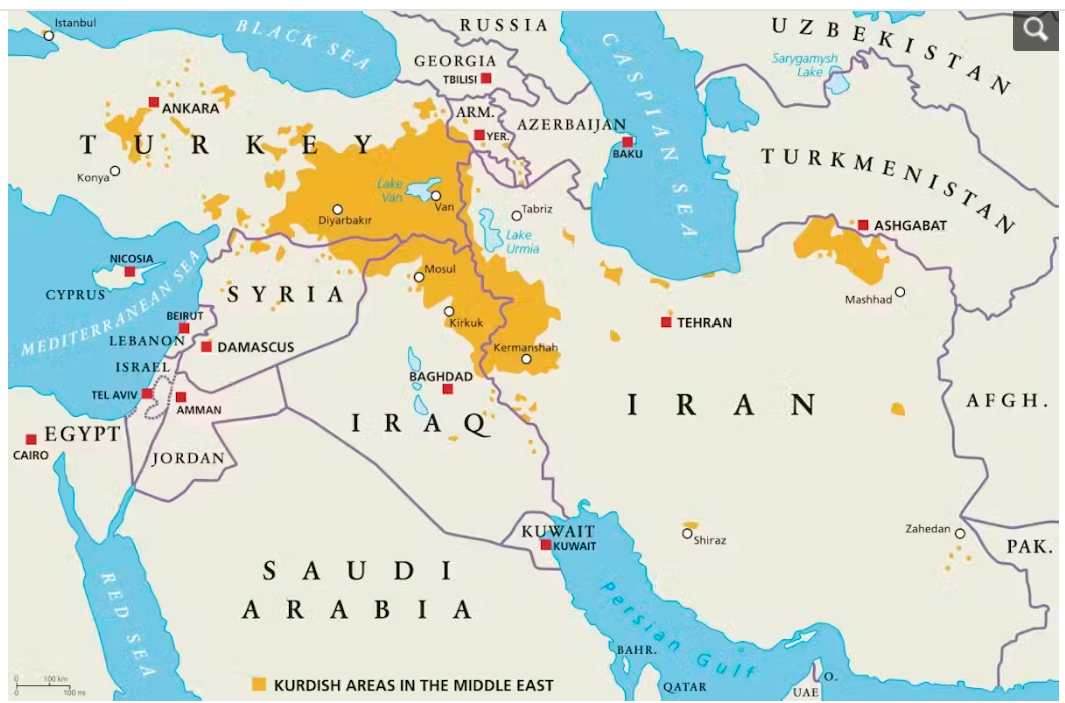 kuridsh population
The escalating conflict between the United States, Israel, and Iran could trigger broader regional consequences, particularly if Kurdish armed groups become involved in destabilizing the Iranian regime. While Washington may see Kurdish fighters as a way to pressure Tehran without deploying US troops, such a strategy could provoke serious tensions with Türkiye. Ankara views Kurdish militancy as a core national security threat and fears that empowering Kurdish groups in Iran could embolden separatist movements across its borders, potentially opening a new front in an already volatile regional conflict.
Airstrikes Alone May Not Achieve Regime Change
Since US and Israeli strikes on Iran began two weeks ago, President Donald Trump’s war objectives have shifted between weakening Iran’s military capabilities and attempting to topple the Islamic Republic that has ruled the country since 1979.
The initial attacks, which reportedly killed Supreme Leader Ali Khamenei, dealt a significant blow to Iran’s leadership structure. However, many analysts argue that airpower alone is unlikely to achieve regime change.
Historically, military campaigns aimed at overthrowing governments have required ground forces to consolidate gains. Yet deploying American troops inside Iran is widely seen as politically and militarily unacceptable in Washington after decades of costly wars in the Middle East.
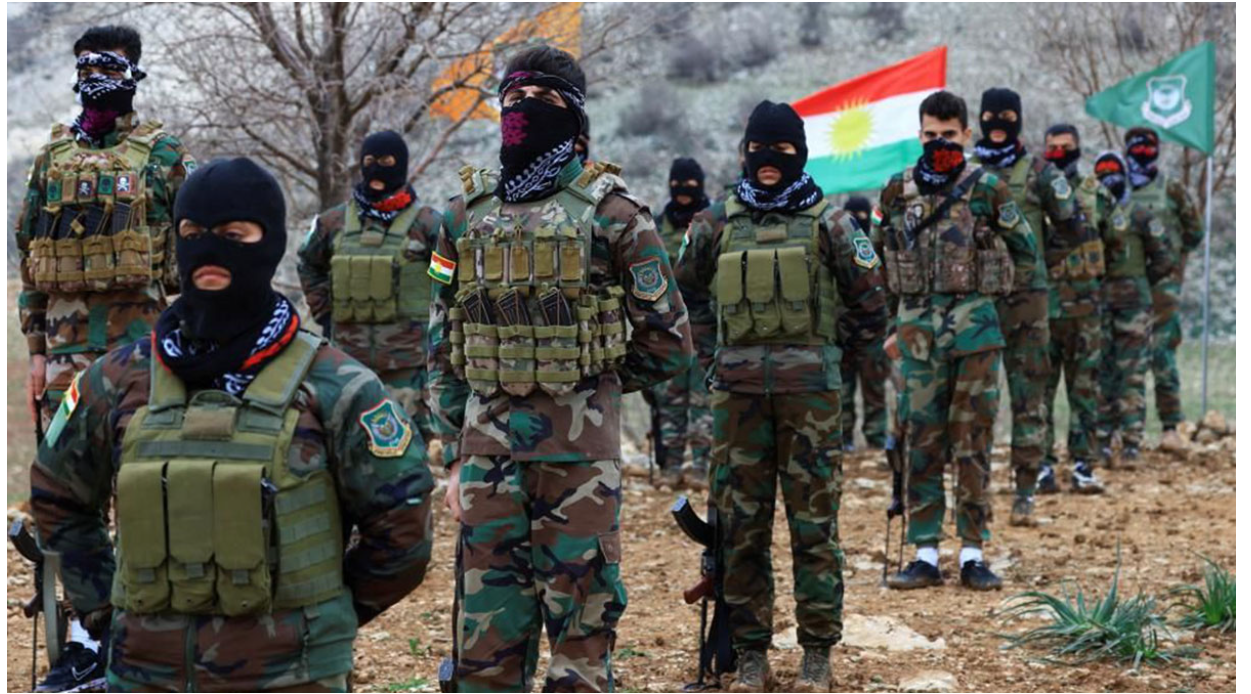
As a result, alternative strategies are being discussed within policy circles. One idea reportedly circulating in Washington involves supporting Kurdish armed groups operating in Iraq and western Iran in order to destabilize the Iranian state from within.
Trump himself appeared to reject the idea on March 6, telling reporters: “I don’t want the Kurds to go into Iran… The war is complicated enough as it is.”
However, given the unpredictable nature of the conflict and Trump’s shifting rhetoric, analysts believe such a scenario cannot be ruled out.
The Kurdish Factor in Regional Politics
The Kurds are an ethnic group with their own language and culture who have lived for centuries in a mountainous region spanning parts of Türkiye, Iran, Iraq and Syria. With a population estimated at around 30 million, they are widely considered the largest stateless ethnic group in the world.
Their current geopolitical situation dates back to the collapse of the Ottoman Empire after World War I. Kurdish leaders at the time hoped to establish an independent state following centuries of Ottoman rule.
Instead, the Kurdish homeland was divided among several newly formed states, leaving Kurdish communities split across multiple national borders.
Today, Kurdish populations remain concentrated in southeastern Türkiye, northern Iraq, northern Syria and northwestern Iran.
Approximately 10% of Iran’s population is Kurdish. Many live in mountainous regions near the Iraqi and Turkish borders, areas that have historically been among the least economically developed parts of the country.
Kurdish political parties are banned in Iran, and armed Kurdish groups have periodically clashed with Iranian security forces while demanding autonomy or independence.
Why the Issue Is Highly Sensitive for Türkiye
The Kurdish issue is particularly sensitive in Türkiye, which hosts the largest Kurdish population in the region.
Since 1984, the Turkish state has been engaged in an armed conflict with the Kurdistan Workers’ Party (PKK), an organization that has fought to establish Kurdish autonomy or independence. The conflict has killed more than 40,000 people over the past four decades.
For Turkish policymakers, the possibility that the United States might support Kurdish fighters in neighboring Iran is not simply a matter of foreign policy. Ankara fears that strengthening Kurdish militant organizations elsewhere in the region could embolden separatist movements inside Türkiye itself.
In recent years, Türkiye has conducted multiple cross-border military operations in northern Iraq and northern Syria targeting Kurdish armed groups. It has also maintained extensive counterinsurgency operations against PKK militants within its own territory.
These actions reflect how strongly Turkish leaders oppose any moves toward Kurdish independence anywhere in the region.
Atlantic Council: Iran War Poses Greater Risks for Türkiye Than Previous Regional Conflicts
Previous Tensions Between Washington and Ankara
The Kurdish issue has long been a source of friction between Washington and Ankara.
During the campaign against the Islamic State militant group in Syria in the late 2010s, the United States partnered with Kurdish-led forces on the ground. Türkiye strongly opposed this cooperation, arguing that some of these groups were linked to the PKK.
The dispute strained relations between the two NATO allies and highlighted the deep strategic disagreements surrounding Kurdish political movements.
Türkiye’s relations with Israel have also been affected by the Kurdish question. President Recep Tayyip Erdoğan has accused Israeli Prime Minister Benjamin Netanyahu of undermining the transitional government in Syria by supporting Kurdish groups in the country.
As a result, Kurdish politics has become a recurring flashpoint in relations between Türkiye and Western allies.
Türkiye and Iran Share Concerns Over Kurdish Militancy
Despite being regional rivals, Türkiye and Iran share a common concern: preventing Kurdish separatism.
Both countries have historically cooperated in containing Kurdish militant groups operating along their shared border. Security forces from the two states have occasionally coordinated military actions and exchanged intelligence targeting Kurdish fighters moving between Iranian and Turkish territory.
The two governments also jointly opposed the 2017 independence referendum held by Kurdish authorities in northern Iraq, where more than 92% of voters supported independence.
For Ankara and Tehran alike, the emergence of an independent Kurdish state in the region is viewed as a major strategic threat.
A Kurdish Uprising Could Alarm Ankara
If Kurdish armed groups were to play a major role in destabilizing Iran, Turkish officials would likely view the development with deep concern.
A weakening or fragmentation of the Iranian state could create a much longer and more unstable border region where Kurdish militant organizations could operate more freely.
Such a scenario could dramatically expand the geographic scope of Kurdish insurgency networks.
Another major concern for Türkiye is the potential for a new refugee crisis.
The country already hosts nearly four million Syrian refugees who fled the civil war that began in 2011, making Türkiye the largest refugee-hosting country in the world. The issue has become a significant domestic political challenge.
A collapse or prolonged conflict in Iran — a country larger and more populous than Syria — could trigger another wave of displacement, sending large numbers of refugees westward toward Turkish territory.
A New Front in the Regional Conflict?
From Washington’s perspective, Kurdish groups may appear to offer a way of confronting the Iranian regime without deploying American ground troops.
However, such a strategy could carry serious regional risks.
For Türkiye, Kurdish militancy represents a core national security threat rather than simply a foreign policy concern. Any move perceived as strengthening Kurdish armed organizations near its borders would likely provoke a strong response from Ankara.
If the Iran conflict ends up empowering Kurdish militants or destabilizing Türkiye’s southeastern frontier, President Erdoğan may feel compelled to intervene.
Such a development could open another front in a conflict that is already expanding across the Middle East.
Source: The Conversation, excerpt
PA Turkey intends to inform Turkey watchers with diverse views and opinions. Articles in our website may not necessarily represent the view of our editorial board or count as endorsement.
Follow our English YouTube channel (REAL TURKEY):
https://www.youtube.com/channel/UCKpFJB4GFiNkhmpVZQ_d9Rg